Hjemmeværnets Historiske Center Holstebro
Volunteer-run exhibition on the history of the Danish Home Guard (Hjemmeværnet) in Holstebro, with objects from the occupation, the resistance and the Cold War.
Have only individual sections read aloud
About the museum
The collection was started by the farmer Carl Fonager from Sørvad, who began collecting weapons and other relics of the war on his farm immediately after the Second World War. After the Home Guard (Hjemmeværnet) was founded in 1949, which he joined himself, he also added Home Guard material to the collection. By the late 1960s it had grown so large that it was offered to Holstebro Municipality. In 1974 Home Guard Region II took over the collection, and on 28 February 1975 the Hjemmeværnsmuseum opened in the basement of the then new Hafniahus in Holstebro – by its own account the first museum within the Home Guard – with Fonager as its manager.
The actual weapons collection passed to the Holstebro Museum in 1979, was put into storage after the 1996 "biker war" because of stricter security requirements, and has been on display at the Holstebro Museum since 2003; the centre itself now shows only a few deactivated weapons. Because the Home Guard is not allowed to run museums, the institution has been called Hjemmeværnets Historiske Center Holstebro since 2015. It is one of the Home Guard's historical exhibitions, reports to the Midt- og Vestjylland Home Guard district and is looked after by volunteer Home Guard members.
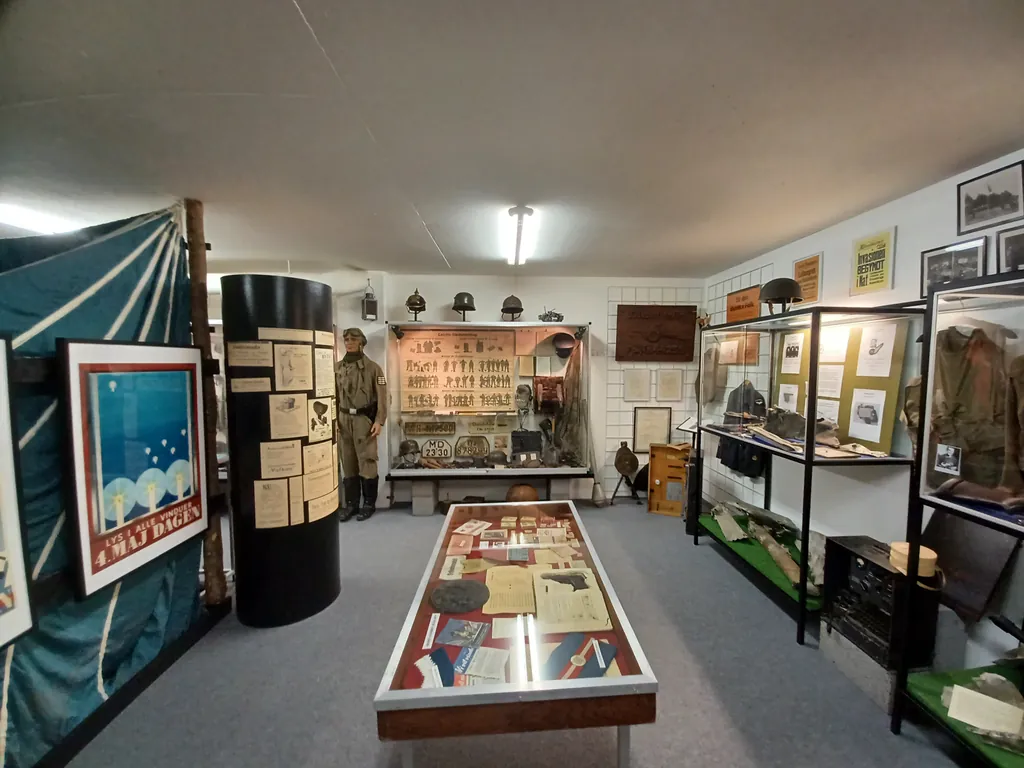
The exhibition in the basement tells how the Home Guard emerged from the resistance movement of the Second World War and shows the development of military equipment from then to the present day, along with objects from the German occupation and the resistance in the region. On request, the volunteers guide visitors through the rooms and tell the stories behind the objects. By arrangement, the centre also shows associations and groups the Holstebro municipal command centre on Døesvej, inaugurated in 1968: a Cold War bunker of around 200 square metres with its original fittings largely preserved.
Highlights
- How the Home Guard emerged from the resistance movement
- Military equipment from the Second World War to the present day
- Objects from the occupation and the resistance in the region
- Guided tours by volunteer Home Guard members
- Holstebro command centre from 1968 with original fittings (for groups by arrangement)
- Founded
- 1975
- Operated by
- Hjemmeværnet – Hærhjemmeværnsdistrikt Midt- og Vestjylland (ehrenamtlich betrieben)
Admission & discounts
Admission is free.
Admission is free.
Accessibility
- Wheelchair accessible: no information
- Elevator: no information
- Accessible restroom: no information
- Accessible parking: no information
- Service dogs welcome: no information
- Tactile models & exhibits: no information
- Sign language tours: no information
- Easy-to-read materials: no information
- Audio description: no information
The exhibition is in the basement and is reached by stairs. Access to the command centre is also via stairs, which are difficult for people with limited mobility; wheelchairs and pushchairs cannot be taken down there.
Kids & families
The museum hasn’t published any information on this.
Getting there & parking
By car
Parking available
Parking is permitted on Teaterpladsen opposite Musikteatret Holstebro; alternatively in the Kvickly car park a short walk away.
By car, drive onto the inner ring road and follow the signs to Musikteatret Holstebro. Enter through the glass door marked "Hjemmeværnsmuseum", then take the stairs down to the basement and follow the signs.
Get directionsAmenities & dining
- Café: not available
- Restaurant: not available
No food or drinks are sold; visitors may eat food they have brought at the tables in the large meeting room.
Events & venue rental
The museum hasn’t published any information on this.
Plan your visit
| Guided tours | yes · approx. 60 min |
|---|---|
| School programs | yes |
| Photography | Photography is permitted in all rooms. |
| Good to know | Volunteers are always on hand during opening hours to guide visitors through the exhibition. Group tours last about an hour and should be booked well in advance with the chairman; particular focuses can be agreed. School programme for children and young people aged about 8 to 18 with a tour, history lesson, stories for younger pupils and dressing up in soldiers' uniforms. The command centre is only shown to associations and larger groups (at least 8–10, at most 25 people) by arrangement. |