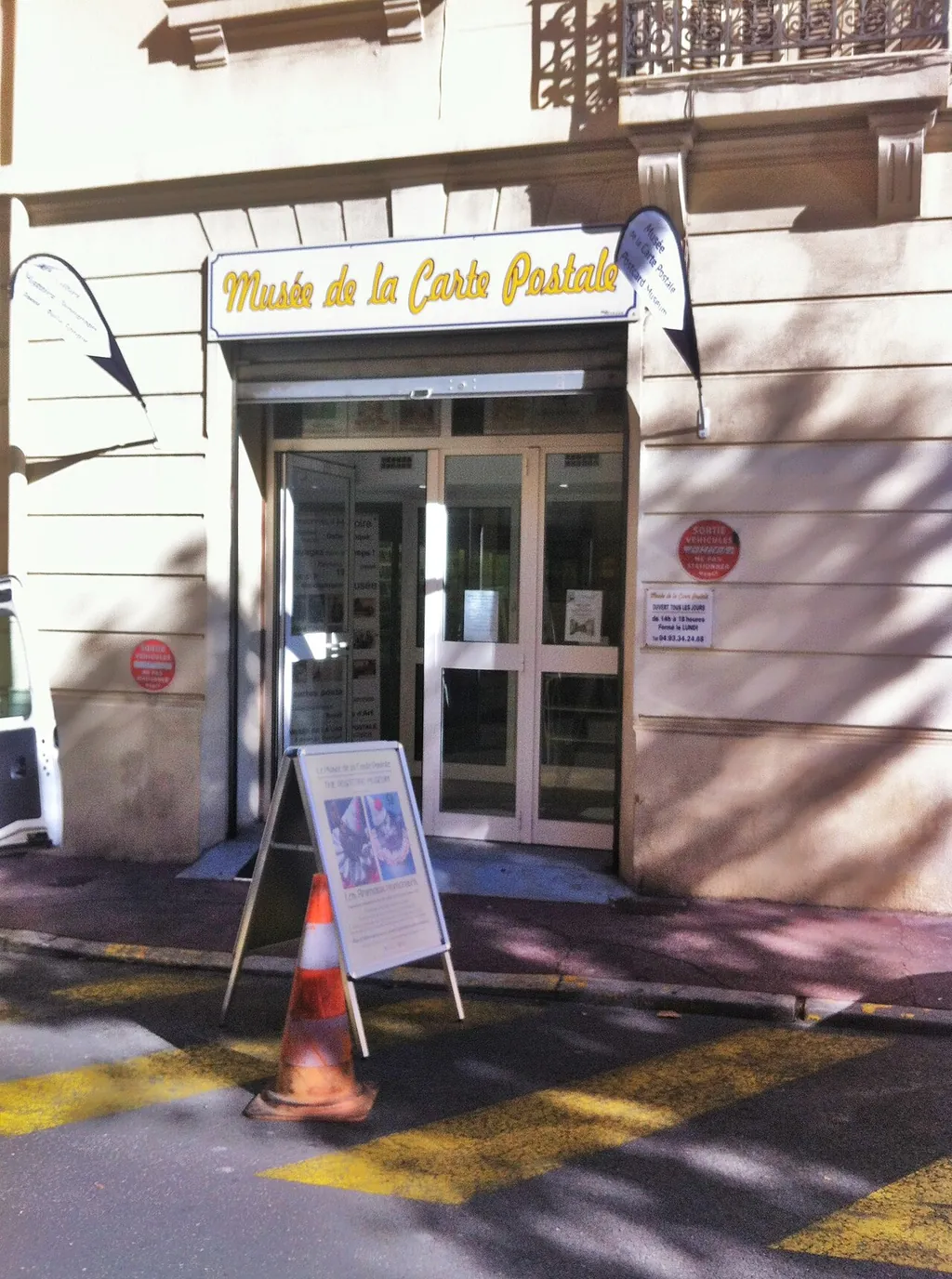
Musée de la Carte Postale
Association-run museum devoted to the history of the postcard, with several thousand cards and an audio guide; closed since October 1, 2026.
No sound? Check your device’s silent switch.
Have only individual sections read aloud
About the museum
The museum was founded on July 1, 2000. It is based on the loan of a private collection and is run by a team of volunteers. It presents the history of the postcard, from its beginnings in 1869 in Austria-Hungary to the present day, told through the cards themselves.
The visit has three parts: the history of the postcard in France and around the world, including its production, trade and role in everyday life; a century of human life in postcards, from mechanical and pull-tab cards to cards made of materials such as wood, leather or silk; and finally a temporary exhibition of at least a hundred cards, changed every quarter.
The visit is audio-guided in five languages and includes a demonstration of mechanical and pull-tab cards. The museum has lent cards to several exhibitions in France and abroad, and in 2011 took part in an exhibition at the French Ministry of Culture in Paris marking 120 years of the photographic postcard. The museum has been closed since October 1, 2026, for an indefinite period.
Highlights
- Several thousand postcards from every era and many countries
- Mechanical and pull-tab cards demonstrated during the visit
- Audio guide available in French, English, Italian, German and Spanish
- Complete “Paris vécu” series
- Temporary exhibition changed every quarter
Permanent exhibition
- Histoire de la carte postale et un siècle de vie en cartes postales – Permanent display of several thousand cards: origins of the postcard, golden age, everyday life and mechanical cards.
- Founded
- 2000
Admission & discounts
| Adults | €8 |
|---|---|
| Children & teens | €8free up to age 11 · Free admission for children under 12. |
| Groups (10+ people) | €6 per personGroup visits are led by a member of staff, without audio guide; an early-morning opening can be arranged on request. |
The ticket is valid for the day of purchase and covers the permanent collection, the current temporary exhibition and the audio guide. Payment: cash and checks.
Accessibility
- Wheelchair accessible
- Elevator: no information
- Accessible restroom: no information
- Accessible parking: no information
- Service dogs welcome
- Tactile models & exhibits: no information
- Sign language tours: no information
- Easy-to-read materials: no information
- Audio description: no information
Wheelchair users can visit independently. Mobile induction loops are lent for the audio guide (hearing aid in T setting), and a large-print version of the visit for visually impaired visitors is available on request. The rooms are air-conditioned. The regional tourism portal states that animals are welcome.
Kids & families
| Time needed | approx. 1.5 hrs |
|---|---|
| Kids’ admission | free up to age 11 |
Getting there & parking
By public transit
Diables Bleus
Antibes SNCF station, 5 minutes on foot. Envibus bus lines 1, 2, 6, 7, 8, 9, 10, 14, 16 and 30/31 to the Diables Bleus stop; from Nice airport, bus 250 to the Pôle d’échanges Antibes stop.
By car
Paid parking
Paid parking nearby: Jean Marie Poirier, Port Vauban and Pré-des-Pêcheurs. Coach parking for private buses on Avenue du Onze Novembre, opposite the harbor and the Fort Carré.
The museum is about a 5-minute walk from the tourist office, the harbor and the car parks.
Get directionsAmenities & dining
The museum hasn’t published any information on this.
Events & venue rental
The museum hasn’t published any information on this.
Plan your visit
| Guided tours | yes |
|---|---|
| Audio guide | yes (FR, EN, IT, DE, ES) |
| Photography | Photography is not permitted in the museum. |
| Good to know | An identity document is requested as a deposit for the audio guide. Explanatory panels in French and English are also displayed in the showcases. |