September 26, 2026 – November 1, 2026
Das Verschwinden der Mauer
Photographs by Robert Conrad from the weeks and months after the fall of the Berlin Wall in 1989 show how Berlin integrated the former death strip into everyday life.
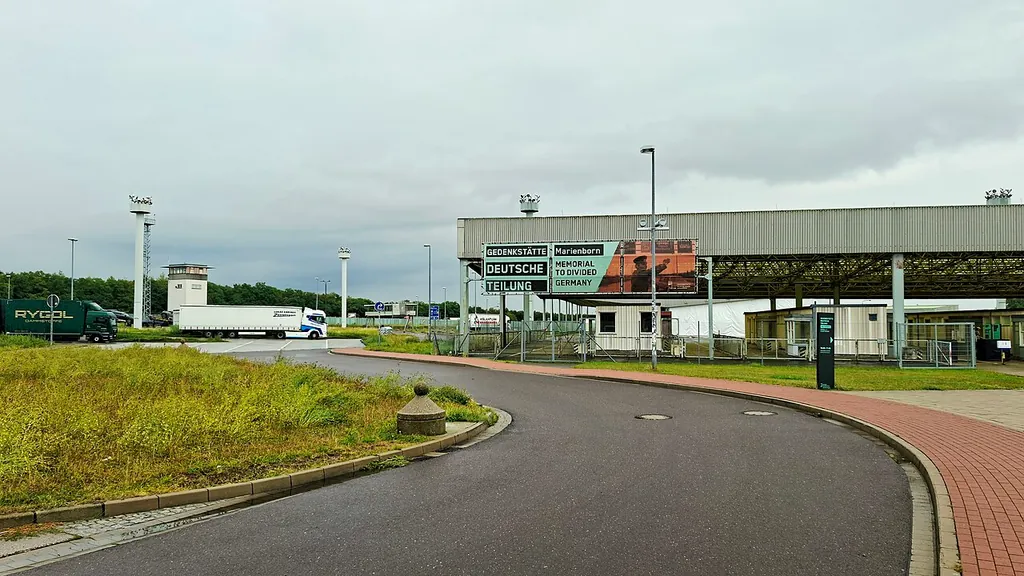
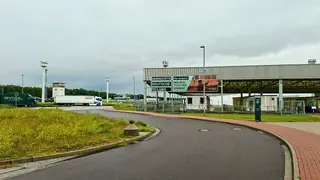
Memorial at the former GDR border crossing on the A2, with a permanent exhibition, outdoor grounds, and the Hötensleben border memorial; free admission.
September 26, 2026 – November 1, 2026
Photographs by Robert Conrad from the weeks and months after the fall of the Berlin Wall in 1989 show how Berlin integrated the former death strip into everyday life.
The Marienborn border crossing was the largest GDR checkpoint on the border with the Federal Republic and lay on the transit autobahn between Berlin and Hannover. Since July 1990, the site has been protected as a historic monument. After years of decay, the state of Saxony-Anhalt decided in 1994 to establish a memorial on part of the roughly 30-hectare site. The facilities for outbound traffic and the service building were demolished to make way for a rest stop; the essential buildings and open spaces on the entry side were preserved and restored in line with monument protection requirements.
The memorial opened on August 13, 1996. Visitors can see the inspection areas for cars and trucks, the customs area, the former exchange office of the GDR State Bank, and the commandant's tower of the border troops. Since 2004, the Hötensleben border memorial, with preserved border fortifications, has been part of the memorial.
Since July 2020, a new permanent exhibition has shown the history of the border crossing and the border area. The memorial is run by the Stiftung Gedenkstätten Sachsen-Anhalt; in 2011, the site was honored with the European Heritage Label as part of the Netzwerk Eiserner Vorhang (Iron Curtain network).
Admission is free.
Admission is free; donations are welcome. Guided walks for registered groups and school classes are free from 8 people onward.
A mobile ramp leads into the visitor center with the permanent exhibition. The outdoor grounds are accessible but extensive at 7.5 hectares; walking aids are provided on request. The small exhibitions in the historic individual buildings are not accessible; there, panels with photos and QR codes link to short films. A bronze model with Braille stands at the West entrance. Brochures in plain language (Leichte Sprache) can be borrowed free of charge or bought for €4. The Hötensleben border memorial is not barrier-free. Registration before the visit is recommended.
Great for kids & families
For a family search for traces of the past, free accompanying material is available for children aged 9 to 14, with a walk of about 90 minutes across the site. Family walks are offered on special dates.
Bahnhof Marienborn · 4 km
Marienborn station is about 4 km away; bus 658 runs to the memorial at irregular intervals.
Parking available
Parking is available at the south entrance (signposted) or at the Marienborn rest stop (west entrance), from where you walk to the memorial. Visitors with limited mobility can drive right up to the door.
From Magdeburg, take the A2 exit Alleringersleben; from Hannover, take the exit at the Raststätte Marienborn. On country roads, use the B1 from Helmstedt or the B245 via Sommersdorf. Roadworks on the A2 may cause traffic jams. Train travel is not recommended for school classes, since no transport from the station is offered.
Get directionsToilets and seating are located in the exhibition building.
The museum hasn’t published any information on this.
| Guided tours | yes · approx. 1.5 hrs |
|---|---|
| School programs | yes |
| Good to know | Public guided walks without registration take place every Sunday at 14:30 (meeting point: information desk in the visitor center). Groups and school classes should register at +49 39406 92090 or by email; the walk lasts 90 minutes, and 60 minutes at the Hötensleben border memorial. The commandant's tower can only be visited as part of a guided tour. On the outdoor grounds, panels and QR codes explain the historic inspection areas. |