Art exhibition by the collective Stoasag with the Atelier Unterkiefer: works by members and guests on the net as a graphic motif and as a metaphor for security, connectedness and entanglement.
About the museum
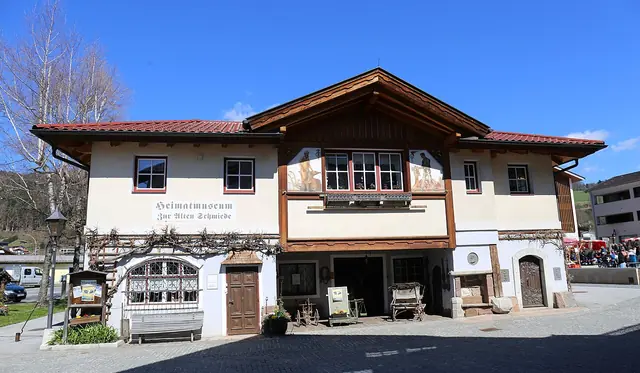
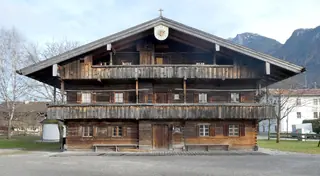
The Blaahaus was built in 1696 as a residence for the employees of the local ironworks and their families. It owes its name to the "Bläher" (blowers), the workers who supplied the blast furnaces with air. A letter from a resident from around 1823 is among the special testimonies of the listed house today.
In 1996 the building was dismantled at its original site and rebuilt true to the original at its present location on Innstraße. Three former employees of the marble works, Sepp Bleier, Otto Plattner, and Josef Reheis, set up a museum inside on a volunteer basis, looked after it for years, and laid the foundation for the collection and archive on local and industrial history.
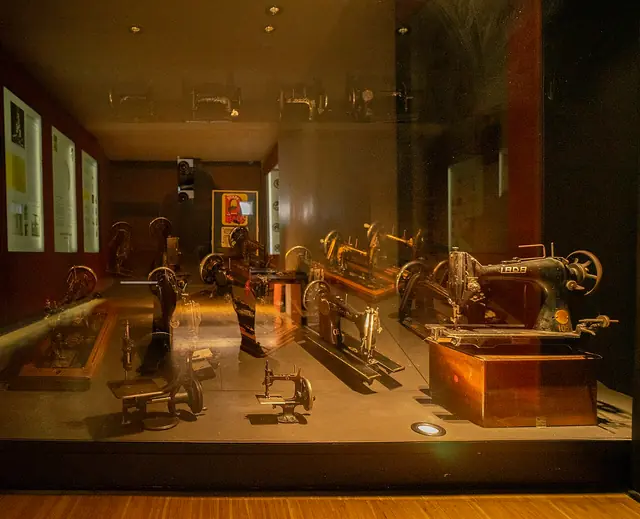
After a one-year closure and a complete redesign, the museum opened on November 16, 2024, with a new permanent exhibition. It tells of around 400 years of industry in Kiefersfelden – from log driving and charcoal burning through iron and scythe production to the marble industry, whose works at times were the largest in Germany, and cement production. Further rooms are devoted to local history and transport, social life, music, and the long tradition of the Kieferer Volkstheater. The sponsor is the municipality of Kiefersfelden.
Highlights
Listed workers' residence from 1696, relocated in 1996
Marble industry: products of what was once Germany's largest marble works
Iron and scythe industry, log driving and charcoal burning
Historic theater costumes of the Kieferer Volkstheater
Hands-on, media, and listening stations
Free admission
Permanent exhibition
Industriegeschichte Kiefersfelden – The permanent exhibition, redesigned in 2024, leads through the town's branches of industry – log driving, charcoal burning, iron, scythes, marble, and cement – and shows tools, models, material samples, and documents. It is supplemented by rooms on local history, social life, music, and folk theater.
Founded
1996
Operated by
Gemeinde Kiefersfelden
Admission & discounts
Admission is free.
Adults
free
Accessibility
Wheelchair accessible
Elevator
Accessible restroom
Accessible parking: no information
Service dogs welcome
Tactile models & exhibits: no information
Sign language tours: no information
Easy-to-read materials: no information
Audio description: no information
Accessible, including with a stroller or walker; an elevator serves all three floors. For guests with hearing impairments, transcripts of the films and listening stations are available at the ticket desk.
Kids & families
Great for kids & families
Family tours & workshops
Activity booklet, scavenger hunt or kids’ audio guide
Hands-on stations
Stroller-friendly
Hands-on stations to try out, a dress-up station, and a touch station with marble surfaces; scavenger hunts, musical instrument puzzles, marble mandalas, and instructions for making a stonemason's cap are available to download.
Getting there & parking
By public transit
Kiefersfelden Bahnhof · 10-min walk
Kiefersfelden station is nearby; from there about 10 minutes on foot through the underpass toward the Inn on a paved path.
The museum hasn’t published any information on this.
Events & venue rental
The museum hasn’t published any information on this.
Plan your visit
Guided tours
yes
School programs
yes
Good to know
Guided tours for groups, school classes, and families can be booked individually (inquiry via the contact form on the website). Worksheets for 3rd and 4th grade are available to download. Two rooms on the ground floor regularly show special exhibitions by regional artists (seven in 2026, seven in 2027). Every year the Kirta festival takes place in front of the Blaahaus on the third Sunday in October, and on the first Advent weekend a village Advent market is held around the building, with events inside the Blaahaus as well (shadow theatre for children, Stubn music, readings).