Mineralogisches Museum der Philipps-Universität Marburg
The University of Marburg's mineral collection; its main building is closed, and its highlights are on show at the Landgrafenschloss until February 2027.
Opening hoursAdmission from €3 Partially accessible
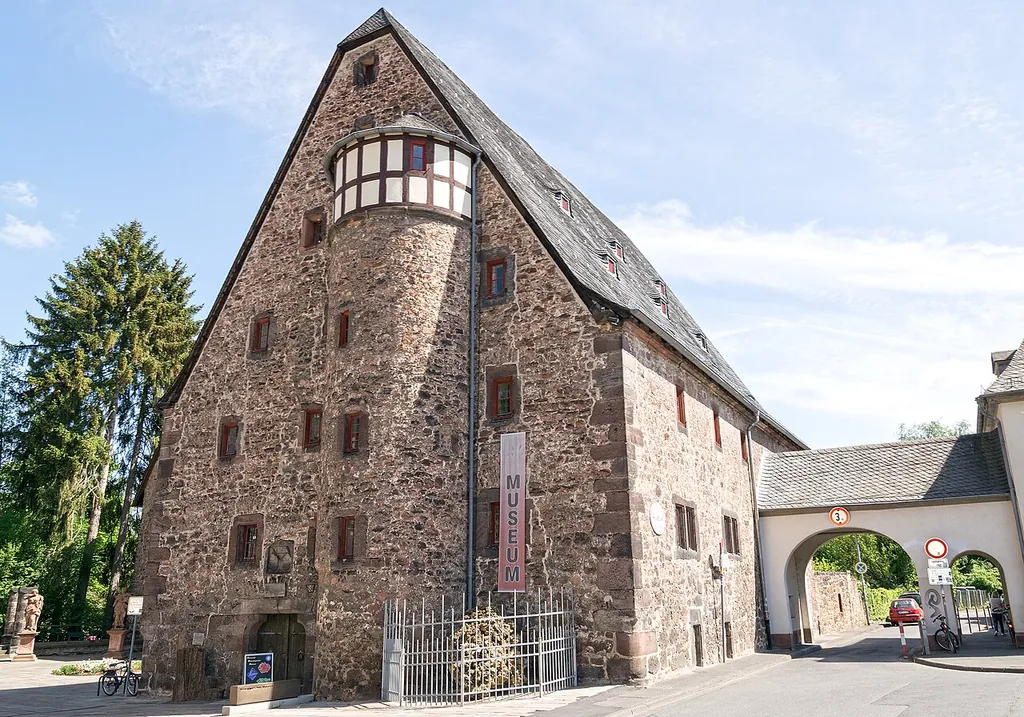
Temporary location (expected until 2027-02). The main building in the granary on Firmaneiplatz has been closed until further notice since 2019 for fire safety reasons. As a temporary home, the exhibition "MINERALE – Schätze der Erde" in the Waldecker Saal of the Landgrafenschloss is showing the highlights of the collection until February 2027.
The exhibition in the Waldecker Saal of the Landgrafenschloss shows selected minerals from the university collection and explains how they form, their beauty and their importance for modern technology. It runs until February 2027.
About the museum
The foundation was laid by a 1790 decree of the Landgrave of Hesse: the mathematician Johann Gottlieb Waldin was to build up a "Hessisches Mineralien-Kabinett" (Hessian mineral cabinet) at the University of Marburg, for which the state's mines sent in ores, rocks and fossils. In the 19th century, professors such as Friedrich Hessel and Heinrich Girard organized and expanded the holdings; in 1852, for example, the Herz Collection with more than 4,000 pieces was added. In 1917 the Treysa iron meteorite entered the collection.
From the 1920s on, the collection gradually took over the Teutonic Order's granary on Firmaneiplatz near the Elisabethkirche, a building from the early 16th century. After the building was converted, the Mineralogical Museum opened there in 1977 as a public display collection, marking the university's 450th anniversary; a friends' association has supported the museum since 1990.
Today, with more than 60,000 minerals, around 55,000 rock samples, 15,000 rough gemstone samples and some 150 meteorites, the collection is considered the largest mineralogical collection in Hesse; it belongs to the Department of Geography. Because the granary does not meet fire safety requirements, the main building has been closed since 2019. Since September 2024, the special exhibition "MINERALE – Schätze der Erde" in the Waldecker Saal of the Landgrafenschloss has been showing the finest pieces, including specimens from the Ingrid-und-Reinhard-Balzer-Stiftung and the Gerhard Schweisfurth Collection.
Highlights
A selection of the finest pieces from some 235 years of collecting history
Mineral specimens from the Ingrid-und-Reinhard-Balzer-Stiftung
Ore specimens from the Gerhard Schweisfurth Collection
Displayed in the Gothic Landgrafenschloss high above the old town
€2Students of other universities, apprentices, groups of 15 or more, seniors aged 65 and over, people with a degree of disability (GdB) of 50 or more, volunteer service participants
Children & teens
freefree up to age 17 · Children and teens under 18 free.
Seniors
€2From age 65.
Visitors with disabilities
€2companion free · With a degree of disability of 50 or more; registered companion free.
Students & apprentices
€2Students of Philipps-Universität Marburg free; students of other universities reduced.
Groups (15+ people)
€2 per personReduced price for groups of 15 or more.
Entire Landgrafenschloss (including "MINERALE")
€8Reduced €5
Combined ticket Landgrafenschloss and Kunstmuseum
€10Reduced €7
Prices apply only to the "MINERALE" exhibition. Free admission for, among others, members of the Freunde des Museums für Kunst und Kulturgeschichte, holders of the Deutscher Museumsbund museum card, ICOM card holders and holders of a press ID.
Accessibility
Partially wheelchair accessible
Elevator
Accessible restroom
Accessible parking: no information
Service dogs welcome: no information
Tactile models & exhibits: no information
Sign language tours: no information
Easy-to-read materials: no information
Audio description: no information
The path to the castle entrance leads uphill over cobblestones. Inside the castle, ramps and an elevator provide access to the exhibition rooms and restrooms (castle chapel only via stairs). Directions from the bus stop for blind and visually impaired visitors in text and audio; folding stools on the second floor.
Kids & families
The museum hasn’t published any information on this – please ask the museum directly.
Getting there & parking
By public transit
Schloss
Bus 10 to the Schloss stop.
An uphill cobblestone path leads to the Landgrafenschloss.