Limited operations. The cultural history collection in the Wilhelmsbau is currently closed for renovation. The exhibitions in the Südsaal and Westhalle, as well as the Fürstensaal and castle chapel, remain accessible; no reopening date for the Wilhelmsbau has been announced.
In the Knights’ Hall, the University Archive, Library and Museum show original documents, insignia and objects from five centuries of university history.
Minerals from the collection of the University’s Mineralogical Museum, along with a cross-section from the Museum am Firmaneiplatz, which is currently not open to the public; beginning in September 2024.
About the museum
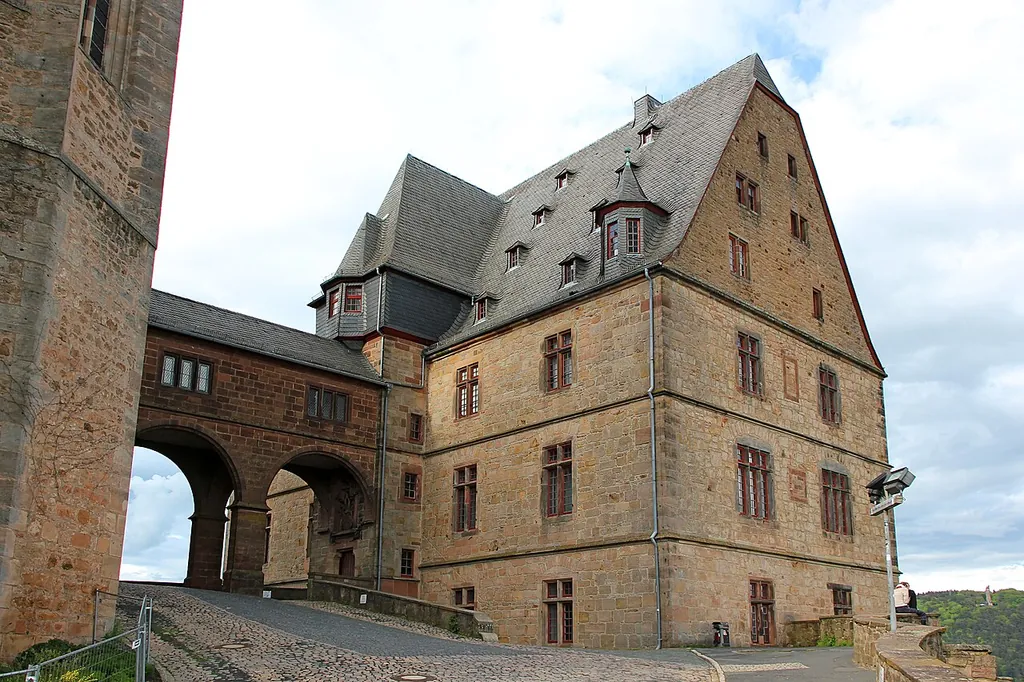
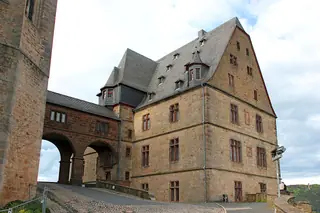
Marburg Castle sits on the Burgberg above the town. Landgrave Wilhelm III had the Wilhelmsbau built from 1493 to 1497 as a modern, three-story hall and residential building on the east side of the complex. The Gothic Fürstensaal is one of the largest and most finely crafted secular Gothic halls in Central Europe, and the castle chapel was consecrated in 1288. In 1529, the Marburg Colloquy between Martin Luther and Ulrich Zwingli took place in the castle.
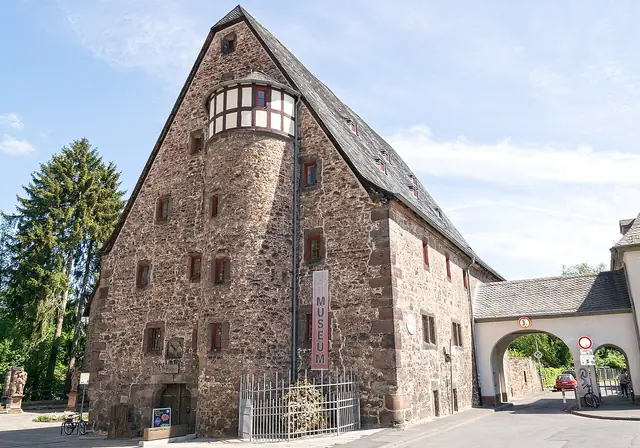
Since 1981, the Wilhelmsbau has housed the University Museum of Cultural History, now part of the Museum für Kunst und Kulturgeschichte of Philipps University Marburg. The cultural history collection in the Wilhelmsbau is currently closed for renovation work; no reopening date has been announced.
Open are the exhibition rooms in the Südsaal and the Westhalle, as well as the Fürstensaal and the castle chapel. The permanent exhibition "Marburger Stadtgeschichte*n" (Marburg city history) shows 40 objects from the 12th to the 20th century, arranged under "Die Häuser der Stadt" (the town's houses), "Kleider machen Leute" (clothes make the person) and "Die Dinge der Menschen" (people's things). "Burg & Schloss Marburg" uses six models to explain the building history from the medieval keep to the landgraves' castle, and floor windows reveal the predecessor buildings discovered in 1989/90. On the ground floor, the Waldecker Saal displays ceramics.
Highlights
Gothic Fürstensaal, one of the largest secular Gothic halls in Central Europe
Castle chapel from 1288
Models of the castle's construction history, with floor windows onto earlier buildings
Permanent exhibition "Marburger Stadtgeschichte*n" with 40 objects
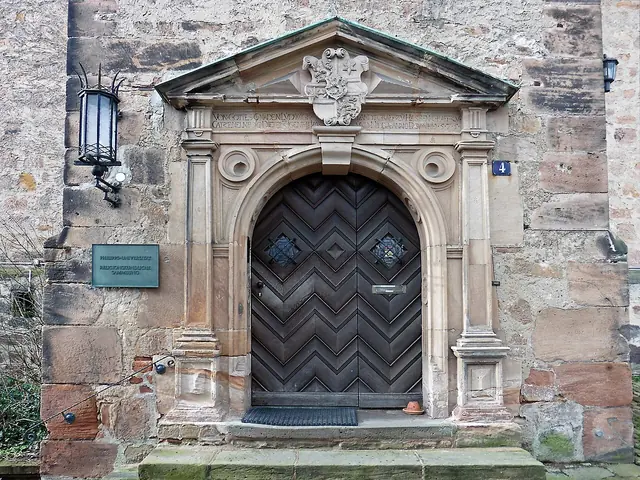
Renaissance ornamental portals and ceramics in the Waldecker Saal
Permanent exhibitions
Marburger Stadtgeschichte*n – In the Südsaal, 40 objects from the 12th to 20th century show aspects of Marburg's city history, arranged by houses, clothing and everyday objects.
Burg & Schloss Marburg – Six models and floor windows tell the building history from the medieval keep to the castle of the Hessian landgraves.
Fürstensaal und Schlosskapelle – The Gothic Fürstensaal and the 1288 castle chapel, with medieval wall paintings, are among the most important rooms in the castle.
Founded
1981
Operated by
Philipps-Universität Marburg
Admission & discounts
Adults
€8
Reduced
€5Students from other universities, trainees, groups of 15 or more, seniors 65 and over, severely disabled persons with GdB 50 or higher, volunteers in a Freiwilligendienst
Children & teens
freefree up to age 17 · Children and young people under 18 free.
Seniors
€5from age 65
Visitors with disabilities
€5companion free · from GdB 50
Students & apprentices
–Students of Philipps University Marburg free; students of other universities reduced.
Groups (15+ people)
€5 per personfrom 15 people
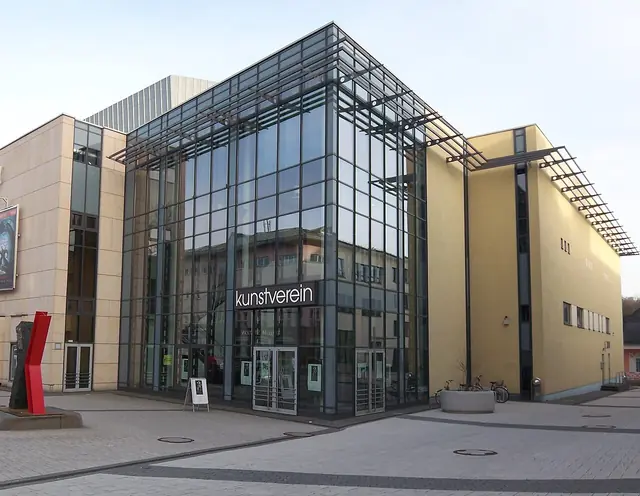
Combined ticket for the Kunstmuseum and Landgrafenschloss
€10reduced, €7
Admission is also free for members of the Museumsfreunde and the Verein für Hessische Geschichte und Landeskunde, with the Museumskarte of the Deutscher Museumsbund, an ICOM card, an Ehrenamtskarte, for members of the Deutscher Verband für Kunstgeschichte, and for journalists with a press pass.
Accessibility
Partially wheelchair accessible
Elevator
Accessible restroom: no information
Accessible parking: no information
Service dogs welcome: no information
Tactile models & exhibits: no information
Sign language tours: no information
Easy-to-read materials: no information
Audio description: no information
Access is uphill over cobblestones. Ramps and an elevator serve the exhibition rooms and toilets; the castle chapel can only be reached by stairs. Folding stools are available on the second floor. For blind and visually impaired visitors, there is a route description from the bus stop "Schloss" to the Fürstensaal, available as accessible text and as an audio file.
Kids & families
The museum hasn’t published any information on this.
Getting there & parking
By public transit
Schloss
City bus line 10 toward the Schloss.
The castle sits above the Oberstadt; on foot, the Ludwig-Bickell-Treppe (stairs) and Landgraf-Philipp-Straße lead up. The city of Marburg provides information on accessible parking spaces in the town area.
The museum hasn’t published any information on this.
Events & venue rental
The museum hasn’t published any information on this.
Plan your visit
Guided tours
yes
Audio guide
yes
Good to know
Public castle tours and special tours are arranged by Marburg Stadt und Land Tourismus. Since April 2026, the event series "Schlossbegegnungen" (castle encounters) has been held at the castle.