Exhibition on the photographer and author Germaine Krull (1897–1985), who spent her last years in Wetzlar. The focus is on the interplay between writing and photography. An accompanying programme complements the show.
About the museum
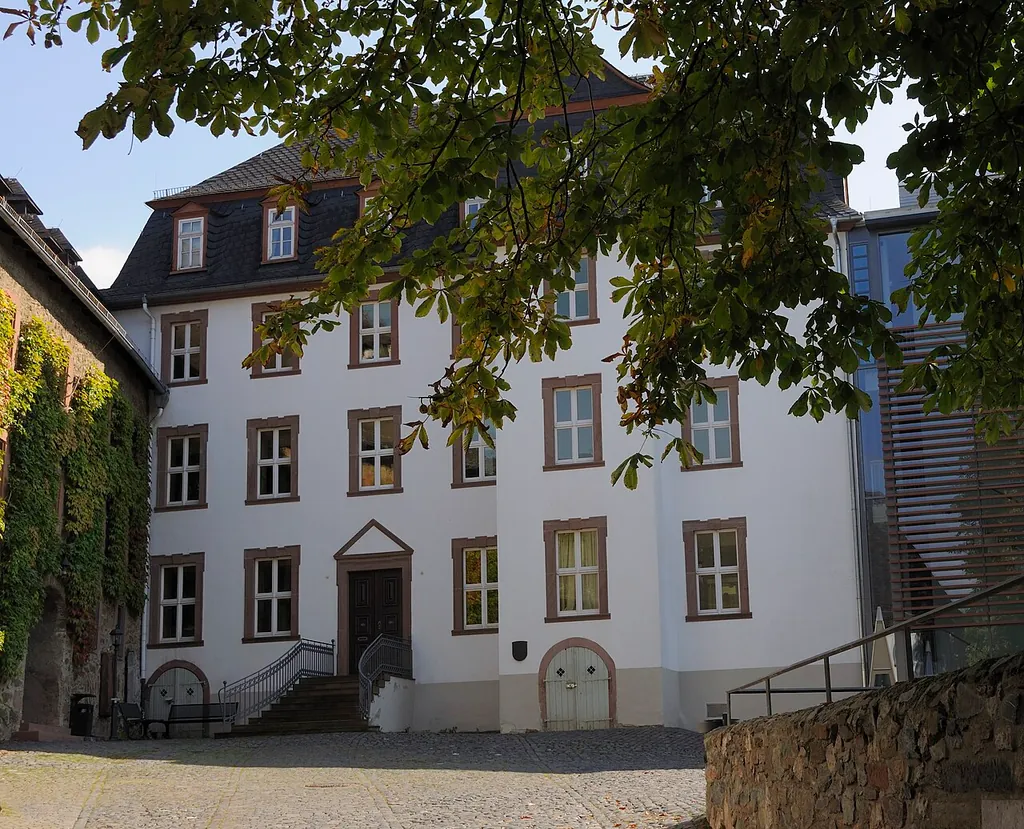
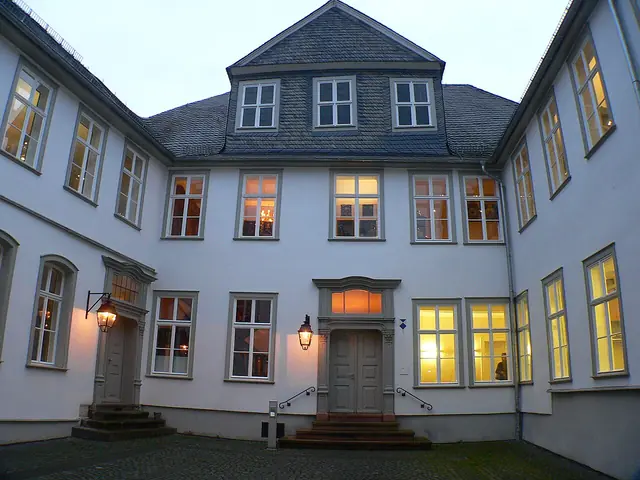
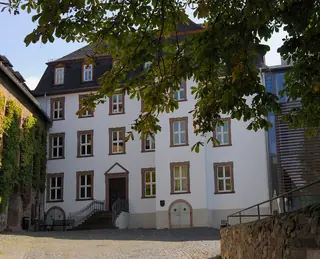
The Wetzlar city museum opened in 1925 in the two main buildings of the former Teutonic Order estate, the Ordensherberge and the Zehntscheune. Together with today's Lottehaus, the former residence of the order's administrative officials, the complex illustrates the history of the Teutonic Order in Wetzlar.
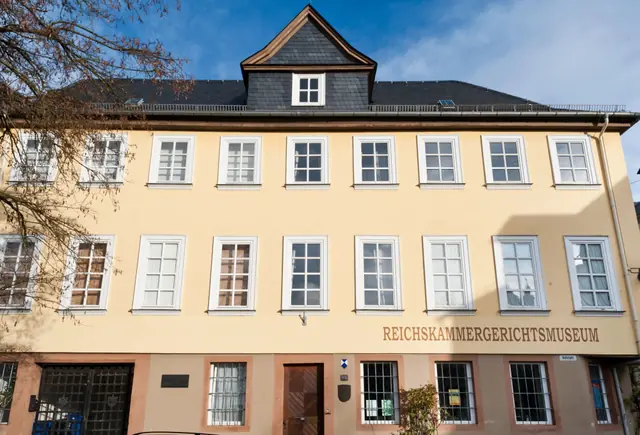
The permanent exhibition on the city's history is in the Ordensherberge. It begins with excavation finds from prehistory and early history, dating back to the early Bronze Age, and continues through older city history from the early Middle Ages to the 19th century, when Wetzlar at times belonged to Prussia. Sacred artworks and pieces of architectural history, such as the door from the choir screen (Lettner) of Wetzlar Cathedral, illustrate the cathedral's importance. Textiles, paintings, furniture and household objects show crafts and bourgeois life up to the era of the Reichskammergericht (Imperial Chamber Court, 1689–1806).
Since 2010 the Zehntscheune has mainly served as a venue for special exhibitions on city, cultural and literary history. On the first floor, it also presents the region's industrial history, from optics and iron processing through precision engineering and vacuum technology to consumer electronics and machine-tool manufacturing.
Highlights
Archaeological finds from the early Bronze Age onward
Wetzlar city history from the early Middle Ages to the 19th century
Door from the choir screen (Lettner) of Wetzlar Cathedral
Household objects and bourgeois life from the Reichskammergericht era
Industrial history from optics to machine-tool manufacturing
Historic buildings of the Deutschordenshof
Permanent exhibitions
Dauerausstellung zur Wetzlarer Stadtgeschichte – From archaeological finds through older city history up to the 19th century, with sacred artworks, household objects and bourgeois life.
Industriegeschichte in der Zehntscheune – On the first floor of the Zehntscheune, companies from optics, iron processing, precision mechanics, vacuum technology, consumer electronics and machine-tool construction are presented.
Founded
1925
Operated by
Städtische Museen Wetzlar (Stadt Wetzlar)
Admission & discounts
Children & teens
freefree up to age 5 · Free for children under 6; from age 6, admission is at the visitor's discretion.
Visitors with disabilities
freeSeverely disabled visitors enter free when presenting their ID.
Groups (10+ people)
€2 per personSuggested price per person; children, young people, apprentices and students €1.50. School classes from Wetzlar free.
Individual visitors pay on a "pay what you want" basis. For groups, the suggested price is €2.00 per adult or €1.50 per child, young person, apprentice or student (for groups of 10 or more). Free admission for children under 6, severely disabled visitors (with ID), accompanying teachers of student groups, and school classes from Wetzlar.
Accessibility
Wheelchair accessible
Elevator: no information
Accessible restroom
Accessible parking
Service dogs welcome: no information
Tactile models & exhibits: no information
Sign language tours: no information
Easy-to-read materials: no information
Audio description: no information
Accessible parking space in the Lottehof; accessible restroom in the entrance area of the city museum; wheelchair loan at reception. The step-free entrance for wheelchair users leads through the restaurant "La Piazza" via its entrance on Kornmarkt.
Kids & families
The museum hasn’t published any information on this.
Getting there & parking
By public transit
Ernst-Leitz-Platz
From Wetzlar train station, take bus lines 11 or 12 to the Ernst-Leitz-Platz stop.
By car
Parking available
Parking in the Avignon-Anlage and at the Neues Rathaus (New Town Hall).
Accessible parking
By car via the A 45 (exits Wetzlar-Süd, Wetzlar-Ost, Wetzlar-Nord), or on the B 49 from the direction of Limburg and Gießen to the Wetzlar Forum exit, then toward the city center.