Vereinigte Museen im Wasserschloss Heerse
Museums in the Neuenheerse moated castle: natural history with large mammals, Africa ethnology, hunting culture, local history and a picture gallery; only with a guided tour.
Have only individual sections read aloud
About the museum
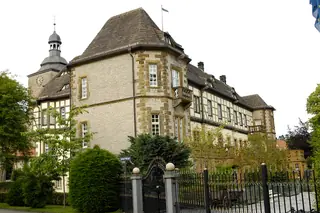
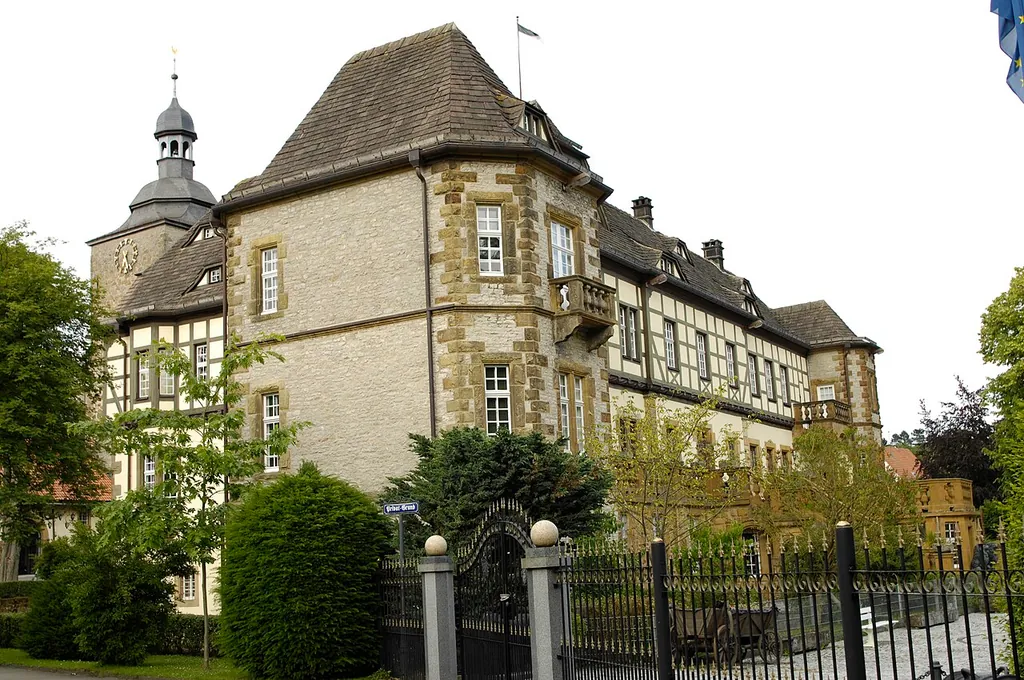
The moated castle in Neuenheerse (Bad Driburg) was for centuries the seat of the abbesses of the Heerse women's foundation (Damenstift), whose origins are traced back to the year 868. In 1599, Abbess Ottilie von Fürstenberg had the complex rebuilt as a moated castle.
In 1989, the donor couple Manfred O. and Helga Schröder acquired the castle, which needed renovation, along with its outbuildings, restored it, and handed it over to the public together with their cultural foundation. Since then, several collections have been housed in the castle and the gatehouse. In June 2016, the "St. Hubertus Helga-Hallen" in the castle park were added as a separate museum building.
The natural history department displays several hundred mounted animals from around the world, including polar bears, walruses, lions and antelopes. The ethnographic museum focuses mainly on Africa (with an emphasis on Ghana), and also covers the South Seas, Australia and the Americas. The Museum of European Cultural Heritage, formerly the Gesamtdeutsches Heimatmuseum, documents rural life with workshops, living rooms and a schoolroom. There is also an exhibition on hunting culture, sections on colonial and Prussian history, and a picture gallery.
Highlights
- One of Germany's largest private collections of large mammals
- Africa exhibition with around 500 objects in the gatehouse, with a focus on Ghana
- Exhibition on hunting customs and hunting culture
- Museum of European Cultural Heritage with a shoemaker's workshop and living rooms
- Picture gallery and Indian art in the St. Hubertus Helga-Hallen
Permanent exhibitions
- Internationales Museum für Naturkunde – Several hundred mounted animals from around the world, including polar bears, walruses, lions and antelopes, along with information on nature and species protection.
- Ethnographisches Museum – Völkerkunde – Cultural objects from Africa (with a focus on Ghana), the South Seas, Australia and the Americas; around 500 African objects are on display in the gatehouse.
- Museum für Europäisches Kulturgut – The former Gesamtdeutsches Heimatmuseum shows farm and household tools, a shoemaker's workshop, living rooms, toys and musical instruments.
- Operated by
- Kulturstiftung Honorargeneralkonsul Manfred O. Schroeder und Helga Schroeder
Admission & discounts
| Adults | €8 |
|---|---|
| Children & teens | €5free up to age 5 · Children aged 6 to 14 pay €5. |
| Groups (10+ people) | €7 per personGroups of 10 or more people (up to 20 participants; larger groups by arrangement); groups of 5 to 9 people pay €8 per person. |
| School classes and kindergartens (per group) | €50 |
Prices apply to the guided tour; visiting without a tour is not possible.
Accessibility
The museum hasn’t published any information on this.
Kids & families
Great for kids & families
| Kids’ admission | free up to age 5 |
|---|
- Family tours & workshops
Family tours on the first Saturday of every month at 14:00, by registration.
Getting there & parking
By car
Parking available
There is no parking on the castle grounds; nearby are the church car park on Asseburger Straße and the castle car park at Asseburger Straße/Taildor.
Amenities & dining
The museum hasn’t published any information on this.
Events & venue rental
- Spaces for rent
- Weddings / ceremonies
Up to 25 guests.
Civil weddings by the City of Bad Driburg registry office take place in the castle chapel (up to 25 guests, or up to 40 in good weather in front of the south side of the castle); flat fee €200.
Inquiries & detailsPlan your visit
| Guided tours | yes |
|---|---|
| School programs | yes |
| Good to know | Visits only with a guided tour; registration by phone at 05259 930333 or at verwaltung@wasserschloss-neuenheerse.com. Tours for school classes and kindergartens cost €50 per group. |