Weberei-Museum Kircher
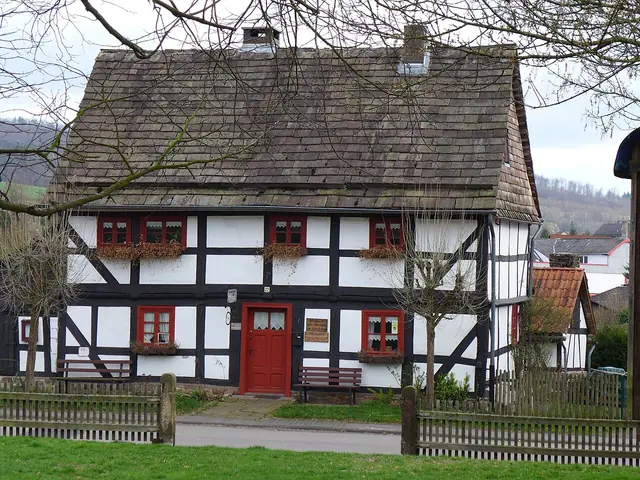
Privately run museum, operated by volunteers, in a half-timbered house more than 300 years old, with hand looms, spinning wheels and textiles from around the world.
Have only individual sections read aloud
About the museum
The museum traces back to the hand-loom equipment firm founded by Walter and Mia Kircher under the influence of the English Arts and Crafts movement and the German Lebensreform (life reform) movement. The company was originally based in Marburg an der Lahn and became a world-renowned maker of weaving frames and looms. In 1955, son Erwin Kircher took over the business; later it was run by Kersten Kircher in the third generation.
In 2007, Kersten Kircher decided to make the company archive, including the weaving collection, accessible to the public. This included the wall hangings and the large specialist library of tapestry weaver Ursula Kircher. His sister Nora Kircher and her husband Timur B. Kircher took over the holdings and planned a weaving museum with their own collection. In spring 2009, they acquired the listed half-timbered house "Kleiner Schneider" in Gieselwerder, more than 300 years old, and partially restored it; the façade was extensively renovated in 2017 and 2018.
Today the "living museum" shows weaving equipment, spinning wheels and textiles from various cultures across two floors. Everyone involved works as a volunteer, supported by the friends' association; the house is funded solely by donations. Once a year, on the Day of Open Monuments (Tag des offenen Denkmals), a crafts market also takes place.
Highlights
- Nearly all hand-loom models made by the firm Walter Kircher
- Loom more than 200 years old from northern Germany, and a Swedish loom
- Spinning wheels, reels, band-weaving equipment and miniatures
- Wall hangings by tapestry weaver Ursula Kircher in the museum hall
- Hands-on workshop for weaving on a small four-shaft loom
- Café in the weaving room with cake, in exchange for a donation
Permanent exhibitions
- Webgeräte und Spinnräder – Almost all models by the firm Walter Kircher, plus a Swedish loom and a loom more than 200 years old from northern Germany, as well as many spinning wheels, reels, band-weaving equipment and miniatures.
- Kunstvolle Textilien – Hand-woven textiles and rugs from different cultures and eras, across two floors.
- Wandbehänge von Ursula Kircher – Works by tapestry weaver Ursula Kircher (1932–2002) hang in the museum hall on the ground floor.
- Operated by
- Privat geführt, unterstützt vom Förderverein Weberei-Museum Kircher e. V.
Admission & discounts
The museum hasn’t published any information on this.
Accessibility
- Wheelchair accessible: no information
- Elevator: no information
- Accessible restroom: no information
- Accessible parking: no information
- Service dogs welcome: no information
- Tactile models & exhibits: no information
- Sign language tours: no information
- Easy-to-read materials: no information
- Audio description: no information
Each room is reached by one step.
Kids & families
Great for kids & families
- Hands-on stations
The museum describes itself as ideal for families; in the hands-on workshop, visitors may weave themselves.
Getting there & parking
Gieselwerder lies in northern Hesse directly on the Upper Weser, between the Reinhardswald and the Solling. The R1 cycle path runs past the house.
Get directionsAmenities & dining
- Café
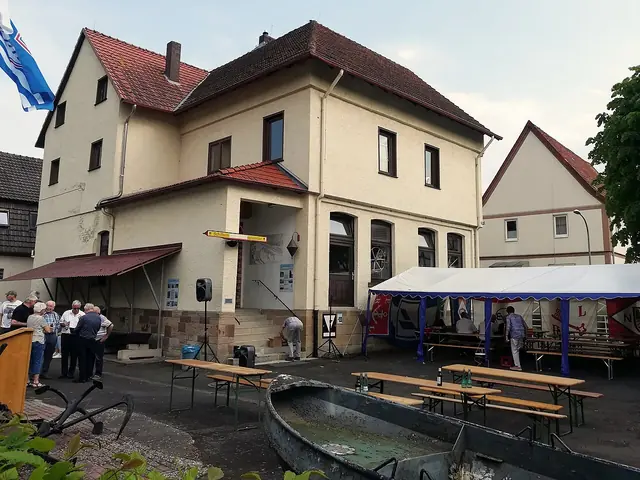
Café in the weaving room: coffee, tea and homemade cake in exchange for a donation, outdoors in front of the house in good weather.
Events & venue rental
- Weddings / ceremonies
The museum hall is the wedding room of the Wesertal civil registry office.
Plan your visit
| Guided tours | yes |
|---|---|
| Good to know | Guided tours for groups by appointment, by phone or email; coffee and cake are also available for registered groups. The museum can be reached by phone only outside opening hours. In the hands-on workshop, visitors can weave themselves on a small four-shaft loom. |