Westwallmuseum Bad Bergzabern
Museum in three preserved artillery bunkers of the Westwall in Bad Bergzabern on the construction, propaganda, and consequences of the fortifications for the people of the southern Palatinate.
About the museum
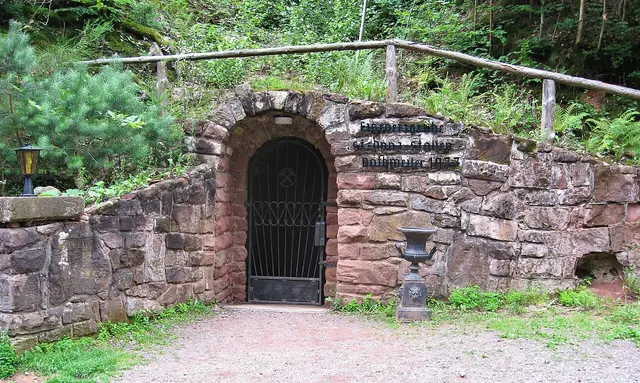
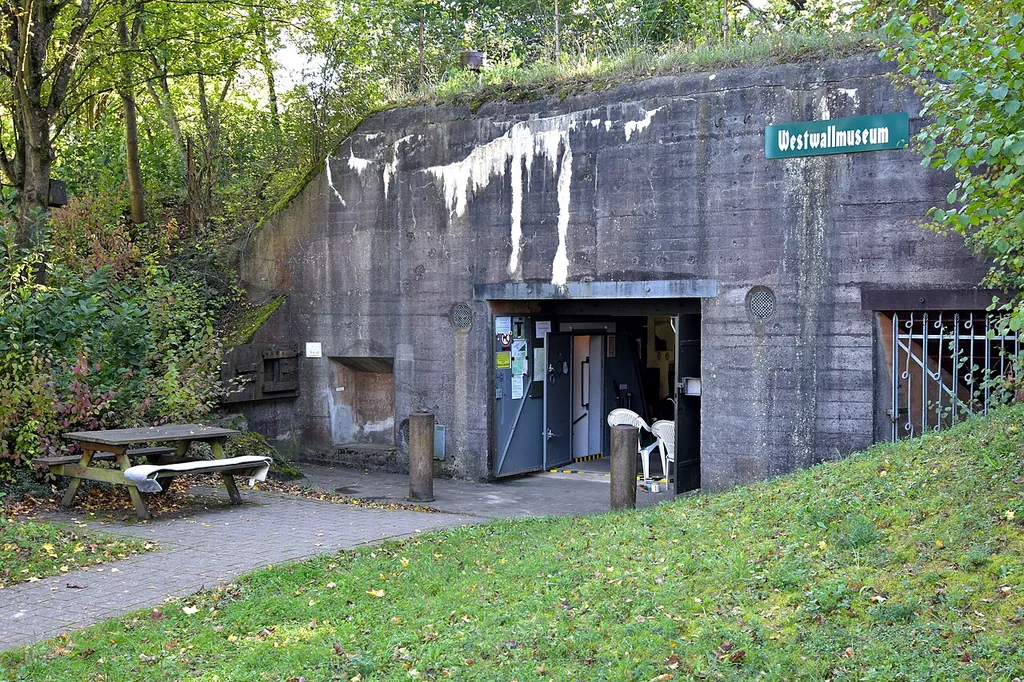
The Westwallmuseum opened on June 6, 1998, on the northeastern edge of Bad Bergzabern. It uses three of the last preserved bunkers of the Westwall in the southern Palatinate – reinforced concrete artillery bunkers with a gun position, ammunition room, and shell-casing pit, which are now protected as historic monuments. After the Second World War, French troops and, from 1959, the Bundeswehr had used the facilities.
The exhibition places the Westwall in the context of the Nazi regime's war aims: the fortification was meant to keep the Western states from intervening in the wars of aggression in the East. It shows how the construction and existence of the bunkers changed the lives of people in the border region – through expropriations, evacuations, and the militarization of everyday life; the Hinzert special camp for Westwall workers is also discussed. One bunker documents political, military, and propaganda backgrounds, while another is furnished with a gun and crew quarters.
The bunkers and grounds belong to the town of Bad Bergzabern; the museum is run by volunteers without an association of their own. Most of the collection consists of long-term loans from private collectors. The museum is open on selected Sundays and public holidays of the summer season; groups and school classes can also book tours outside these days.
Highlights
- Three original artillery bunkers of the Westwall
- Bunker with gun and reconstructed crew quarters
- Documentation on the expropriation and evacuation of the border population
- Tours for school classes as an extracurricular learning site
Permanent exhibitions
- Der Westwall in der Südpfalz – In three bunkers, the museum shows the construction and function of the Westwall, its propaganda role, and the consequences for the population in the border region; one bunker is furnished with a gun and quarters.
- Founded
- 1998
- Operated by
- Stadt Bad Bergzabern (ehrenamtlicher Betrieb)
Admission & discounts
| Adults | €4 |
|---|---|
| Reduced | €3Holders of the Rheinpfalz Card, Dahner Felsenland Card, or Kurkarte Bad Bergzabern (spa guest card), people with severe disabilities with ID, visitors with a stamped flyer of the Westwallmuseum Niedersimten |
| Children & teens | €3free up to age 7 · Children and young people aged 8 to 13; from age 14 the regular price |
| Visitors with disabilities | €3with severe disability ID (Schwerbehindertenausweis) |
| Groups | €6 per personTour outside opening days: €6 per person, minimum €90 (up to 15 people flat rate €90) |
| School classes outside opening days (from 15 students, companions free) | €3smaller groups flat rate €45 |
Free admission with the Pfalzcard, only on regular opening days.
Accessibility
- Partially wheelchair accessible
- Elevator: no information
- Accessible restroom: no information
- Accessible parking: no information
- Service dogs welcome: no information
- Tactile models & exhibits: no information
- Sign language tours: no information
- Easy-to-read materials: no information
- Audio description: no information
The museum is only partially accessible.
Kids & families
Only partly suitable for kids
| Kids’ admission | free up to age 7 |
|---|
Children under 8 have free admission. For school classes, the museum recommends visiting only once National Socialism has been covered in class.
Getting there & parking
The museum hasn’t published any information on this – please ask the museum directly.
Amenities & dining
No restroom is available from November until Good Friday. Backpacks and large bags are not permitted on the grounds.
Events & venue rental
The museum hasn’t published any information on this – please ask the museum directly.
Plan your visit
| Guided tours | yes · approx. 1.5 hrs |
|---|---|
| School programs | yes |
| Good to know | The temperature in the bunkers is around 10 °C – warm clothing recommended even in summer. Dogs are not allowed. After the guided tour, school classes should plan about 30 additional minutes for their own visit. |