Archaeological Museum of Amphipolis
The museum of Amphipolis presents the history of the ancient city on the Strymon from prehistoric to Byzantine times.
Have only individual sections read aloud
About the museum
Amphipolis was founded by the Athenians in 437 BC on the banks of the Strymon, to control the gold and silver of Mount Pangaion and the timber of the region’s forests. It later became a naval base of the Macedonian kingdom, and the Via Egnatia passed through the city, which favoured its development in the Roman and early Byzantine periods.
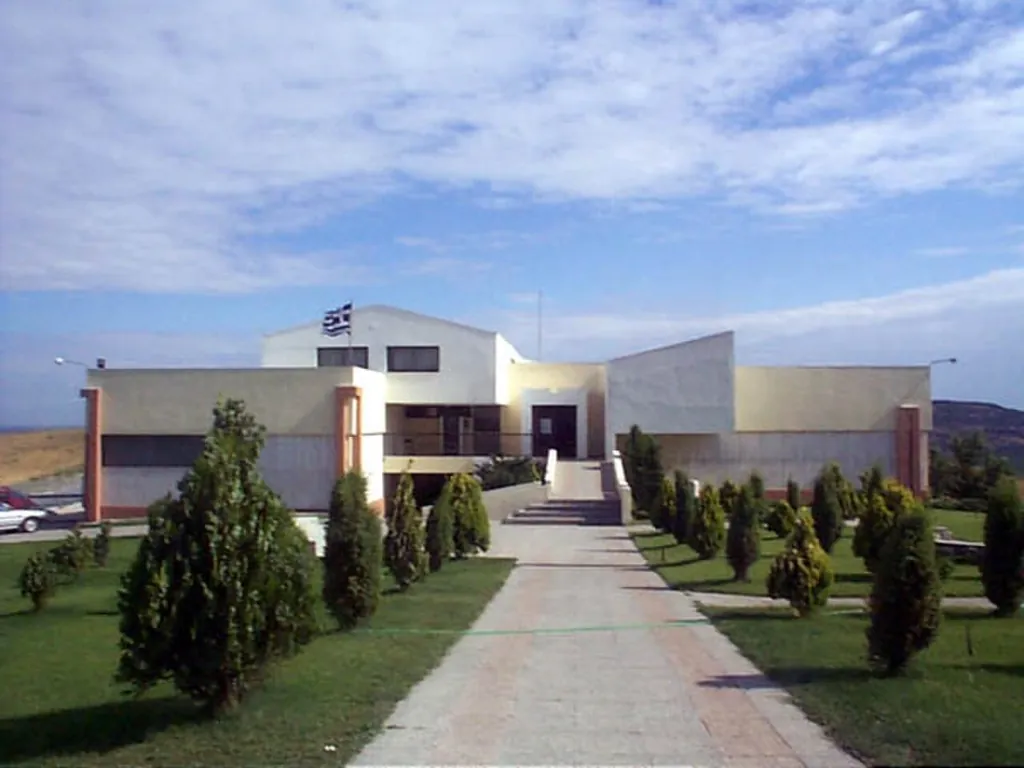
The Archaeological Museum of Amphipolis is an integral part of the archaeological site of the same name. It houses finds from excavations in the wider Strymon area, organised in thematic sections that cover the history of the city from prehistoric to Byzantine times.
Attic and Corinthian pottery show the penetration of the Greeks into Thrace, while coins and products of local workshops for pottery, terracotta figurines and sculpture shed light on public and private life. The stele of Amyntas and the gold stater of Alexander the Great are also on display, while material on the finding and re-erection of the Lion of Amphipolis presents the important sculpture of the 4th century BC.
Highlights
- Stele of Amyntas
- Gold stater of Alexander the Great
- Attic and Corinthian pottery
- Coins and products of local workshops for pottery, terracotta figurines and sculpture
- Photographic material on the re-erection of the Lion of Amphipolis
Permanent exhibition
- Μόνιμη έκθεση του Αρχαιολογικού Μουσείου Αμφίπολης – Finds from ancient Amphipolis and the Strymon area, from prehistoric to Byzantine times, with pottery, coins, sculptures and the story of the Lion of Amphipolis.
- Founded
- 1995
- Operated by
- Υπουργείο Πολιτισμού – Εφορεία Αρχαιοτήτων Σερρών
Admission & discounts
| Adults | €10 |
|---|---|
| Reduced | €5reduced ticket (50%): citizens over 65 from Greece and the EU (from 1 October to 31 May), parents accompanying primary school visits from the EU and the EEA, teachers accompanying visits from countries outside the EU |
| Children & teens | freefree up to age 18 · Free admission for children and young people up to 25 from the EU and for children up to 18 from non-EU countries, with ID card or passport. |
| Seniors | €5Reduced ticket for citizens over 65 from Greece and the EU, from 1 October to 31 May. |
| Visitors with disabilities | freecompanion free · Free admission for people with disabilities and one companion (for a disability of 67% or more). |
Free admission: 6 March, 18 April, 18 May, the last weekend of September, 28 October and the first and third Sunday of every month from 1 November to 31 March
Free admission is granted, upon presentation of the relevant documents, among others to young people up to 25 from the EU, children up to 18 from non-EU countries, people with disabilities and one companion (for a disability of 67% or more), unemployed people, large families, ICOM members and guides.
Accessibility
- Wheelchair accessible
- Elevator
- Accessible restroom
- Accessible parking: no information
- Service dogs welcome: no information
- Tactile models & exhibits: no information
- Sign language tours: no information
- Easy-to-read materials: no information
- Audio description: no information
The museum has a ramp, a lift and accessible toilets.
Kids & families
The museum hasn’t published any information on this.
Getting there & parking
By public transit
By KTEL bus from Serres or KTEL bus from Drama, getting off at the “Diastavrosi” stop.
By car
Parking available
The museum is 5 minutes on foot from the centre of the modern settlement of Amphipolis, 50 minutes by car from Serres and 1 hour and 10 minutes from Thessaloniki.
Get directionsAmenities & dining
- Museum shop
- Wi-Fi
Shop at the museum; WiFi is available for visitors.
Events & venue rental
The museum hasn’t published any information on this.
Plan your visit
| Good to know | The museum offers a printed guide. |
|---|