Magyar Zsidó Múzeum és Levéltár
The museum beside the Dohány Street Synagogue presents Jewish everyday life, festivals and ceremonial objects, together with the Temetőkert (Cemetery Garden) and the archive.
Have only individual sections read aloud
About the museum
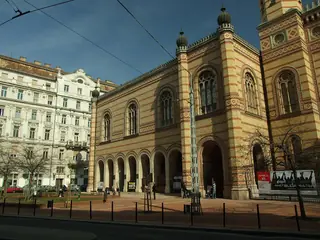
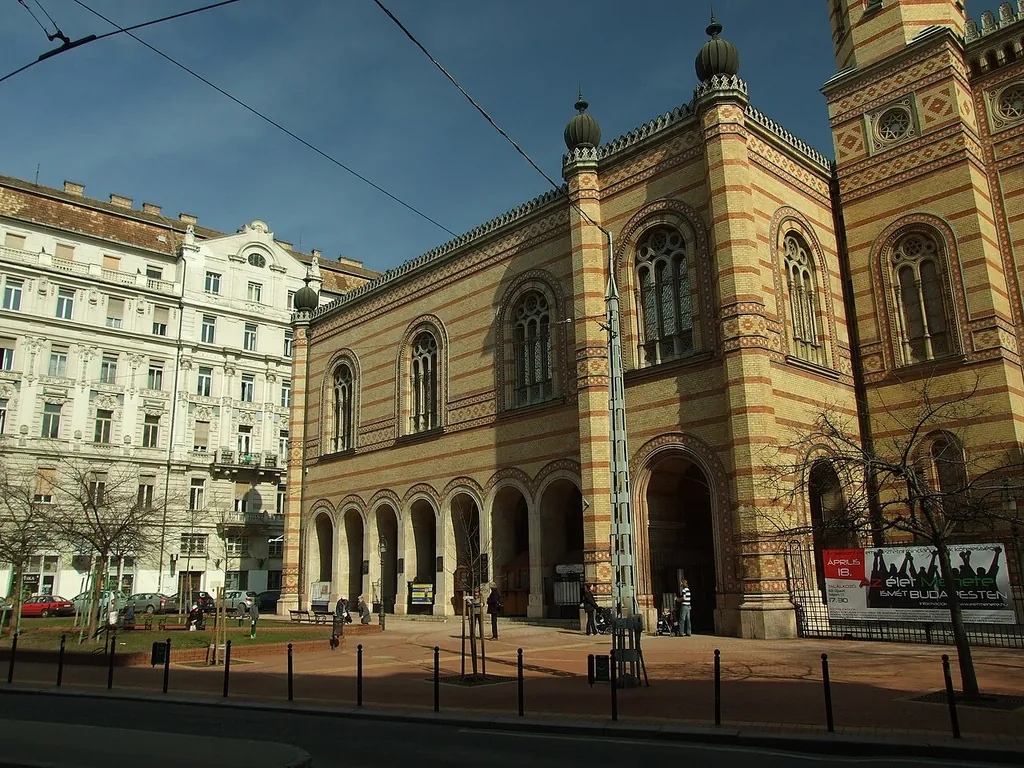
The Magyar Zsidó Múzeum (Hungarian Jewish Museum) was founded at the beginning of the twentieth century; its first exhibition was seen by the public in a rented flat on Hold utca. Its present independent building was completed in 1931 beside the Dohány Street Synagogue, through the conversion of one wing of the synagogue. The façade follows the style of the synagogue, while the interior reflects the most modern architectural solutions of its time. The museum became an integral part of the institutions of the Jewish community.
The permanent exhibition Tamid: Mindig (“Always”) presents the foundations of Judaism, Jewish everyday life, festivals and rites of passage through more than three hundred objects, including ceremonial objects, books and furniture. As visitors walk through the rooms, they learn about object histories linked to time and space, and the closing wall faces Jerusalem. The museum’s audioguide is provided by a free mobile app.
The arcaded Temetőkert (Cemetery Garden) beside the synagogue was part of the Budapest ghetto during the Holocaust, where 2280 people were buried. The institution also includes an archive and a research room (Wesselényi utca 7), which can be visited by prior arrangement.
Highlights
- Tamid: Mindig – permanent exhibition with more than three hundred objects
- Temetőkert (Cemetery Garden) beside the Dohány Street Synagogue
- Collection of ceremonial objects, books and furniture
- Free audioguide via a mobile app
- Joint visit with the Dohány Street Synagogue
Permanent exhibitions
- Tamid: Mindig – The permanent exhibition presents the foundations of Judaism, Jewish everyday life, festivals and rites of passage through more than three hundred objects.
- Temetőkert – The arcaded garden beside the Dohány Street Synagogue was part of the Budapest ghetto during the Holocaust; today it is a place of remembrance of the destruction.
- Founded
- 1909
- Operated by
- Magyarországi Zsidó Hitközségek Szövetsége (Mazsihisz)
Admission & discounts
The museum hasn’t published any information on this.
Accessibility
- Wheelchair accessible
- Elevator
- Accessible restroom
- Accessible parking: no information
- Service dogs welcome: no information
- Tactile models & exhibits: no information
- Sign language tours: no information
- Easy-to-read materials: no information
- Audio description: no information
A lift runs between the floors of the museum, and the exhibition spaces are accessible. The toilet for visitors with reduced mobility is on the first floor.
Kids & families
Only partly suitable for kids
- Family tours & workshops
- Stroller-friendly
Family tickets are available. Children under two may only be brought in in a pram or a front-mounted carrier; prams may only be pushed.
Getting there & parking
By public transit
The museum is located beside the Dohány Street Synagogue; entry is through the main entrance. Route planning: BKK Futár.
Address: 1074 Budapest, Dohány utca 2.
Get directionsAmenities & dining
- Café
- Coat check: not available
- Wi-Fi
Free Wi-Fi: the network is called Museum. There is no cloakroom in the museum; large packages and suitcases cannot be brought in. Food and drink may only be consumed in the café area.
Events & venue rental
The museum hasn’t published any information on this.
Plan your visit
| Guided tours | yes |
|---|---|
| Audio guide | yes |
| Photography | Photography and video recording are only permitted for personal use; flash, tripods and selfie sticks are not allowed. |
| Good to know | Dress code: skirts above the knee, sleeveless tops and shorts are not permitted in the synagogue. Children under 14 can visit the museum only with a parent or adult companion. Personal guided tours are available in English, German, French and Hebrew. The audioguide can be accessed via the Milev mobile app. |