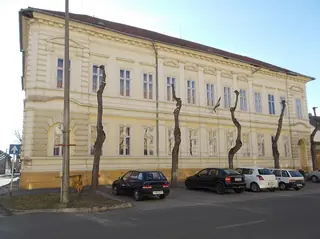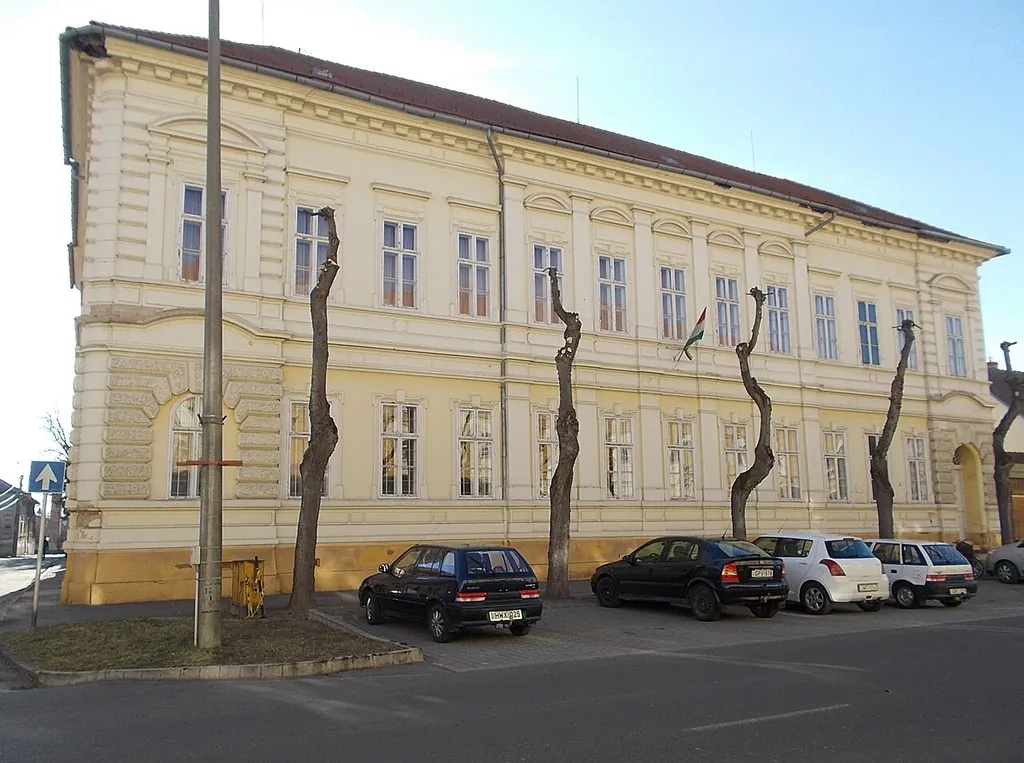
Viski Károly Múzeum
The Kalocsa regional museum presents the ethnography of the Kalocsai Sárköz, the famous mineral collection and the coin collection.
Have only individual sections read aloud
About the museum
The predecessor of the Kalocsa museum is the town collection set up in 1932 in the corridor of the town hall. Its founders were canon Kujáni Ferenc, mayor Antalffy Sándor and the painter Gábor Lajos. After the Second World War Laszczik Ernő reorganised the collection, which for a long time had no permanent home. From 1963 it was managed by the county council, and in 1970 it was decided to develop it into an independent regional museum.
Among the museum’s oldest collections is the mineral collection of the Jesuit upper grammar school, cared for by the mineralogist monk Tóth Mike. It formed the basis of the Kalocsai Ásványgyűjtemény (Kalocsa Mineral Collection), which opened to the public on 12 July 1981. The coin collection also comes from the grammar school.
The museum keeps ten kinds of collection: ethnographic, archaeological, historical, fine art, archive and photographic collections, and a library. Of its three permanent exhibitions, “Népek, életformák, hagyományok a Kalocsai Sárközben” (Peoples, Ways of Life and Traditions in the Kalocsai Sárköz) presents the 18th–20th-century life of the peoples of the region. Several Kalocsa venues belong to the museum, such as the Nicolas Schöffer Collection, the Népművészeti Ház (House of Folk Art) and the Kalocsai Képtár (Kalocsa Picture Gallery).
Highlights
- Peoples, Ways of Life and Traditions in the Kalocsai Sárköz – ethnographic exhibition
- Ásványok és az élet (Minerals and Life): mineral collection in the original furniture of the Jesuit grammar school
- Kalocsa Coin Collection with antique, Hungarian and foreign money
- Kalocsa textile and folk costume collection
- Finds from the Avar and Hungarian Conquest-period cemetery of Homokmégy-Halom
Permanent exhibitions
- Népek, életformák, hagyományok a Kalocsai Sárközben – Ethnographic exhibition presenting the life, culture and folk art of the peoples of the Kalocsai Sárköz in the 18th–20th centuries.
- Ásványok és az élet – The mineral collection kept in the original furniture and inscriptions of the Jesuit grammar school in Kalocsa.
- A Kalocsai Éremgyűjtemény – Antique, Hungarian, foreign and ecclesiastical coins in the collection taken over from the Jesuit grammar school.
- Founded
- 1932
Admission & discounts
| Adults | HUF 2,000 |
|---|---|
| Reduced | HUF 1,000students and pensioners |
| Seniors | HUF 1,000 |
| Students & apprentices | HUF 1,000 |
| Guided tour in Hungarian (by prior registration) | HUF 3,000Per group. |
| Guided tour by a specialist museologist (by prior registration) | HUF 10,000Per group. |
| Hire of a written guide text in German or English | HUF 500 |
| Photography ticket | HUF 1,000 |
| Video ticket | HUF 4,000 |
Self-guided audio tours in Hungarian, English and German are free of charge. Further discounts available to visitors entitled to museum concessions are described on the museum’s website.
Accessibility
The museum hasn’t published any information on this.
Kids & families
Great for kids & families
- Family tours & workshops
The museum offers museum education sessions for children’s groups.
Getting there & parking
The museum hasn’t published any information on this.
Amenities & dining
The museum hasn’t published any information on this.
Events & venue rental
The museum hasn’t published any information on this.
Plan your visit
| Guided tours | yes |
|---|---|
| Audio guide | yes (HU, EN, DE) |
| School programs | yes |
| Photography | Photography requires a photography ticket (HUF 1,000); filming requires a video ticket (HUF 4,000). |
| Good to know | Guided tours can be booked in advance. Museum education sessions are also available. |