Civico Museo Sartorio
House museum in a nineteenth-century villa with garden: furnishings of the Sartorio family, 254 drawings by Tiepolo and the Lokar porcelain collection.
Have only individual sections read aloud
About the museum
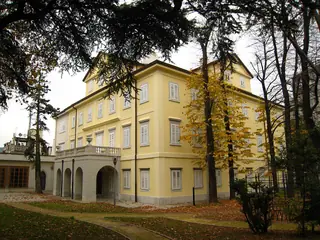
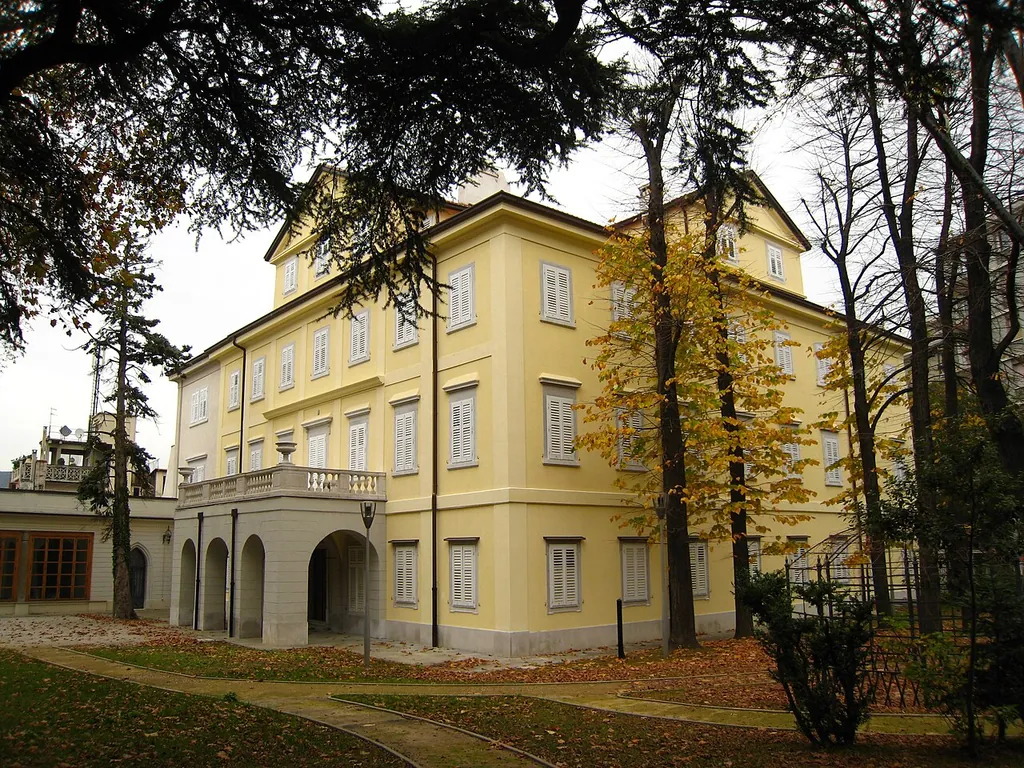
The museum occupies a patrician villa already documented at the end of the 18th century and enlarged in the 1830s. Its present form is the result of the work of the architect Nicolò Pertsch in 1838–1839, who gave the façades a Neoclassical character. The villa was home from 1838 to 1949 to the Sartorio family, wealthy merchants originally from Sanremo, present in Trieste since the late 18th century. On the death of the last direct descendant, Anna Segrè Sartorio, the house passed with its collections to the Comune di Trieste, as she had willed. The museum opened to the public in March 1954.
Over time the original collection was joined by other holdings of the Civici Musei di Storia ed Arte, including the Rusconi-Opuich, Costantinides, Piperata and Lokar collections, the Gipsoteca-Gliptoteca and masterpieces from Istria. After two years of closure for a complete restoration, financed by the Comune and by a contribution from the Costantinides family, the museum reopened in 2006.
The route extends over three floors, with communicating drawing rooms in which Empire and Biedermeier styles coexist, up to Neo-Gothic and Neo-Rococo revivals. Among the collections stands out the group of 254 drawings by Giambattista Tiepolo, purchased in Trieste in 1893 by the collector Giuseppe Sartorio and donated to the city by his heirs in 1910; the sheets are displayed on rotation in two rooms on the second floor. Around the villa extends an English garden with eighteenth-century statues.
Highlights
- Rooms with the original Sartorio furnishings, from the kitchen to the Sala Gotica
- Collection of 254 drawings by Giambattista Tiepolo, displayed on rotation
- Giovanni Lokar collection of European porcelain
- Works from Istria, including the Santa Chiara triptych
- English garden with early 18th-century statues
Permanent exhibitions
- La casa museo della famiglia Sartorio – Drawing rooms, dining room, library, kitchen and private chapel on three floors show the furnishings and tastes of a wealthy 19th-century upper-middle-class family.
- Disegni del Tiepolo – Two rooms on the second floor display in rotation the collection of 254 sheets by Giambattista Tiepolo, one of the most important of his graphic works.
- Porcellana europea. Collezione Giovanni Lokar – The porcelain rooms on the second floor present the donation of European porcelain by Giovanni Lokar.
- Founded
- 1954
- Operated by
- Comune di Trieste – Civici Musei di Storia ed Arte
- Visitors per year
- approx. 12,891
Admission & discounts
Admission is free.
| Children & teens | –Free admission for everyone. |
|---|---|
| Groups | –Guided tours and educational activities for schools are paid (€80–120 per class group), while admission remains free. |
Admission to the museum is free. Guided tours and educational activities are run by CoopCulture.
Accessibility
- Partially wheelchair accessible
- Elevator
- Accessible restroom
- Accessible parking
- Service dogs welcome: no information
- Tactile models & exhibits: no information
- Sign language tours: no information
- Easy-to-read materials: no information
- Audio description: no information
The museum spans several floors (basement, ground floor, first and second floors) and is equipped with a lift with automatic doors, a car of 120 × 100 cm, Braille buttons and audio announcements; the stairs have tactile indicators. Some internal changes of level without ramps remain: a 6 cm step on the ground floor and a 3 cm step on the first floor. The equipped toilet is in a separate building outside the museum. For people with motor disabilities the visit is only partially accessible. A parking bay is reserved in Largo Papa Giovanni XXIII, near the entrance.
Kids & families
- Family tours & workshops
For nursery and primary schools the museum offers play-visits with creative workshops, for example on the theme of the porcelain cups of the Lokar Donation.
Getting there & parking
By public transit
Largo Papa Giovanni XXIII (linea 30)
Bus line 30, stop Largo Papa Giovanni XXIII, close to the entrance.
By car
Parking available
Car park nearby, with a bay reserved for people with disabilities in Largo Papa Giovanni XXIII.
- Accessible parking
The museum is a short distance from the sea.
Get directionsAmenities & dining
- Museum shop
- Coat check
Bookshop with catalogues and gifts in front of the park entrance. Unattended cloakroom.
Events & venue rental
The museum hasn’t published any information on this.
Plan your visit
| Guided tours | yes |
|---|---|
| School programs | yes |
| Good to know | Guided tours and educational activities are run by CoopCulture (museicivici.trieste@coopculture.it, call centre +39 040 9892032). The museum's website is also available in English, German, Slovene and Croatian. |
Museums nearby
Museo Revoltella
Museo ferroviario di Trieste Campo Marzio
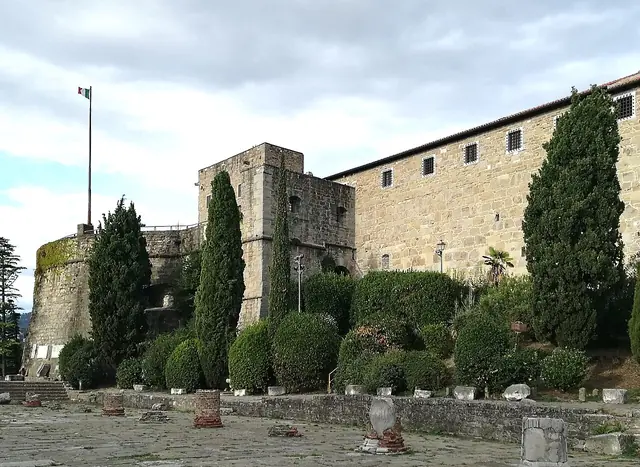
Castello di San Giusto
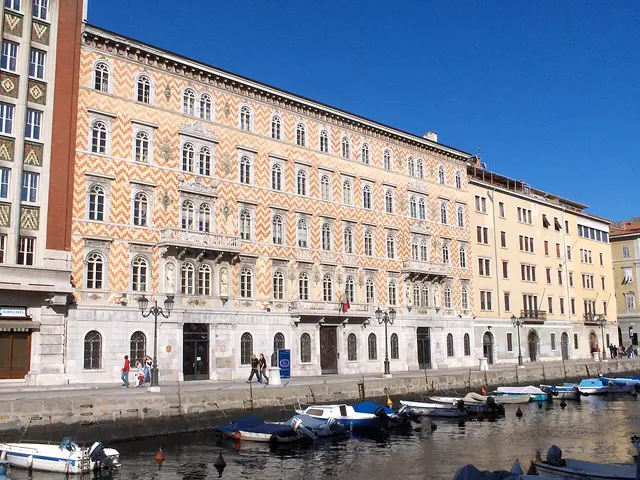
Museo teatrale Carlo Schmidl
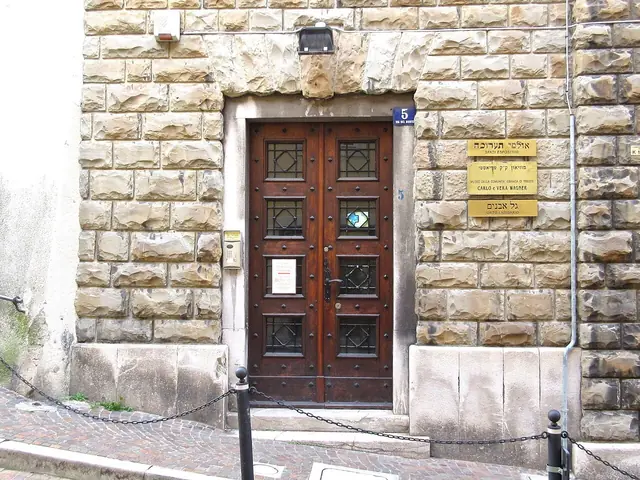
Museo ebraico Carlo e Vera Wagner
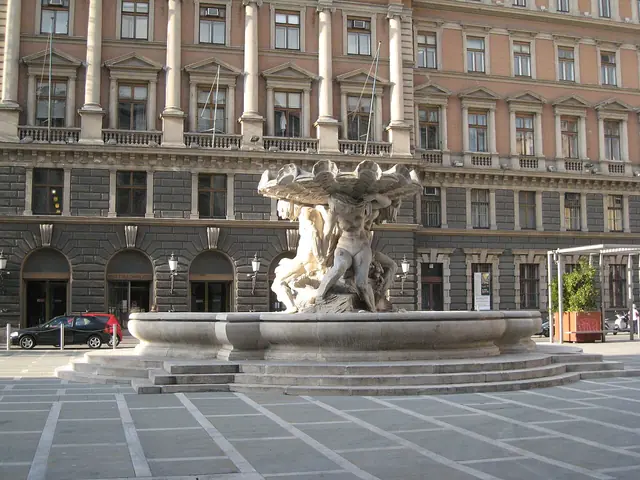
Museo postale e telegrafico della Mitteleuropa
All 12 museums in Trieste All museums in Friuli-Venezia Giulia