Convento di San Francesco a Folloni
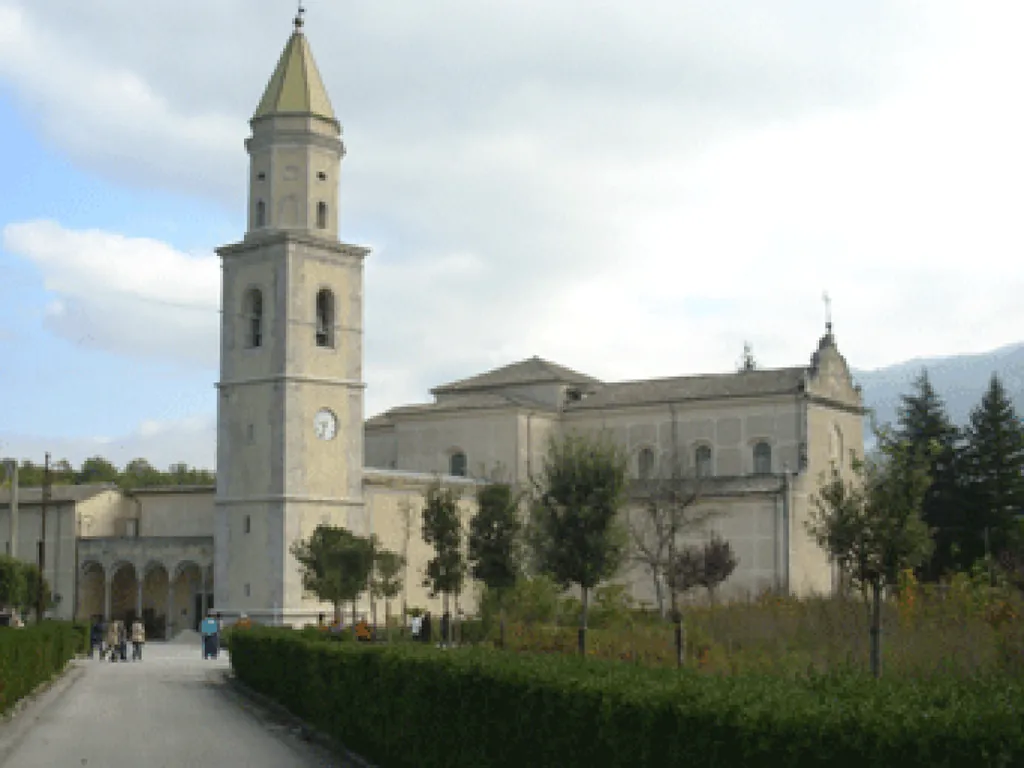
Franciscan convent in Montella, a national monument, with a baroque church, cloister, Museo dell’Opera, library and the room of Umberto II.
Have only individual sections read aloud
About the museum
According to tradition, in 1222 Saint Francis of Assisi founded the first small chapel in the woods of Folloni, while travelling towards Monte Sant’Angelo. The first written evidence of the convent's existence dates from 5 January 1322, when the privileges granted by Philip I of Taranto and Catherine of Valois were confirmed; in 1374 Queen Joanna I confirmed and extended them. In the 16th century the complex expanded considerably, with the contribution of the Cavaniglia family.
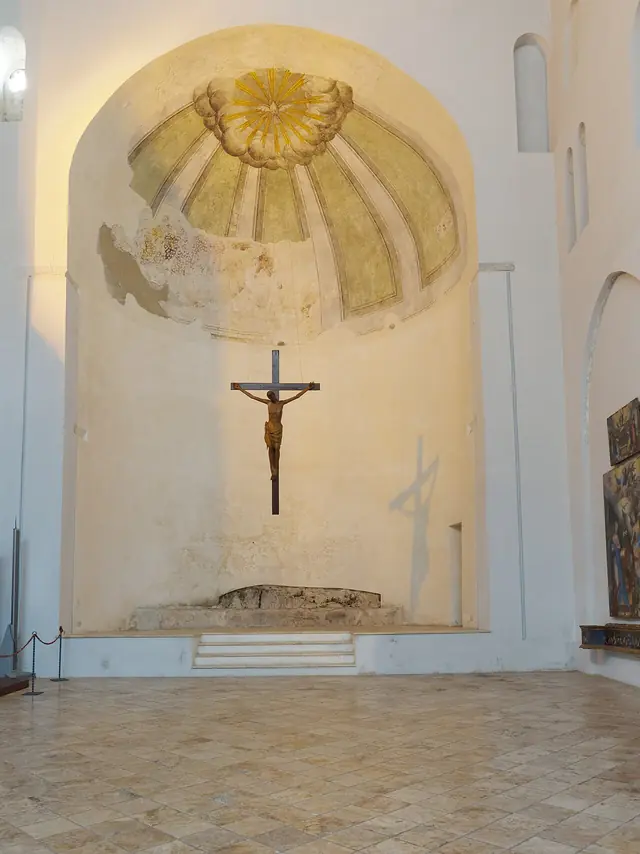
The earthquake of 1732 led to the reconstruction in the mid-18th century: the new baroque-rococo church was rotated by about 90 degrees with respect to the old one. Inside are the stuccoes by Francesco Conforto (1747) and a majolica floor of 1750; the portico, the apse (today the Chapel of the Crucifix) and a late 15th-century bell tower also remain. In the sacristy stands the sarcophagus of Diego I Cavaniglia, the work of Jacopo della Pila. The convent was suppressed during the French decade (1806–1815), with the loss of many books.
Excavations following the Irpinia earthquake of 1980 brought to light the older church, and those of 2005–2010 a medieval Franciscan necropolis dating between 1190 and 1550. The complex includes the cloister, the Museo dell’Opera with liturgical vestments, furnishings, ceramics, silverware and reliquaries (including the robe of Diego Cavaniglia), the library of around 20,000 volumes in the former refectory, and the room of Umberto II with its original furnishings. Since 2014 the heritage has been managed by the Ministero della Cultura (Italian Ministry of Culture), while the convent spaces are administered by the Conventual Franciscan friars.
Highlights
- Baroque-rococo church with stuccoes by Francesco Conforto and majolica floor of 1750
- Sarcophagus of Diego I Cavaniglia, the work of Jacopo della Pila
- Museo dell’Opera with vestments, silverware, ceramics and reliquaries
- Cloister and library of around 20,000 volumes in the former refectory
- Room of King Umberto II with its original furnishings
- Medieval Franciscan necropolis uncovered by excavations of 2005–2010
- Founded
- 1222
- Operated by
- Frati minori conventuali (spazi conventuali); Ministero della Cultura (patrimonio)
Admission & discounts
The museum hasn’t published any information on this.
Accessibility
The museum hasn’t published any information on this.
Kids & families
The museum hasn’t published any information on this.
Getting there & parking
The museum hasn’t published any information on this.
Amenities & dining
The museum hasn’t published any information on this.
Events & venue rental
The museum hasn’t published any information on this.
Plan your visit
| Good to know | The complex includes the church and chapels, the cloister, the Museo dell’Opera, the library and the room of Umberto II. The friars administer the convent spaces, so access may be subject to religious activities. |
|---|