Area archeologica Helvia Ricina
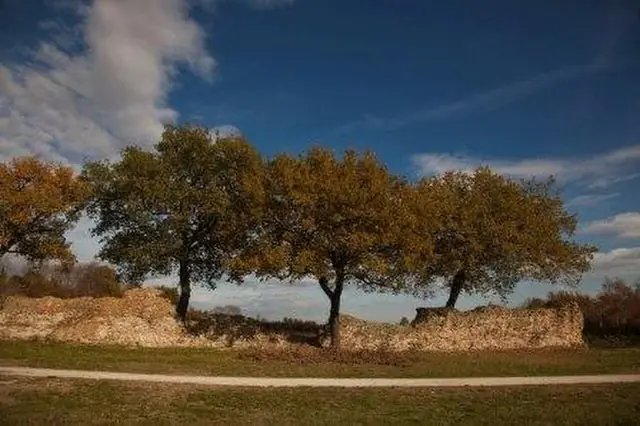
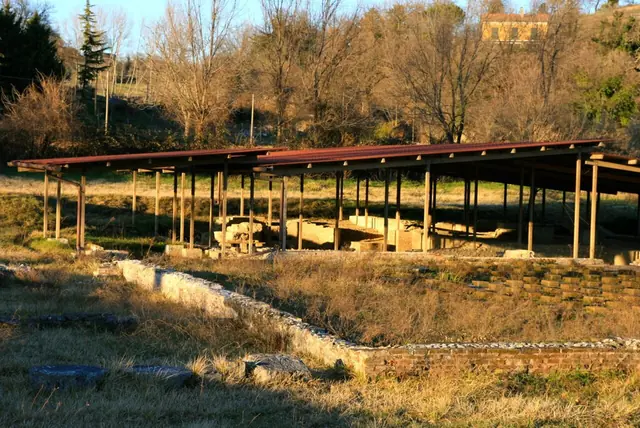
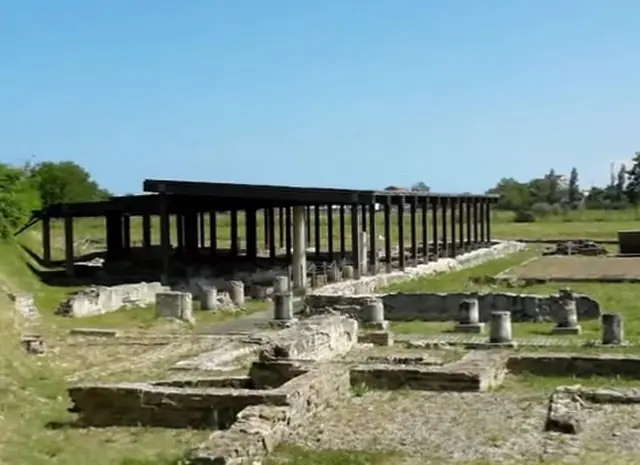
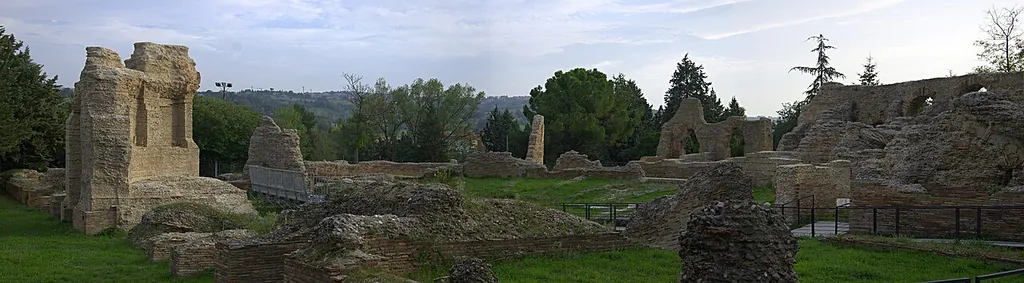
Roman archaeological site at Villa Potenza (Macerata), with the 1st-century theatre and reconstructed funerary monuments. Free admission by reservation.
Have only individual sections read aloud
About the museum
The Helvia Ricina archaeological area lies in the hamlet of Villa Potenza, about 7 kilometres from the centre of Macerata, and is an important testimony to the Roman presence in the Marche. The town, probably founded in the 3rd century BC as a small settlement of colonists, developed in the 1st century BC as a municipium thanks to its strategic position along the main land and river routes, in particular the via Flaminia Prolaquense and the via Salaria Gallica. In AD 205 the emperor Septimius Severus raised it to the rank of colony, under the name Helvia Ricina Pertinax.
The town covered about 22 hectares, enclosed by walls, and included a large theatre, a forum, a thermal complex and an extensive sanctuary. Aerial photography also revealed an amphitheatre north-east of the theatre. With the crisis of the empire and the barbarian invasions it went into slow decline until it was abandoned, and in the Middle Ages the ruins were used as a quarry for building materials.
Today the main point of interest is the Roman theatre, built in brick in the first decades of the 1st century AD, with a diameter of about 72 metres and a two-tier cavea that could hold about 2,000 spectators. In 1967, after a report by the sculptor Valeriano Trubbiani, 150 decorated and inscribed stone blocks were recovered from the bed of the Potenza river. They made it possible to reconstruct at least six funerary monuments, which are now visible on the site. The site is part of the Rete Macerata Musei.
Highlights
- Roman brick theatre of the 1st century AD (diameter of about 72 metres)
- Six reconstructed funerary monuments built from blocks recovered from the Potenza river
- 3D prints of the theatre and the funerary monuments
- Visit notes in Braille
- Official Archaeodigit app with visit routes
Permanent exhibition
- Sito archeologico Helvia Ricina – Visit to the Roman theatre and the reconstructed funerary monuments, with 3D prints and Braille notes for accessibility.
- Operated by
- Comune di Macerata – Macerata Musei
- Visitors per year
- approx. 895
Admission & discounts
Admission is free.
The archaeological area is one of the free-admission venues of the Rete Macerata Musei.
Accessibility
- Partially wheelchair accessible
- Elevator: no information
- Accessible restroom: no information
- Accessible parking: no information
- Service dogs welcome: no information
- Tactile models & exhibits
- Sign language tours: no information
- Easy-to-read materials: no information
- Audio description: no information
The Rete Macerata Musei lists minimal accessibility for people with mobility impairments at the site. 3D prints of the theatre and the funerary monuments in PVA and Braille visit notes are available.
Kids & families
The museum hasn’t published any information on this.
Getting there & parking
The site is on Via Teatro Romano, in the hamlet of Villa Potenza, about 7 km from the centre of Macerata.
Get directionsAmenities & dining
The museum hasn’t published any information on this.
Events & venue rental
The museum hasn’t published any information on this.
Plan your visit
| Good to know | The museum provides the official Archaeodigit app (Android and iOS), with visit routes and multimedia content. |
|---|