Museo Diocesano di Tropea
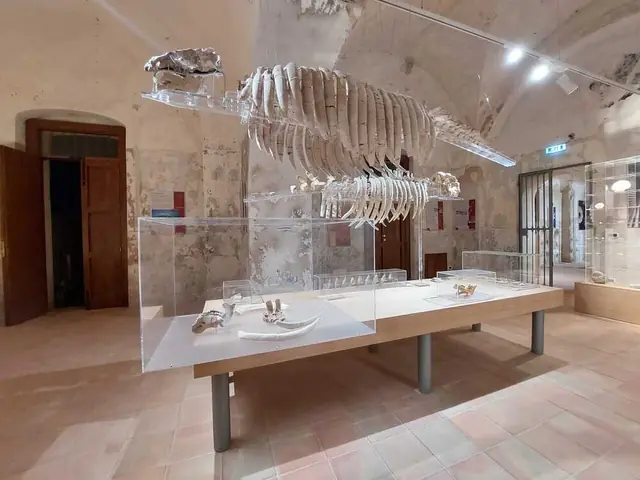
Diocesan museum of Tropea, next to the Cathedral, with paintings and wooden sculptures from the old cathedral and from city churches.
Have only individual sections read aloud
About the museum
The Diocesan Museum of Tropea is housed in the Palazzo Vescovile (Bishop’s Palace), in Largo Duomo, next to the Cathedral. It preserves works from the old Baroque cathedral and from other churches in the city that are now closed to worship.
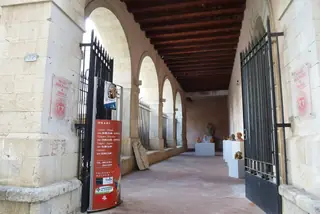
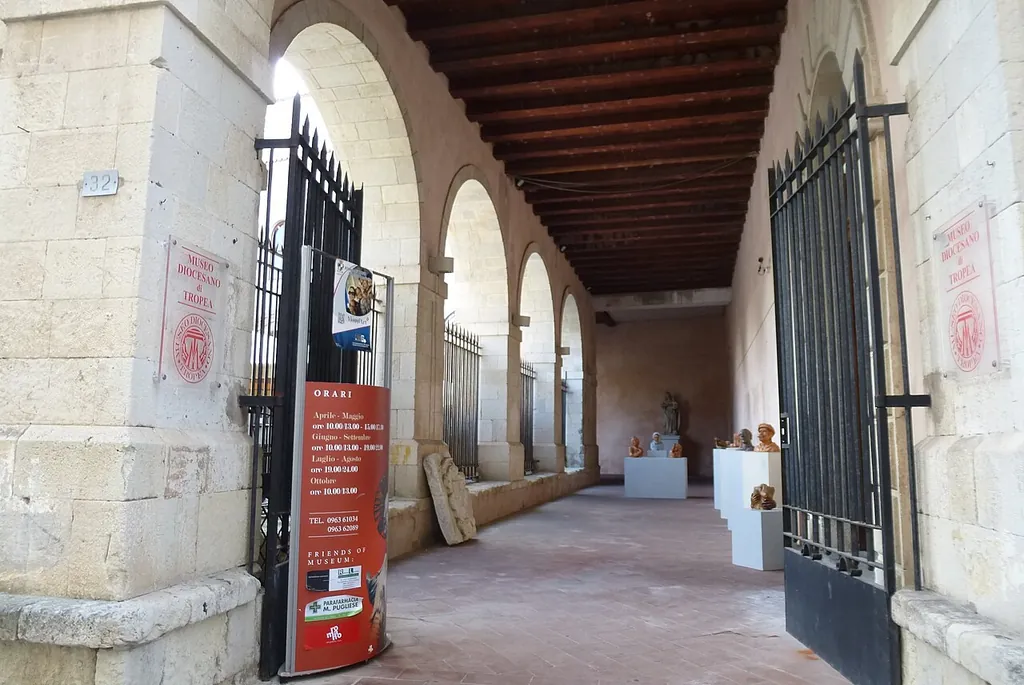
The route begins on the ground floor, in the portico in Swabian style, where five marble statues are placed, including the saints Peter and Paul, copies of the statues by Montorsoli for the Cathedral of Messina. On the upper floor are medieval fragments, including part of the tomb of Andrea de Rogerio, and some rooms devoted to the Virgin Mary.
The collection includes paintings and sculptures, with a considerable presence of wooden statues. Among the best-known pieces are a Sicilian Coronation of the Virgin from the 17th century, canvases by the painter Giuseppe Grimaldi from Tropea (18th century) and a display case with jewels and crowns of the Madonna, some of local production. Some sources describe the display as provisional.
Highlights
- Portico in Swabian style with marble statues of Saints Peter and Paul
- Wooden sculptures from the old cathedral and city churches
- 17th-century Sicilian Coronation of the Virgin
- Paintings by Giuseppe Grimaldi
- Display case with jewels and crowns of the Madonna
- Visitors per year
- approx. 5,000
Admission & discounts
| Adults | €2 |
|---|
The standard ticket of €2 is given in unofficial listings; the museum’s website does not publish prices.
Accessibility
The museum hasn’t published any information on this.
Kids & families
The museum hasn’t published any information on this.
Getting there & parking
The museum is in Largo Duomo, in the Palazzo Vescovile next to the Cathedral, in the historic centre of Tropea.
Get directionsAmenities & dining
The museum hasn’t published any information on this.
Events & venue rental
The museum hasn’t published any information on this.