Bäuerliches WohnMuseum
The Bäuerliches WohnMuseum in the Biedermann-Haus, built in 1518 in Schellenberg, shows rural living around 1900.
Have only individual sections read aloud
About the museum
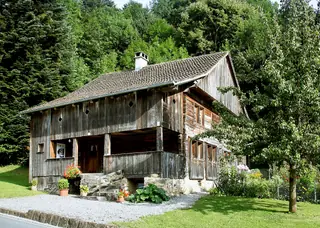
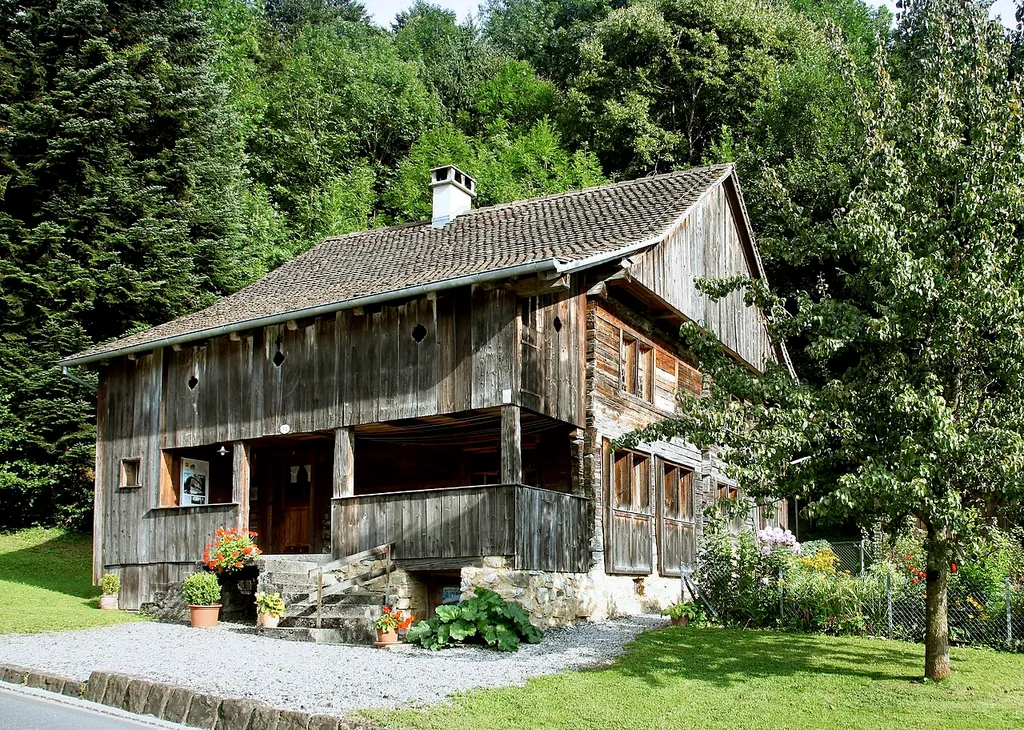
The Biedermann-Haus is a log building from 1518 and one of Liechtenstein’s oldest houses. Under the law of the time, such a house counted as the farmer’s movable property, since he only leased the land; if he changed his lease, the building could be taken apart and rebuilt elsewhere. It was moved in this way in 1687 and in 1793/94. Because of this demountable construction, this type of house has nearly disappeared from the Alpine region.
The house takes its name from the Biedermann family, who were its last private owners and lived in it for over 150 years. In 1992/93 it was dismantled beam by beam and rebuilt in Schellenberg on a masonry basement; in 1993 it was placed under monument protection. The living section consisted of the kitchen, which originally was open up to the roof ridge, the Stube (parlor) and a side room, and two chambers on the upper floor.
In 1994 the Bäuerliches WohnMuseum opened and was integrated into the Stiftung Liechtensteinisches LandesMuseum. The furnishings show how many people in Liechtenstein lived before the economic boom of the 20th century, in a country that for a long time was shaped by agriculture and modest living standards. The great change only began after 1945; the first signs appeared already in the late 19th century with the Rhine regulation and the first industrial plants from 1860.
Highlights
- Log building from 1518, one of the oldest surviving buildings in the country
- Demountable construction: the house was moved several times, most recently in 1993
- Furnishings show rural living around 1900
- Free admission
Permanent exhibition
- Dauerausstellung – Bäuerliches Wohnen – The furnishings in the 1518 log building show how families in Liechtenstein lived and worked around 1900.
- Founded
- 1994
- Operated by
- Stiftung Liechtensteinisches LandesMuseum
Admission & discounts
Admission is free.
| Opening the house outside opening hours | CHF 100for groups; guided tour CHF 170 (60 minutes, up to 25 people) additionally |
|---|
Admission is free.
Accessibility
- Wheelchair accessible: not available
- Elevator: no information
- Accessible restroom: no information
- Accessible parking: no information
- Service dogs welcome: no information
- Tactile models & exhibits: no information
- Sign language tours: no information
- Easy-to-read materials: no information
- Audio description: no information
For reasons of monument protection, the interior is not wheelchair-accessible.
Kids & families
The museum hasn’t published any information on this.
Getting there & parking
By public transit
Schellenberg Post
By train to Sargans, then LIEmobil bus 11 to “Mauren Post” and on with line 33 to “Schellenberg Post”; via Buchs SG, bus 12 to Schaan Bahnhof, bus 11 to “Mauren Post” and line 33; from Austria and Germany by train to Feldkirch, bus 11 to “Mauren Post” and line 33 to “Schellenberg Post”.
By car
Parking available
Parking spaces by the church.
By car from Switzerland, take the A13 motorway to exit 6 Sennwald/Ruggell and then follow the signs to Schellenberg; from Austria, take the A14 to exit 41 Feldkirch-Frastanz, then via Nofels to Ruggell and on to Schellenberg.
Get directionsAmenities & dining
The museum hasn’t published any information on this.
Events & venue rental
The museum hasn’t published any information on this.
Plan your visit
| Guided tours | yes · approx. 60 min |
|---|---|
| Good to know | Private guided tours are available by registration (60 minutes, up to 25 people, CHF 170; in German and English, other languages on request). |