A. Baranausko ir A. Žukausko-Vienuolio memorialinis muziejus
The Anykščiai museum combines the little granary (klėtelė) of the poet Antanas Baranauskas, the house-museum of the writer Antanas Vienuolis and an exhibition hall for Stanislovas Petraška's stone paintings.
Have only individual sections read aloud
About the museum
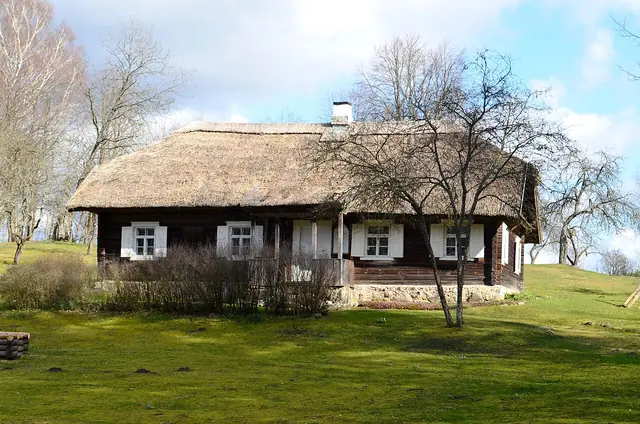
The museum's founding date is 1 May 1927, when the writer Antanas Žukauskas-Vienuolis made the first entry in the visitors' book of the Antano Baranausko klėtelė. The klėtelė was built in 1826 by the poet's father, and in 1839 it was moved to its present site. Here, during the summers of 1858–1859, Antanas Baranauskas wrote the poem “Anykščių šilelis” (The Anykščiai Grove). Vienuolis gathered the poet's furniture, violin and other objects in the klėtelė – it was the first memorial museum in Lithuania.
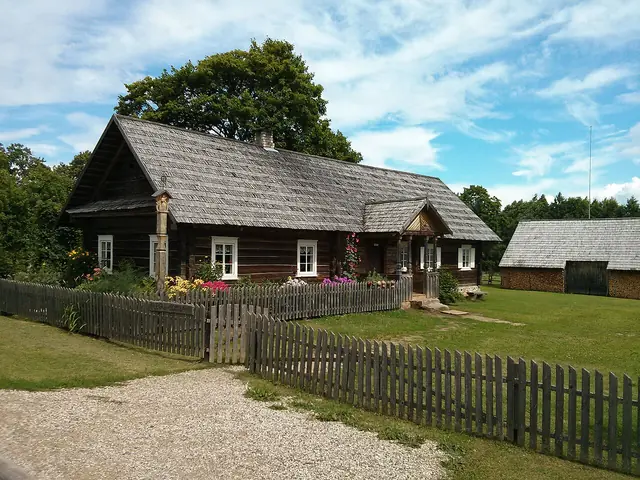
Antanas Žukauskas-Vienuolis, the grandson of Baranauskas's brother, built his own house next to the klėtelė in 1925 and lived in it until his death in 1957. After his death a memorial museum of the writer was set up in this house, which actually began operating in January 1958. The first floor holds an exhibition on the writer's life and work; the second floor has memorial rooms – the study has been left as it was on the day of the writer's death.
Today the joint ticket covers the klėtelė, the Vienuolis house-museum and the exhibition hall on Muziejaus gatvė, where Stanislovas Petraška's stone painting exhibition is shown. This original technique uses pictures made from crushed and glued grains of stone, without paint.
The museum is also the centre of a wider network of branches: it includes the Arklio muziejus (Horse Museum), the Jono Biliūno sodyba-muziejus (Jonas Biliūnas Homestead Museum) in Niūronys, the Siauruko muziejus (Narrow-Gauge Railway Museum), the Bronės Buivydaitės namas-muziejus (Bronė Buivydaitė House Museum), the Didžiulių sodyba-muziejus (Didžiuliai Homestead Museum) and the Šeimyniškėlių piliakalnio kompleksas (Šeimyniškėliai Hillfort Complex).
Highlights
- Antano Baranausko klėtelė, where “Anykščių šilelis” was written
- The first memorial museum in Lithuania (1927)
- Antanas Vienuolis house-museum with the study left as it was
- Stanislovas Petraška's stone painting exhibition
- Educational programmes at the klėtelė and in the Vienuolis house
Permanent exhibitions
- Antano Baranausko klėtelė – The klėtelė, built in 1826, with the poet's furniture, violin, family bed, dowry chest and manuscript shelf; “Anykščių šilelis” was written here in 1858–1859.
- Antano Vienuolio namas-muziejus – The first floor holds an exhibition on the writer's life and work; the second floor has memorial rooms with the surviving study and a cabinet.
- Stanislovo Petraškos akmens tapybos ekspozicija – Paintings by the Anykščiai native Stanislovas Petraška, created from crushed and glued grains of stone, without paint.
- Founded
- 1927
Admission & discounts
| Adults | €4 |
|---|---|
| Reduced | €3pupils, students, pensioners and holders of the “Anykštėnas” card |
| Families | €11Family ticket for a group of 4–7 people: 1–2 adults and 2–6 people aged 7 to 18. |
| Only the A. Baranausko klėtelė or only the A. Vienuolio namas-muziejus | €2With concession: €1.50 |
| Only the exhibition hall (S. Petraškos stone painting) | €2With concession: €1.50 |
| Educational programme at the A. Baranausko klėtelė or in the A. Vienuolio house | €3For pupils, students and pensioners: €2 (up to 60 min.) or €3 (up to 90 min.) |
The joint ticket covers the A. Baranausko klėtelė, the A. Vienuolio namas-muziejus and the exhibition hall.
Accessibility
The museum hasn’t published any information on this.
Kids & families
The museum hasn’t published any information on this.
Getting there & parking
The museum hasn’t published any information on this.
Amenities & dining
The museum hasn’t published any information on this.
Events & venue rental
The museum hasn’t published any information on this.
Plan your visit
| Guided tours | yes |
|---|---|
| School programs | yes |
| Good to know | Visits take the form of guided tours; educational programmes are offered at the klėtelė, in the Vienuolis house and in the exhibition of S. Petraška's stone paintings. |