Mauzoleum Martyrologii Wsi Polskich w Michniowie
Memorial site and museum in Michniów devoted to the inhabitants of Polish villages repressed in 1939–1945, with a modern exhibition and free admission.
Have only individual sections read aloud
About the museum
On 12 and 13 July 1943, German police units pacified the village of Michniów and murdered 204 of its inhabitants, including women and children. The village was burned down, and rebuilding it and cultivating the fields were forbidden; the remains of the victims lie in a mass grave. These events became a symbol of the martyrdom of the Polish village under German occupation.
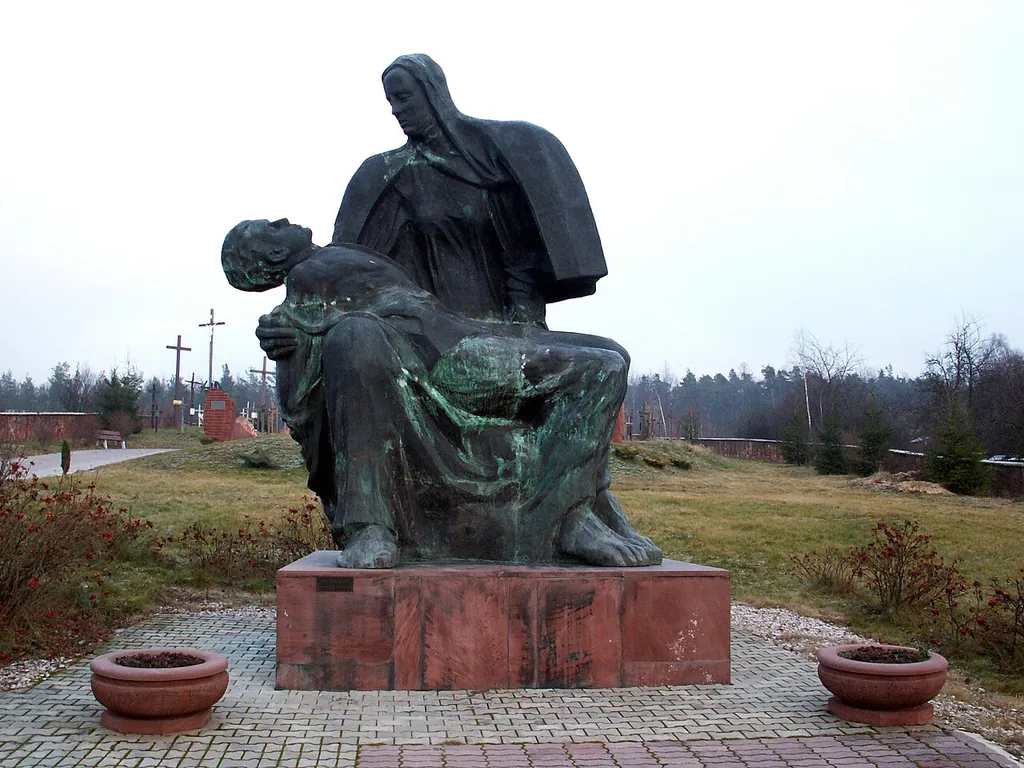
In autumn 1979, during a meeting of the Main Commission for the Investigation of Hitlerite Crimes, the idea of a nationwide Mausoleum of the Struggle and Martyrdom of the Polish Village was born. In 1983 the Social Committee for the Construction of the Mausoleum was set up, and in 1990 the Foundation – Monument of the Mausoleum of the Martyrdom of the Polish Village. In 1993, on the 50th anniversary of the pacification, the monument “Pieta Michniowska” (The Michniów Pietà) was consecrated, and in 1997, on the site of a modest memorial room, the House of National Memory with a research centre was built. Since 1999 Michniów has been a branch of the Museum of the Kielce Village (Muzeum Wsi Kieleckiej), and in 2010 the modernisation of the mausoleum began.
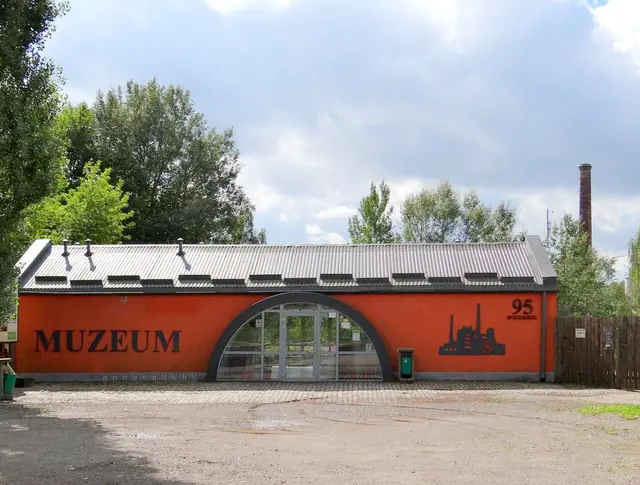
The contemporary complex, with a modern exhibition building opened in 2021, combines the functions of a place of remembrance, a museum and a centre of historical education. The mausoleum is also a symbolic cemetery, where every martyred Polish village sets up its cross. The exhibition “Losy polskich wsi 1939–1945” (“The Fates of Polish Villages 1939–1945”) shows the various forms of repression against village inhabitants during the German occupation, as well as Soviet and Ukrainian nationalist repression, and its central thread is the pacification of Michniów.
Key themes
- Exhibition “Losy polskich wsi 1939–1945” (“The Fates of Polish Villages 1939–1945”) in a modern building
- “Pieta Michniowska” monument and the grave of the victims of the pacification
- Symbolic cemetery with crosses of martyred villages
- House of National Memory with a library and a history workshop
- Free audio guide and free admission
Permanent exhibition
- Losy polskich wsi 1939–1945 – Exhibition on the fate of Polish villagers under German occupation: on repression, forced resettlement, pacifications, aid to persecuted Jews, and the pacification of Michniów on 12–13 July 1943.
- Founded
- 1999
- Operated by
- Muzeum Wsi Kieleckiej
Admission & discounts
Admission is free.
| Children & teens | –Children under 13 may stay on the mausoleum grounds only in the care of an adult. |
|---|---|
| Groups | –Fees apply only to additional services: a guided tour costs PLN 100 (group of up to 10 people) or PLN 150 (group of up to 30 people). |
| Guided tour – group of up to 10 people | 100 zł |
| Guided tour – group of up to 30 people | 150 zł |
| Workshop – group of up to 20 people | 20 złPrice per person. |
| Museum lesson – group of up to 30 people | 150 złPrice for 45 minutes. |
Admission to the mausoleum is free of charge. Audio guides are provided free of charge, subject to availability.
Accessibility
- Partially wheelchair accessible
- Elevator
- Accessible restroom
- Accessible parking
- Service dogs welcome
- Tactile models & exhibits: no information
- Sign language tours: no information
- Easy-to-read materials: no information
- Audio description: no information
The main entrance from the voivodeship road no. 751 has a car park and a passenger lift for people with disabilities; inside the building there are ramps and a passenger lift to all levels, and toilets adapted to the needs of people with disabilities are on levels I and II. In parts of the exhibition the spaces between the cubes are narrow, and the paths to the crosses and the memorial wall, as well as the ground around the building, are uneven stone and grass, which makes moving about by wheelchair difficult. Visually impaired visitors may encounter obstacles (edges, low arms of the crosses). Admission with an assistance dog is provided; multimedia texts are in Polish and English, and transcripts are available in different font sizes.
Kids & families
Only partly suitable for kids
| Time needed | approx. 1.5 hrs |
|---|
- Family tours & workshops
The exhibition deals with crimes against the civilian population, including children. Children under 13 may stay on the mausoleum grounds only in the care of an adult. The museum runs museum lessons and workshops for schools.
Getting there & parking
By public transit
The nearest railway station is in Suchedniów (about 12 km); from the station you can continue by car, taxi or local transport.
By car
Free parking
Free car park for cars and coaches at the entrance from the voivodeship road no. 751; there are spaces for people with disabilities.
- Accessible parking
The mausoleum lies by the voivodeship road no. 751, about 30 km from Kielce, 18 km from Skarżysko-Kamienna and 25 km from Starachowice. In navigation enter: Michniów 38, 26-130 Suchedniów.
Get directionsAmenities & dining
The museum hasn’t published any information on this.
Events & venue rental
The museum hasn’t published any information on this.
Plan your visit
| Guided tours | yes |
|---|---|
| Audio guide | yes |
| School programs | yes |
| Photography | Photography for private use is permitted without flash; tripods, additional lighting and commercial photography require the consent of the museum director, and drones are prohibited without a permit. |
| Good to know | Individual visitors go round at their own pace (60–90 minutes, about 1 km of route; part of the exhibition is outdoors). Organised groups and classes require prior booking: tel. +48 41 254 51 62 ext. 14 or +48 664 517 718, with a written order form submitted at least a week in advance. Animals (except assistance dogs) may not be taken onto the mausoleum grounds, and meals may not be eaten in the exhibition. |
Museums nearby
Muzeum Siekier w Orzechówce
Muzeum im. Orła Białego
Centrum Edukacji i Kultury „Szklany Dom” w Ciekotach
Muzeum Minerałów i Skamieniałości w Świętej Katarzynie
Muzeum Dawnej Wsi „Domek Tkaczki”