Muzeum w Tomaszowie Mazowieckim imienia Antoniego hrabiego Ostrowskiego
Regional museum in the Classicist Ostrowski Palace, with ethnographic, archaeological, historical, art and natural history exhibitions and the German armoured carrier ‘Rosi’.
Have only individual sections read aloud
About the museum
The museum was established in 1927 on the initiative of Professor Tadeusz Seweryn and members of the Polish Society for Regional Studies (Polskie Towarzystwo Krajoznawcze). The first collections, mainly ethnographic, were kept in a teachers’ seminary and in private flats. In September 1939 German troops occupied the premises, and the collection was almost entirely destroyed – of more than 1,700 exhibits only a few dozen survived. After the war the institution was revived, and in 1947 the first permanent exhibition devoted to folk art opened.
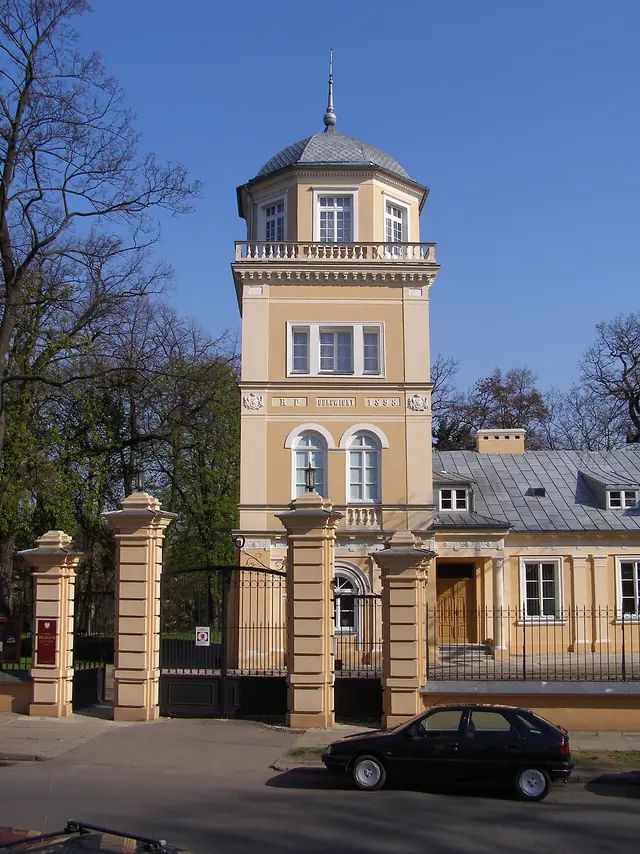
From 1950 the museum has been housed in a Romantic palace in the Classicist style, built at the beginning of the 19th century by the Ostrowski family, the founders of the town. The building needed a thorough renovation, which lasted intermittently until the end of the 1960s. In 1969 the first permanent historical exhibition opened, and in 1974 an archaeological one, based on excavations from the area of the Sulejów Reservoir (Zalew Sulejowski).
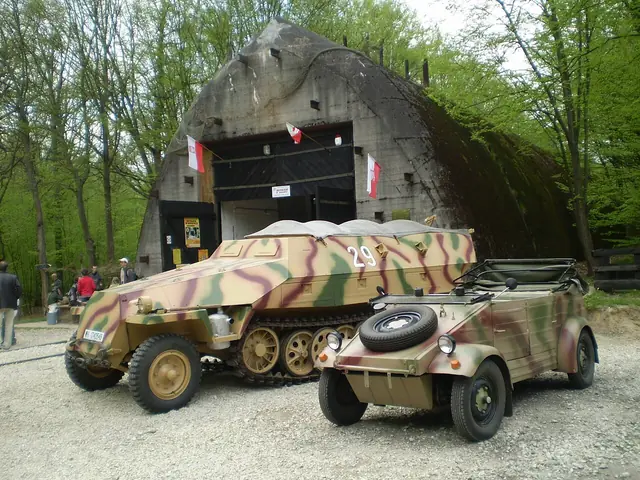
The museum is now a local-government cultural institution with five academic departments: ethnographic, historical and numismatic, archaeological, art and natural history. Visitors learn the history of the town from an ironworks settlement to a centre of the textile industry, a year in the life of a village near Tomaszów, prehistoric burial rites on the Pilica, interiors with furniture from the turn of the 19th and 20th centuries, and the fauna of the central Nadpilicze region. In the former palace stables a German armoured carrier from 1945, recovered from the Pilica, is displayed.
Highlights
- Ostrowski Palace from the beginning of the 19th century as the museum’s seat
- Exhibition ‘Rosi – wojenne pamiątki’ (Rosi – Wartime Relics) with the German armoured carrier recovered from the Pilica
- Ethnographic exhibition on a year in the life of a village near Tomaszów at the turn of the 19th and 20th centuries
- Archaeological exhibition on burial rites in prehistory on the Pilica
- Historical exhibition on the history of Tomaszów from an ironworks settlement to a centre of textile production
- Natural history exhibition on the fauna of the central Nadpilicze, with an interactive board of animal calls
Permanent exhibitions
- Rosi – wojenne pamiątki – The exhibition in the former palace stables presents the German armoured carrier Sd.Kfz.251 ‘Rosi’, recovered from the Pilica in 1996, and several hundred objects found in the vehicle.
- Wystawa etnograficzna – The display shows a year in the life of the inhabitants of villages near Tomaszów at the turn of the 19th and 20th centuries: daily work, harvest festivals and the customs of Christmas and Easter.
- Wystawa archeologiczna – The exhibition presents grave goods, cinerary urns and a reconstructed inhumation grave from Swolszewice Małe, as well as a model of a prehistoric settlement.
- Founded
- 1927
Admission & discounts
| Adults | 12 zł |
|---|---|
| Reduced | 7 złpersons with disabilities and their carers, veterans and repressed persons, activists of the anti-communist opposition, teachers |
| Children & teens | freefree up to age 6 · Children under 7 visiting individually enter free of charge. |
| Seniors | –Holders of the Tomaszowianin Senior Card enter free of charge. |
| Visitors with disabilities | 7 złThe carer of a person with a disability also pays PLN 7. |
| Groups | –Carers of organised groups enter free of charge. A guided tour costs PLN 45. |
| Families | –Holders of the Large Family Card pay PLN 5 per person. Parents with the Tomaszowianin Family 3+ card pay PLN 5, and their children enter free of charge. |
| Large Family Card | 5 złPrice per person. |
| Tomaszowianin Card | 5 złHolders of the Young Tomaszowianin Card enter free of charge. |
| Museum workshops | 15 złWorkshops within the Museum Academy for Toddlers (Muzealna Akademia Malucha) cost PLN 10. |
| Museum lesson | 7 zł |
| Guided tour | 45 złPrice per group. |
Free admission: every Tuesday
Veterans and disabled veterans enter free of charge.
Accessibility
- Partially wheelchair accessible
- Elevator: not available
- Accessible restroom: not available
- Accessible parking
- Service dogs welcome
- Tactile models & exhibits: no information
- Sign language tours: not available
- Easy-to-read materials: no information
- Audio description: no information
Two steps lead to the entrance, with no ramp or lift; the double-leaf doors can be opened wider for a wheelchair. Wheelchair users can see the exhibitions on the ground floor (passages at least 1.5 m wide, doors 85–120 cm, thresholds between rooms). The exhibitions on the first floor and in the palace tower are not accessible to wheelchair users. The toilets are below the hall and are not adapted. The museum has no induction loops or Braille markings; most exhibition descriptions are printed in large type. Rest chairs are set up in the rooms. Entry with an assistance dog is possible; on ul. POW there are public parking spaces for people with disabilities.
Kids & families
Great for kids & families
| Kids’ admission | free up to age 6 |
|---|
- Family tours & workshops
For the youngest children there is a regular Museum Academy for Toddlers (workshops for PLN 10). Children up to 7 years of age enter free of charge.
Getting there & parking
By car
The museum has no car park of its own. On ul. POW there are public car parks with marked paid parking spaces.
- Accessible parking
The museum is housed in the Ostrowski Palace at ul. POW 11/15.
Get directionsAmenities & dining
- Coat check
The visitors’ cloakroom is in the hall on the right from the entrance.
Events & venue rental
The museum hasn’t published any information on this.
Plan your visit
| Guided tours | yes |
|---|---|
| School programs | yes |
| Good to know | A guided tour costs PLN 45. The museum offers museum lessons and workshops for schools, as well as the Museum Academy for Toddlers. |