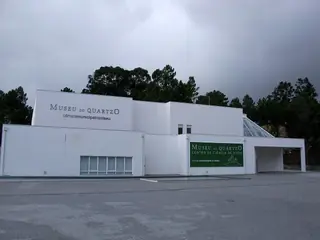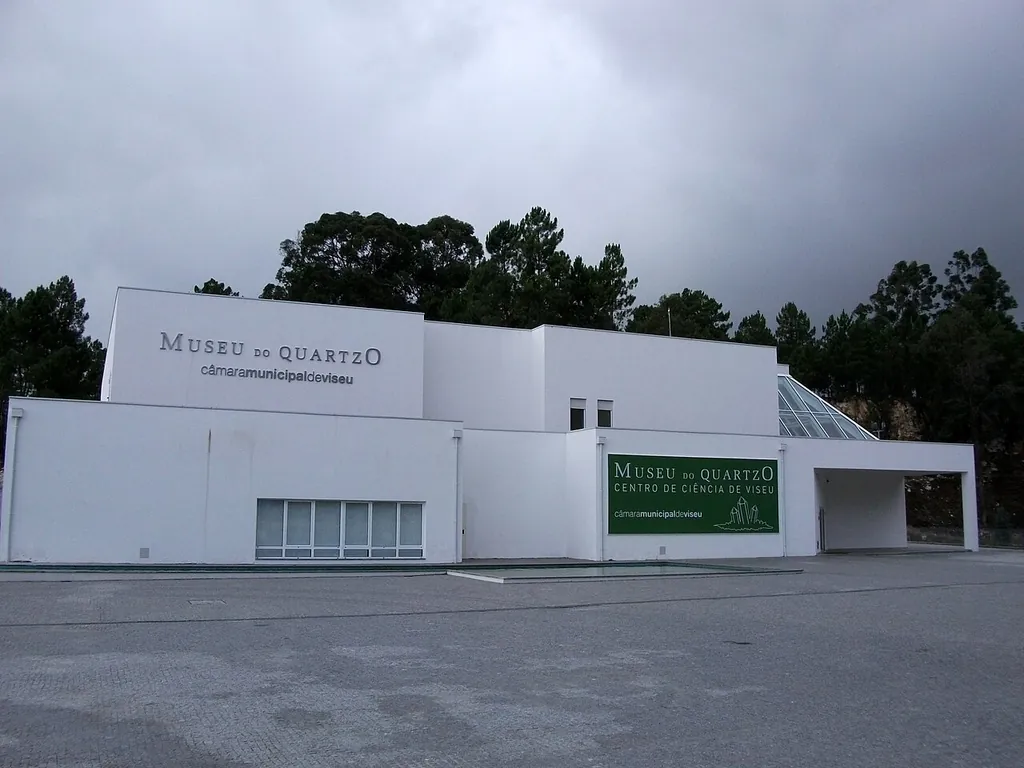
Museu do Quartzo - Centro de Interpretação Prof. Galopim de Carvalho
Interactive geology centre in a former quartz quarry on Monte de Santa Luzia, in Viseu, with a permanent exhibition on geological heritage.
Have only individual sections read aloud
About the museum
Between 1961 and 1986 Monte de Santa Luzia was a site for quartz extraction by the Companhia Portuguesa de Fornos Elétricos, of Canas de Senhorim. The mining left a large crater, a “window into the interior of the earth”, which Viseu Municipality used to build the museum.
Works began in 2006 and the museum opened in April 2012. The venue includes exhibition rooms, a science centre, an auditorium and a library, and uses interactive media and new technologies to present quartz and the geological and natural heritage of the region.
The centre pays tribute to the geologist Galopim de Carvalho, the scientific coordinator of the project. It has a strong educational dimension, with visits adapted to different ages, and also hosts temporary exhibitions on mineralogy.
Highlights
- Museum set in the crater of a former quartz quarry
- Interactive exhibition on quartz and geological heritage
- Science centre, auditorium and library
- Visits adapted for schools and for different ages
Permanent exhibition
- Exposição permanente sobre o quartzo e a geologia – Interactive exhibition on quartz, minerals and the geological and natural heritage of the region, housed in the former quarry.
- Founded
- 2012
- Operated by
- Município de Viseu
Admission & discounts
The museum hasn’t published any information on this.
Accessibility
The museum hasn’t published any information on this.
Kids & families
Great for kids & families
The museum is an interactive centre with visits adapted to different age groups.
Getting there & parking
The museum hasn’t published any information on this.
Amenities & dining
The museum hasn’t published any information on this.
Events & venue rental
The museum hasn’t published any information on this.
Plan your visit
| School programs | yes |
|---|---|
| Good to know | The museum has a strong educational dimension, with visits adapted to different age groups, and is very popular with schools for learning about geology and natural heritage. |