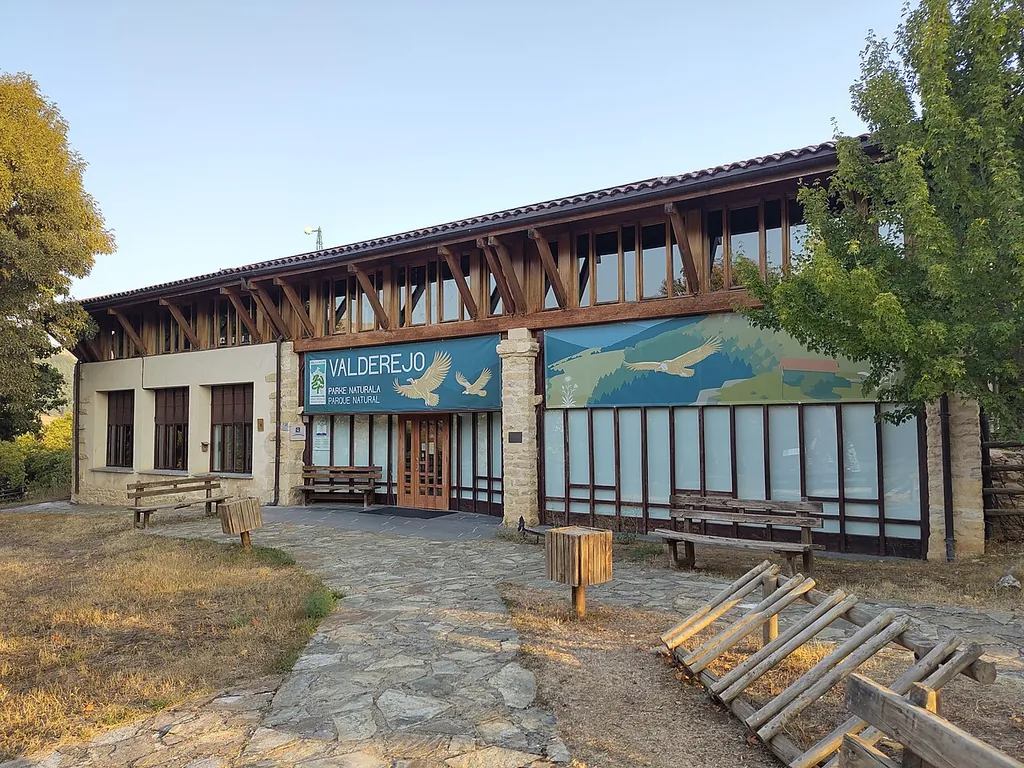
Centro de Interpretación del Parque Natural de Valderejo
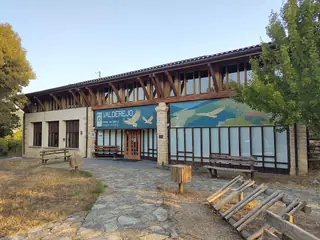
Park house of Valderejo, in Lalastra, with an interpretive exhibition on roe deer, geology, flora and scavenging birds of the natural park.
Have only individual sections read aloud
About the museum
The Casa del Parque Natural de Valderejo, called Parketxe in Basque, is in the village of Lalastra, in the municipality of Valdegovía, and works as a reception, information and interpretation centre for the protected area. It occupies the building that once housed the old valley school, which was restored and extended by one floor.
The building has two floors connected by a ramp and a usable area of 278 m². On the ground floor are the information desk and a model of the park. The upper floor houses an interpretive exhibition with panels and interactive models on the life of the roe deer, the park's geology and geomorphology, a herbarium of Mediterranean plants and the behaviour of scavenging birds, such as the griffon vulture, the red kite and the Egyptian vulture. A projection room with capacity for 35 or 40 people shows two audiovisuals of about 25 minutes each, one for adults and one animated, in Spanish and Basque.
In the same village, the former council house of Valderejo holds an ethnographic museum showing the traditional trades and ways of life of the valley, such as tile-making, basketry and beekeeping. It is a natural complement to a visit to the Casa del Parque.
Highlights
- Interpretive exhibition with panels and interactive models
- Model of the natural park on the ground floor
- Panels on the life of the roe deer and models of scavenging birds
- Herbarium of Mediterranean plants and a display of the park's rocks
- Audiovisual of about 25 minutes in Spanish and Basque
- Hide for observing small birds behind the building
Permanent exhibition
- Exposición interpretativa de la Casa del Parque – Panels and interactive models on the roe deer, the park's geology, the Mediterranean herbarium and scavenging birds, with a projection room.
- Operated by
- Diputación Foral de Álava
Admission & discounts
The museum hasn’t published any information on this.
Accessibility
- Wheelchair accessible: no information
- Elevator: no information
- Accessible restroom: no information
- Accessible parking: no information
- Service dogs welcome: no information
- Tactile models & exhibits: no information
- Sign language tours: no information
- Easy-to-read materials: no information
- Audio description: no information
The two floors of the building are connected by a ramp. In the surroundings there is a 5 km educational trail with panels also in Braille.
Kids & families
Great for kids & families
- Family tours & workshops
- Stroller-friendly
- Baby changing facilities
The whole building is accessible with a pushchair and the toilets have baby-changing facilities. Children under 8 must be accompanied by an adult. The park offers routes and activities for families; in Lalastra there is an ethnographic village trail and a recreation area with swings.
Getting there & parking
By car
Parking available
Open-air car park in Lalastra, next to the Casa del Parque and the recreation area.
From Vitoria-Gasteiz take the N-1 to Nanclares de la Oca, then follow the direction of Pobes, Salinas de Añana and Espejo to Villanueva de Valdegovía. In San Millán de San Zadornil take the road that leads to Lalastra. From Vitoria-Gasteiz it is about 63 km, roughly one hour by car.
Get directionsAmenities & dining
In Lalastra there is a recreation area with swings, a picnic area and barbecues, and behind the Casa del Parque a hide for observing small birds.
Events & venue rental
The museum hasn’t published any information on this.
Plan your visit
| School programs | yes |
|---|---|
| Good to know | The audiovisuals are shown to visitors to the Casa del Parque and have no fixed screening times; each lasts about 25 minutes. Inside the building, running, shouting, eating and drinking are not allowed, and smoking is prohibited throughout the site. Staff provide information on routes, activities and opening times. Environmental education programmes are available for schools at all levels. |