Museo Nacional de Arte Romano
State museum in Mérida, by Rafael Moneo, with the largest collection of Roman art in Hispania and the Visigothic collection of Santa Clara.
Have only individual sections read aloud
About the museum
The museum was created by royal decree on 7 July 1975, on the occasion of the bimillennium of Mérida, and was the first national museum outside Madrid. It inherited the archaeological collections of the ancient Augusta Emerita, gathered since the 16th century in the city's palaces and convents and housed from 1838 in the church of Santa Clara, after the disentailment. Throughout the 20th century, excavations directed by José Ramón Mélida and Maximiliano Macías enriched the holdings with new pieces.
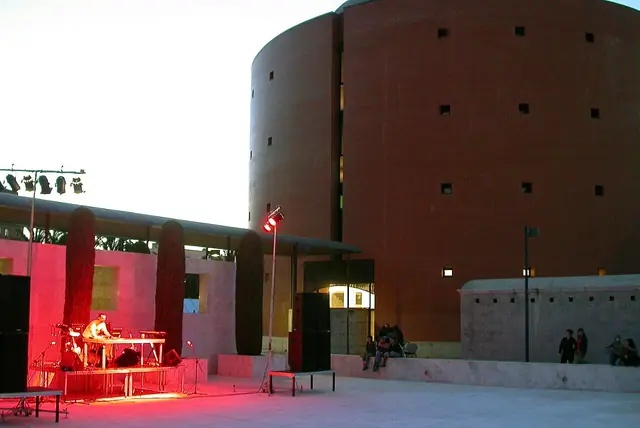
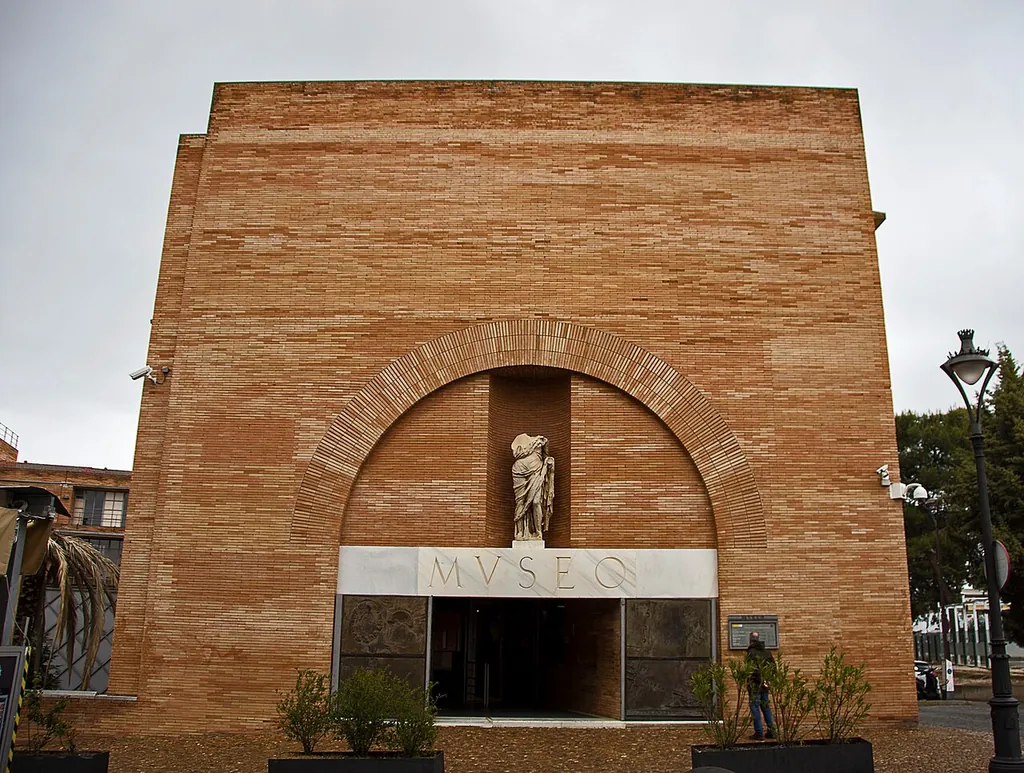
The present building was designed by Rafael Moneo, who received the commission in 1979. It was built between 1980 and 1986 next to the Roman theatre and amphitheatre, and the museum opened on 19 September 1986. Moneo conceived an architecture of large brick arches and zenithal light that recalls Roman buildings, raised over remains of the ancient city that can be seen in the crypt. In February 2026 an extension, also designed by Moneo, was inaugurated, doubling the surface area of the museum.
The permanent collection brings together sculptures, portraits, mosaics, wall paintings, inscriptions, funerary stelae, bronzes, coins, jewellery, ceramics and everyday objects from the Roman province of Lusitania. The Visigothic Art Collection is displayed separately, in the former church of Santa Clara in the historic centre, and admission to it is free. The museum also runs research programmes, publications (among them the journal Anas), educational activities and a library specialising in Roman archaeology.
Highlights
- Building by Rafael Moneo, with brick arches and zenithal light, next to the Roman theatre and amphitheatre
- Crypt with remains of the ancient city of Augusta Emerita visible in situ
- Roman sculptures and portraits, including a bust of Augustus and statues of Ceres and Mercury
- Mosaics and wall paintings from villas and houses in Mérida
- Funerary stelae and inscriptions from the necropolis of Emerita
- Visigothic Art Collection in the church of Santa Clara, free admission
Permanent exhibitions
- Colección permanente de arte romano – Tour of the ground floor, the first and second floors and the crypt of the Moneo building, with sculptures, mosaics, paintings, inscriptions and everyday objects of the Roman city of Augusta Emerita.
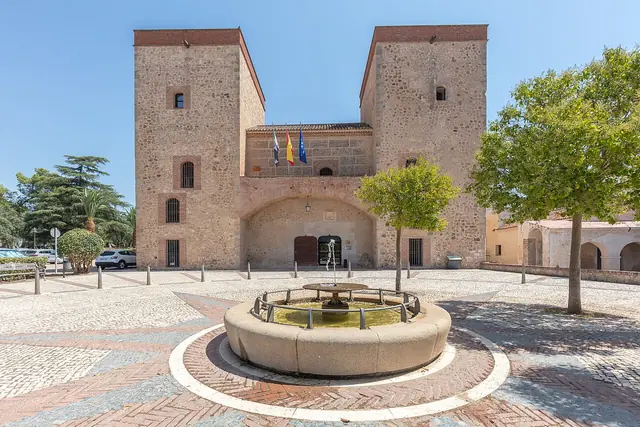
- Colección de Arte Visigodo (Santa Clara) – Visigothic-period pieces displayed in the former church of Santa Clara, in the historic centre of Mérida.
- Founded
- 1986
- Operated by
- Ministerio de Cultura
- Director
- Trinidad Nogales Basarrate
Admission & discounts
| Adults | €3 |
|---|---|
| Reduced | €1.50Groups of 8 or more people, with a prior request 15 days in advance, and cultural volunteers |
| Children & teens | freefree up to age 17 · Free admission for under-18s. |
| Seniors | freeFree admission for over-65s and pensioners. |
| Visitors with disabilities | freeFree admission for people with disabilities. |
| Students & apprentices | freeFree admission for students aged 18 to 25 and holders of the carné joven. |
| Groups (8+ people) | €1.50 per personGroups of 8 or more people: reduced admission, with a prior request 15 days in advance. |
| Families | freeFree admission for members of large families. |
| Annual museum card | €25 |
| Joint annual card (Prado, Reina Sofía and museums of the Directorate-General of Fine Arts) | €36.06 |
Free admission: 18 April, 18 May, 12 October, 6 December, all Saturdays from 14:00 and all Sundays.
The Visigothic Art Collection at Santa Clara is free of charge. Free admission, with accreditation, is also available to people in a legal situation of unemployment, accredited teaching staff, members of ICOM and other professional associations, and official tourist guides and journalists in the performance of their duties.
Accessibility
- Wheelchair accessible
- Elevator
- Accessible restroom
- Accessible parking: no information
- Service dogs welcome
- Tactile models & exhibits: no information
- Sign language tours
- Easy-to-read materials: no information
- Audio description: no information
Wheelchairs are available at the Roman seat, as well as an electric mobility scooter, thanks to an agreement with the FUNVIBA foundation. There is a ramp at the main door and up to the ground floor and the crypt; the lift reaches the crypt and the first and second floors. The Visigothic Collection has an access ramp and a signposted alternative route from the main door. There are adapted public toilets, two portable magnetic loops at the ticket offices of both seats and four FM induction systems at the Roman seat. Sign-language activities and adapted visits are offered. Plans are available in Spanish, English and French.
Kids & families
Great for kids & families
| Kids’ admission | free up to age 17 |
|---|---|
| Family ticket | free · Free admission for members of large families. |
- Family tours & workshops
- Activity booklet, scavenger hunt or kids’ audio guide
- Baby changing facilities
The museum offers a treasure hunt for families, and workshops and educational visits for schoolchildren within the Aula Romana programme. The adapted toilet has a baby-changing table.
Getting there & parking
By public transit
Avenida de Juan Carlos I (línea C1)
City bus: line C1 (stop on Avenida de Juan Carlos I, from where you continue on foot along Calle Octavio Augusto) and line A1 (stop on Avenida de Extremadura, going down Calle Cabo Verde). From the railway station you can walk along Calle Cervantes to Calle José Ramón Mélida or take a taxi.
By car
Parking available · 500 m to the entrance
Public car park on Calle Cabo Verde, about 500 m away. For the Visigothic Collection: public car park on Calle Atarazanas or the blue-zone parking on Paseo de Roma.
The museum is next to the enclosure of the Roman theatre and amphitheatre. From the car park go up to the roundabout, turn right and take the tree-lined promenade that leads to Calle José Ramón Mélida.
Get directionsAmenities & dining
- Museum shop
- Coat check
Shop at the entrance to the main seat, with guides, catalogues and objects related to the collections (the official website indicates that, due to facility improvements, it may remain closed). Free cloakroom only for visitors during the visit. Library specialising in Roman archaeology on the second floor, with consultation by prior request to the management.
Events & venue rental
The museum has an assembly hall for its own activities.
Plan your visit
| Guided tours | yes |
|---|---|
| Audio guide | yes |
| School programs | yes |
| Photography | Photography and filming for personal use are allowed, except with flash and tripod. Professional shoots require authorisation from the Ministry of Culture. |
| Good to know | Guided visits with cultural volunteers are available, along with an educational programme (Aula Romana) for school groups. Food and drink are not allowed in the rooms, and only assistance dogs are admitted. The museum may temporarily close some rooms for safety reasons. |