Museu Arqueològic d'Eivissa i Formentera
Archaeology museum of Ibiza and Formentera; it is now visited at the Museo Monográfico Puig des Molins, next to the Phoenician-Punic necropolis.
Have only individual sections read aloud
About the museum
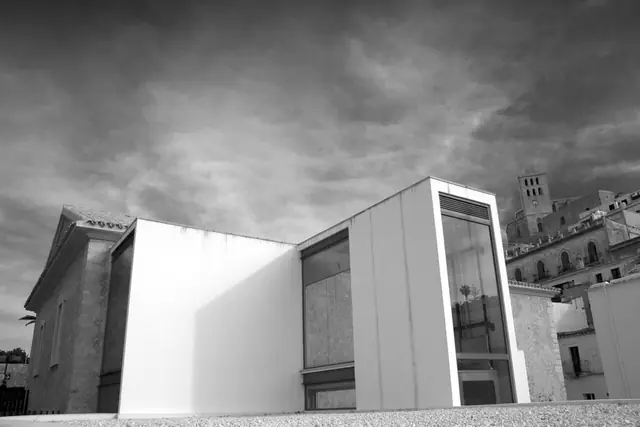
The museum was founded in 1907 from the donation to the State of the collection assembled by the Sociedad Arqueológica Ebusitana, which had been excavating at various sites in Ibiza and Formentera since 1903. Its historic seat was in the old town of Dalt Vila, where the permanent exhibition was extended with material from Ses Torres, Portmany and the sanctuaries of Illa Plana and Es Culleram, donated by the Roman family in 1913. In 2010 the Dalt Vila building had to close because of water leaks and structural deficiencies, and it remains temporarily closed for renovation.
In the meantime, visits are concentrated at the Museo Monográfico Puig des Molins, dedicated to the largest Phoenician-Punic necropolis in the western Mediterranean. The hill, south-west of the bay of Ibiza, served as an urban cemetery from the mid-7th century BC until Roman times. It has been excavated since 1903, was declared a Historic-Artistic Monument in 1931 and has been part of the UNESCO World Heritage List since 1999.
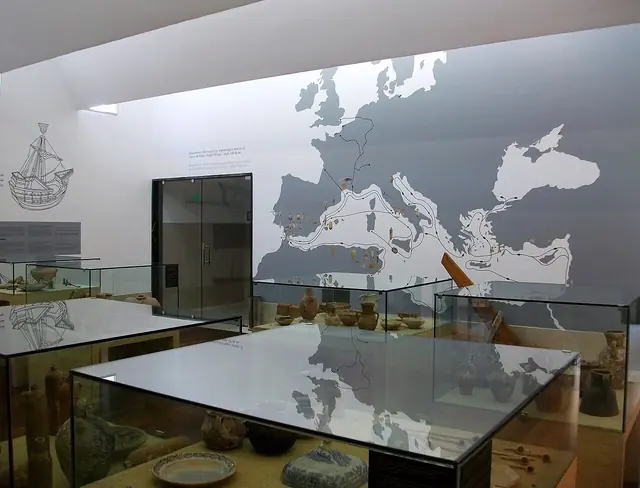
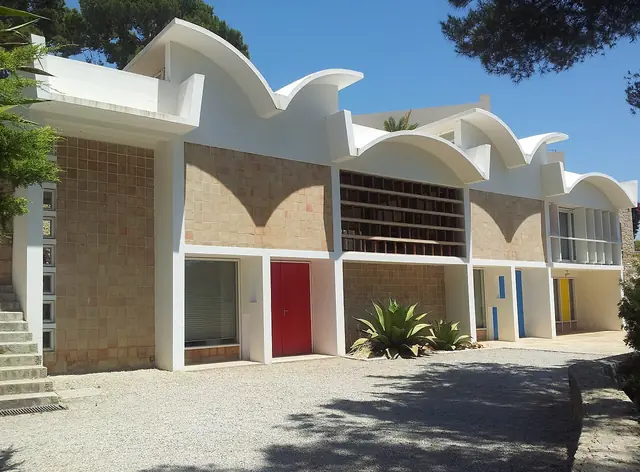
The museum building was completed in 1966 and opened as a monographic museum in 1968. After a major renovation, it reopened on 12 December 2012. Its permanent exhibition covers the Phoenician, Punic and Roman funerary rites of ancient Ibiza across five rooms, with objects such as decorated ostrich eggs, funerary masks and terracotta figurines.
Highlights
- Phoenician-Punic necropolis of Puig des Molins, UNESCO World Heritage Site
- Permanent exhibition in five rooms on death in ancient Ibiza
- Decorated ostrich eggs, a bearded funerary mask and a terracotta tripod
- Visitable hypogea; safety helmets provided for entry
Permanent exhibition
- Exposición permanente del Museo Monográfico Puig des Molins – Five rooms devoted to death in ancient Ibiza: the Phoenician period, Punic funerary rites, burials, the Roman and late-antique period, and the Sainz de la Cuesta collection.
- Founded
- 1907
Admission & discounts
Admission is free.
Admission is currently free. The usual rates were general admission €2.40 and reduced €1.20 (with accreditation: Carnet Joven or student card, and groups of more than fifteen people linked to cultural or educational institutions, on prior request). For Spanish and EU citizens with accreditation, admission was free on Sundays and for under-18s, over-65s, pensioners, unemployed people, holders of a disability card, members of museum friends' associations, teaching staff, official tourist guides and staff of museum institutions.
Accessibility
- Partially wheelchair accessible
- Elevator: no information
- Accessible restroom: no information
- Accessible parking: no information
- Service dogs welcome
- Tactile models & exhibits
- Sign language tours: no information
- Easy-to-read materials: no information
- Audio description: no information
The entire route inside the museum is accessible. The necropolis, which is in the open air, is not fully accessible for people with limited mobility; several hypogea near the building have been adapted for them. There are typological models and tactile reproductions of some pieces, and guided visits adapted for groups with physical or intellectual disabilities, which must be booked in advance (at least one week ahead, at info@maef.eu).
Kids & families
- Baby changing facilities
Baby-changing facilities in the toilets on the main floor.
Getting there & parking
The museum is at Vía Romana, 31, on the Puig des Molins hill, south-west of the bay of Ibiza.
Get directionsAmenities & dining
- Lockers
Lockers at reception for backpacks and personal belongings. There is a designated area for eating and drinking.
Events & venue rental
The museum hasn’t published any information on this.
Plan your visit
| Guided tours | yes |
|---|---|
| School programs | yes |
| Photography | All the pieces may be photographed, but flash, tripods and selfie sticks are not allowed. |
| Good to know | Umbrellas, sharp objects, bags and backpacks are not allowed inside, nor swimwear; children under 14 must be accompanied by an adult, and animals are not admitted except guide dogs. The necropolis has uneven ground, so comfortable clothing and footwear are recommended; safety helmets are lent for entering the hypogea. Free guided visits for primary, secondary and sixth-form students are requested via a form. |