Museu Etnològic de Barcelona
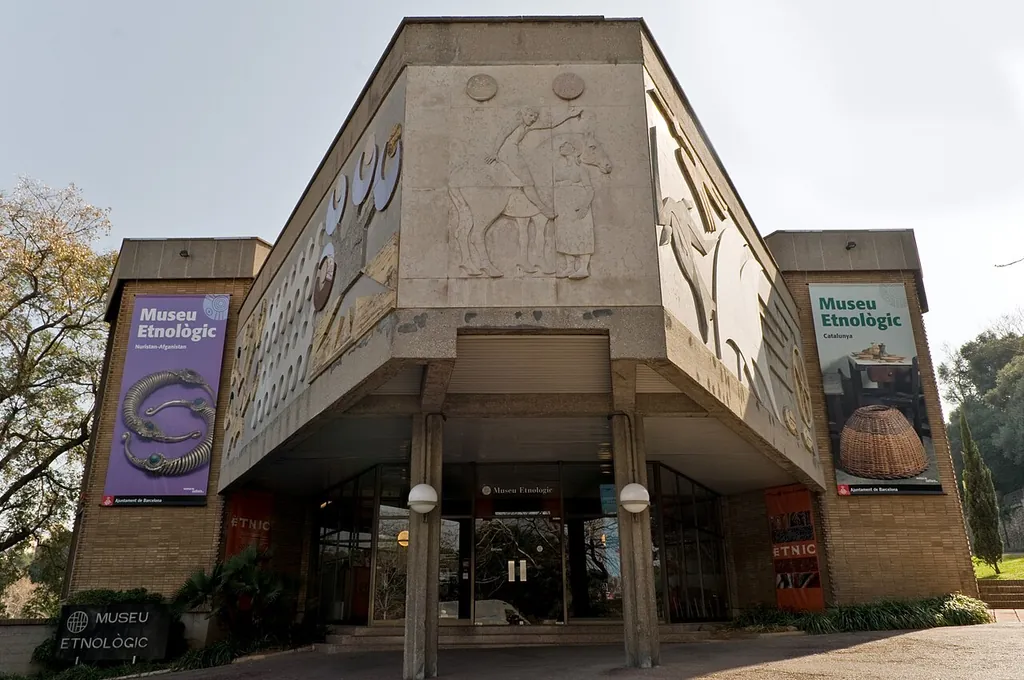
Montjuïc site of the Museu Etnològic i de Cultures del Món, in a 1973 building, with the exhibition “Sentir el patrimoni” on objects and communities.
Have only individual sections read aloud
About the museum
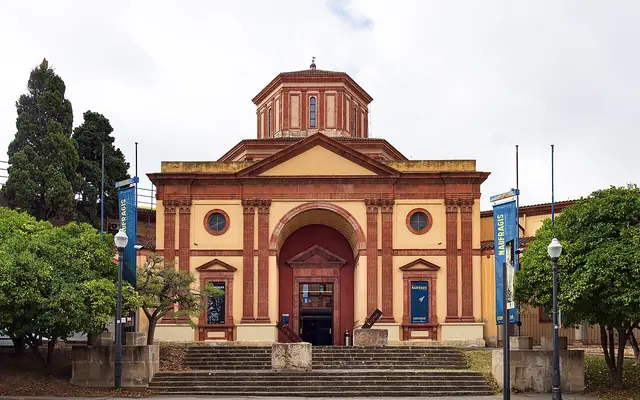
The Montjuïc site of the Museu Etnològic i de Cultures del Món originates in the Museu Etnològic i Colonial, approved in 1948 and opened in 1949 in a pavilion on Montjuïc built for the 1929 International Exhibition. In 1942 the Museu d’Indústries i Arts Populars had been created in the Poble Espanyol, with an ethnographic section designed by Ramon Violant; both museums merged in 1962 under the direction of August Panyella, separated in 1982 and came together definitively in 1999, with some 70,000 pieces.
In 1973 the museum moved to the current building on Passeig de Santa Madrona, the first building in Barcelona designed specifically as a museum. The municipal architects Bonaventura Bassegoda, Jesús López, Antoni Lozoya and Joan Puigdengoles designed a plan with a hexagonal module, inspired by Frank Lloyd Wright, with three floors around three interior courtyards. The museum closed in 2011 and reopened in 2015 after a refurbishment by Toni Gironès, with a new display by Jesús Galdón; the basement became a visitable reserve collection.
In 2017 the Museu Etnològic and the Museu de Cultures del Món merged into the Museu Etnològic i de Cultures del Món, with two sites. The permanent exhibition at Montjuïc, “Sentir el patrimoni”, shows how an object acquires the character of the community that creates and uses it. The site also has a library specialising in social anthropology and ethnology.
Highlights
- Permanent exhibition “Sentir el patrimoni” with objects of trades, festivals and everyday life
- 1973 building with a hexagonal module and three interior courtyards
- Visitable reserve collection in the basement
- “Sentir l’objecte” space, with pieces to touch, Braille texts and large print
- Library specialising in social anthropology and ethnology
Permanent exhibition
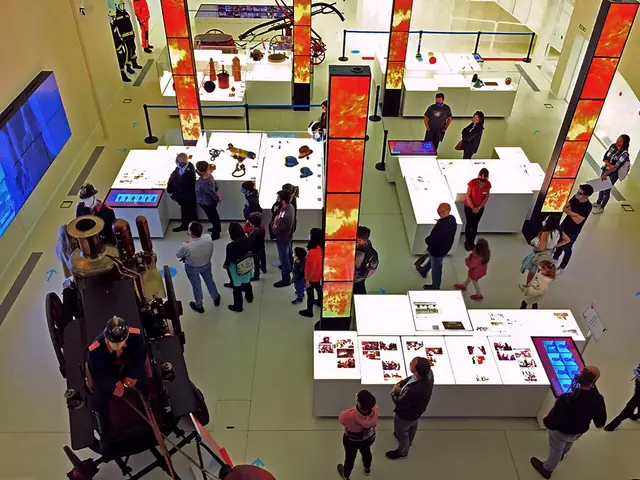
- Sentir el patrimoni – A collage of objects from diverse origins shows how a piece acquires the character of the community that creates and uses it; it is organised into “El mur”, “Els àmbits”, “A través del vidre” and the interior courtyards.
- Founded
- 1949
- Operated by
- Ajuntament de Barcelona
Admission & discounts
| Adults | €5.20 |
|---|---|
| Reduced | €3.70People aged 16 to 29 and over 65, unemployed people and holders of the reduced Targeta Rosa, people with a recognised disability, families of up to two adults with at least one child under 16, large and single-parent families, holders of the Bibliotecas de Barcelona or BCN Cultura card, Barcelona Card Express holders and groups of 10 or more people |
| Children & teens | freefree up to age 15 · Free admission for children under 16. |
| Seniors | €3.70Reduced fare from 65 years old. |
| Visitors with disabilities | €3.70companion free · Reduced fare for a recognised disability; free with the free Targeta Rosa. The companion enters free. |
| Groups (10+ people) | €3.70 per personReduced fare for groups of 10 or more people. |
| Families | €3.70Families of up to two adults with at least one child under 16 pay the reduced fare. |
| Combined ticket with the Museu Egipci de Barcelona (also includes the Parc Montjuïc site) | €12 |
Free admission: Every Sunday 15:00–19:30; the first Sunday of each month 10:00–19:30; 12 February (Santa Eulàlia), 18 May (International Museum Day) and 24 September (La Mercè).
With the tourist bus there is a 20% discount on general admission (permanent collection: €4). Free admission also for accredited members of ICOM and the Associació de Museòlegs de Catalunya, professional tourist guides, accredited teachers, accredited journalists, holders of the free Targeta Rosa, the BCN Card and Gaudir + BCN, and donors of heritage items to the museum they donated to. Tickets are bought online for each site.
Accessibility
- Wheelchair accessible
- Elevator
- Accessible restroom
- Accessible parking
- Service dogs welcome
- Tactile models & exhibits
- Sign language tours: no information
- Easy-to-read materials: no information
- Audio description: no information
Access ramp, interior spaces without architectural barriers, accessible toilets for wheelchair users, an accessible lift and a second usable lift. Induction loops, self-supporting chairs, loan wheelchairs and sign-language assistance on request. In the permanent exhibition: a Braille leaflet with a plan, spaces and furniture suitable for wheelchair users, large high-contrast graphics, tactile stations in the “Oficis” area and in the “Sentir l’objecte” space, which is fully hands-on, with Braille and large print. Guide dogs and assistance dogs are welcome. The museum takes part in Apropa Cultura. There is a PDF itinerary from bus line 55 for blind or partially sighted people.
Kids & families
Great for kids & families
| Kids’ admission | free up to age 15 |
|---|---|
| Family ticket | €3.70 · Families of up to two adults with at least one child under 16 pay the reduced fare. |
- Family tours & workshops
- Activity booklet, scavenger hunt or kids’ audio guide
- Hands-on stations
Family workshops, such as one on copper jewellery, and a self-guided treasure hunt in the visitable reserve collection. In the “Sentir l’objecte” space the pieces can be touched. Children under 16 enter free.
Getting there & parking
By public transit
Museu Nacional/Museu Etnològic (autobús 55)
Metro: L1 (Espanya) and L3 (Poble Sec). Bus: line 55, stop “Museu Nacional/Museu Etnològic”. Montjuïc funicular from Paral·lel metro station (L2 and L3). Bus Turístic, red route, MNAC stop. Bicing: station 234 (Passeig de l’Exposició, 30 / Blasco Garay) and station 237 (Carrer de Rius i Taulet, 4).
By car
The website does not describe a general car park; there is one space reserved for people with reduced mobility.
- Accessible parking
Bicycle parking at the entrance, with room for folding bicycles.
Get directionsAmenities & dining
- Museum shop
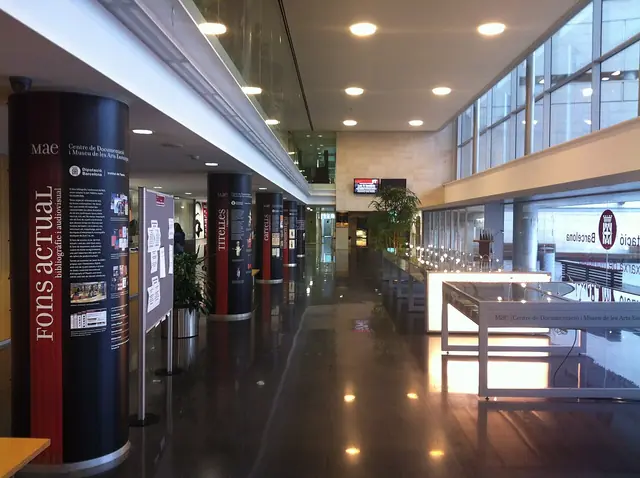
Items and publications related to the collections are sold at reception. The site's library, specialising in social anthropology and ethnology, has more than 22,000 records.
Events & venue rental
- Spaces for rent
The assembly hall can be rented for events.
Inquiries & detailsPlan your visit
| Guided tours | yes |
|---|---|
| School programs | yes |
| Good to know | Guided tours, family activities and an educational programme for schools; bookings on +34 932 562 300 or at reservesmeb@bcn.cat. |