Fröå gruva
Cultural reserve and open-air museum at a former copper mine on the eastern side of Åreskutan, with a water-driven pump system, crofts and guided tours.
Have only individual sections read aloud
About the museum
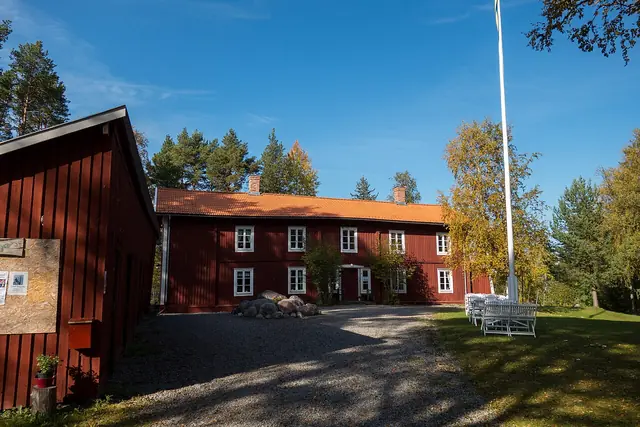
Mining at Fröå began in 1744, when the ore prospector Anna Larsdotter from Björnänge found copper ore by the summer pastures (fäbodarna) at Fröå, and it went on in four periods until 1919. The ore was refined at Huså bruk (Huså ironworks) and Slagså smälthytta (Slagså smelting works). To keep the workers in the mountain environment, the mining company had crofts (torp) built for the mining families, who also received a few tunnland (old land measure) for a cow, sheep and goat. Between the periods of operation, many stayed on in the crofts in the hope of work again.
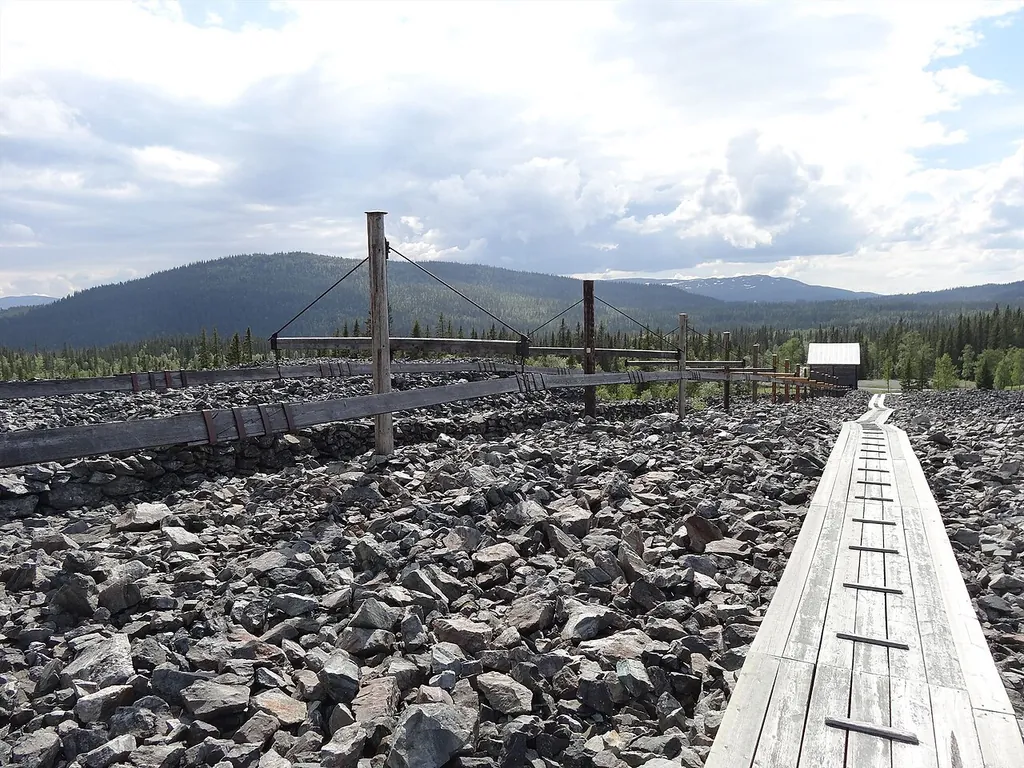
The mine became ever deeper and required water pumping by water-driven machinery. This created a so-called vattenkonst (water-driven pumping system) with a machine house (konsthus), a rod gallery (stånggång) over the spoil heaps and a pump in the Drottningschaktet (Queen’s shaft). In the last period, 1910–1919, a road, telephone and power station were built. The mining company went bankrupt in 1919, and in 1971 the last residents, a brother and sister, moved away from the mining village. The croft where they lived is today a museum.
The association Fröå gruva was formed in 1984 and runs the area as an open-air museum and working-life museum, with production plants, the water-driven pumping system and dwellings. The area is a cultural reserve; the buildings and land have been looked after by the association, which also arranges guided tours and several public events each year, for example midsummer celebrations and Fröå dagar (Fröå Days).
Highlights
- The rod gallery and the machine house (konsthus) with the water wheel
- Drottningschaktet with a working water pump
- The crofts, including Sellstedtstorpet with a view into the kitchen
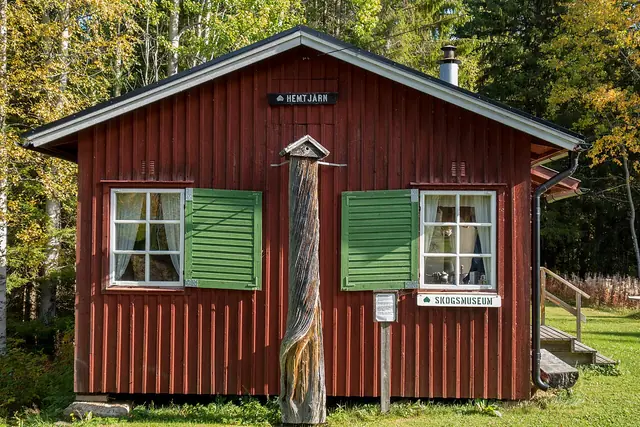
- The information house Fyrkanten
- Guided tours and the restaurant Bergstugan
- Cultural landscape with slag heaps, meadows and grazing land
Permanent exhibition
- Fröå gruva – vattenkonst och gruvby – Open-air museum with a machine house (konsthus), rod gallery, pump house, ore-dressing plant and preserved crofts in the mining village.
- Founded
- 1984
- Operated by
- Föreningen Fröå gruva
Admission & discounts
| Groups (8+ people) | –Guided tours for groups of at least 8 people; price not stated. |
|---|
Accessibility
- Partially wheelchair accessible
- Elevator: no information
- Accessible restroom: no information
- Accessible parking: no information
- Service dogs welcome: no information
- Tactile models & exhibits: no information
- Sign language tours: no information
- Easy-to-read materials: no information
- Audio description: no information
Accessibility adaptations have been made: a ramp over the slag heaps along the rod gallery to the Konsthuset, a ramp at Sellstedtstorpet for looking into the kitchen, a wheelchair ramp at Fyrkanten, and bench seats and accessible outdoor toilets. The terrain is otherwise uneven.
Kids & families
The museum hasn’t published any information on this.
Getting there & parking
By car
Parking available
Parking spaces for cars, buses and bicycles at the area.
From the E14, turn off at Björnänge towards Björnen and Huså; from there it is about 7 km by car. From Björnen there is a 4 km walking path east of Fröåtjärn. The area lies about 10 km east of Åre town.
Get directionsAmenities & dining
- Café
- Restaurant
Restaurant Bergstugan serves lunch and fika (072-521 05 44). Outdoor toilets in the area.
Events & venue rental
The museum hasn’t published any information on this.
Plan your visit
| Guided tours | yes |
|---|---|
| Good to know | Guided tours are booked on 070-323 63 36. In the cultural reserve it is not permitted to drive motor vehicles off-road on bare ground, to cycle outside cycle paths, to walk on uncut meadows or fenced grazing land, to camp or to light fires. |