Hälsinglands museum
Regional museum for Hälsingland in Hudiksvall, with medieval church art, textiles and Rosa Taikon’s jewellery workshop.
Have only individual sections read aloud
About the museum
Hälsinglands museum grew out of Helsinglands fornminnessällskap (the Hälsingland antiquarian society), which was formed in 1859. The society collected antiquities and old weapons and set up a small museum in the school in Hudiksvall. As early as 1858 it had taken over the old church at Enånger to show medieval church art. From 1897 the teacher Frans Rodenstam was in charge of the collections, and in 1903 the first museum building of its own opened in the old hospital building.
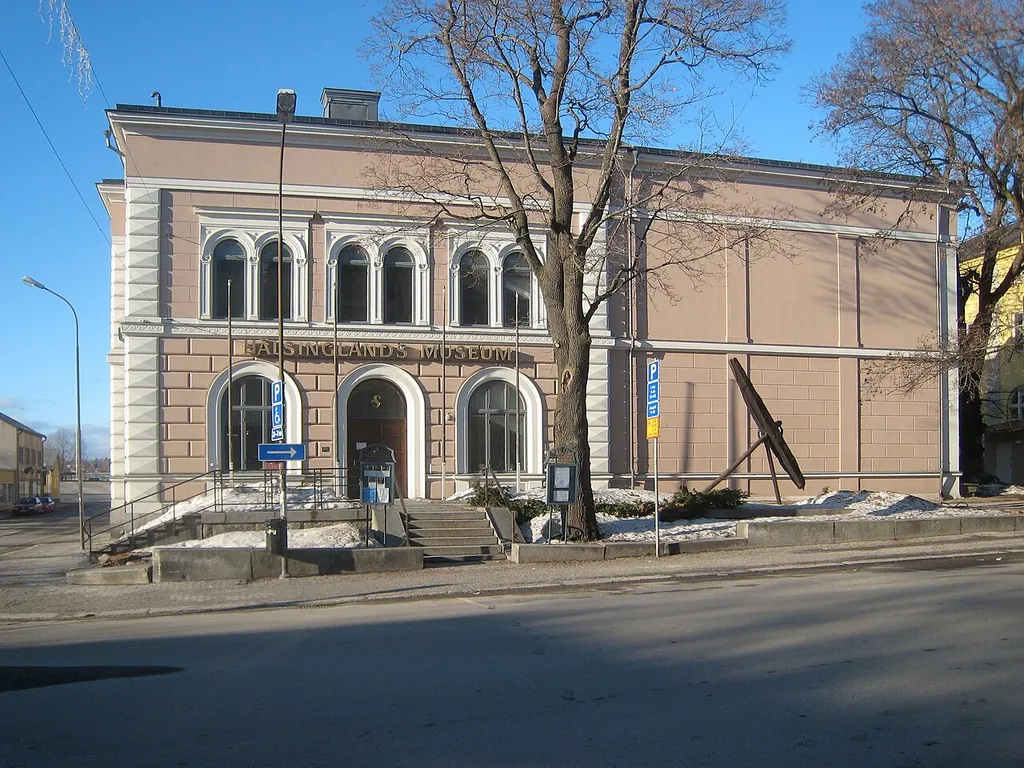
In 1937 the museum moved to its present location at Storgatan 31, a former bank palace built in 1879–1880 for Helsinglands Enskilda Bank and designed by Ernst Jacobsson. Since 2013 it has been designated as the regional museum for Hälsingland.
The collections include, among other things, medieval church sculpture regarded as unique in the world, wall and panel paintings from Hälsing farmsteads (hälsingegårdar), a large textile collection and the studio of the silversmith Rosa Taikon. The museum also has a gentleman’s parlour (herrstuga) from a farm in Nansta in Forsa, with painted walls and period furniture.
Highlights
- Medieval church art in the exhibition on Haaken Gulleson, Mästaren från Fläcka (the Master from Fläcka)
- Textile history in the exhibition De brutna mönstren (The Broken Patterns)
- Rosa Taikon’s jewellery workshop and the exhibition on her art and struggle
- The herrstuga with painted walls and period furniture
- The museum is in a bank palace from 1880 in central Hudiksvall
Permanent exhibitions
- Rosa Taikon – konsten och kampen – The exhibition shows the silversmith and artist Rosa Taikon at the work table in her studio.
- De brutna mönstren – The exhibition tells the story of Hälsingland’s long textile history.
- Haaken Gulleson – Mästaren från Fläcka – Gives an insight into the medieval religious visual world through the works of the artist Haaken Gulleson.
- Founded
- 1859
Admission & discounts
Admission is free.
Free admission. A fee may be charged for certain special events.
Accessibility
- Wheelchair accessible
- Elevator
- Accessible restroom
- Accessible parking
- Service dogs welcome: no information
- Tactile models & exhibits: no information
- Sign language tours: no information
- Easy-to-read materials: no information
- Audio description: no information
The entrance is threshold-free, and parking for visitors with disabilities is by the entrance. A lift goes to floors 2 and 3. Accessible toilets are on floors 1 and 3. Pushchairs and wheelchairs can be used in all exhibitions. When new exhibitions are being built, dust and strong smells may occur; contact the museum in advance if you are unsure.
Kids & families
- Stroller-friendly
Getting there & parking
By public transit
Hudiksvall Centrum · 5-min walk
City buses stop at Hudiksvall Centrum and regional buses at Hudiksvalls resecentrum, both about five minutes’ walk from the museum. Trains (X-tåget and SJ) stop at Hudiksvalls station, about five minutes’ walk away.
By car
Parking available
Parking is behind the museum. The street around the block is one-way: drive once round the block and turn into the car park from Sundsesplanaden. Bicycle parking is in front of the museum.
- Accessible parking
Amenities & dining
- Café
- Museum shop
The museum has a café, where the reception is also located, with newspapers and magazines. The shop sells gifts, crafts, toys and books on history and cultural history.
Events & venue rental
The museum hasn’t published any information on this.
Plan your visit
| Guided tours | yes |
|---|---|
| School programs | yes |
| Good to know | Educational visits for school classes combine the exhibitions with conversation, drama teaching and problem-solving, and can be adapted to the school’s wishes. They are free of charge for schools in Gävleborg County. Some exhibitions can also be used digitally at school. |