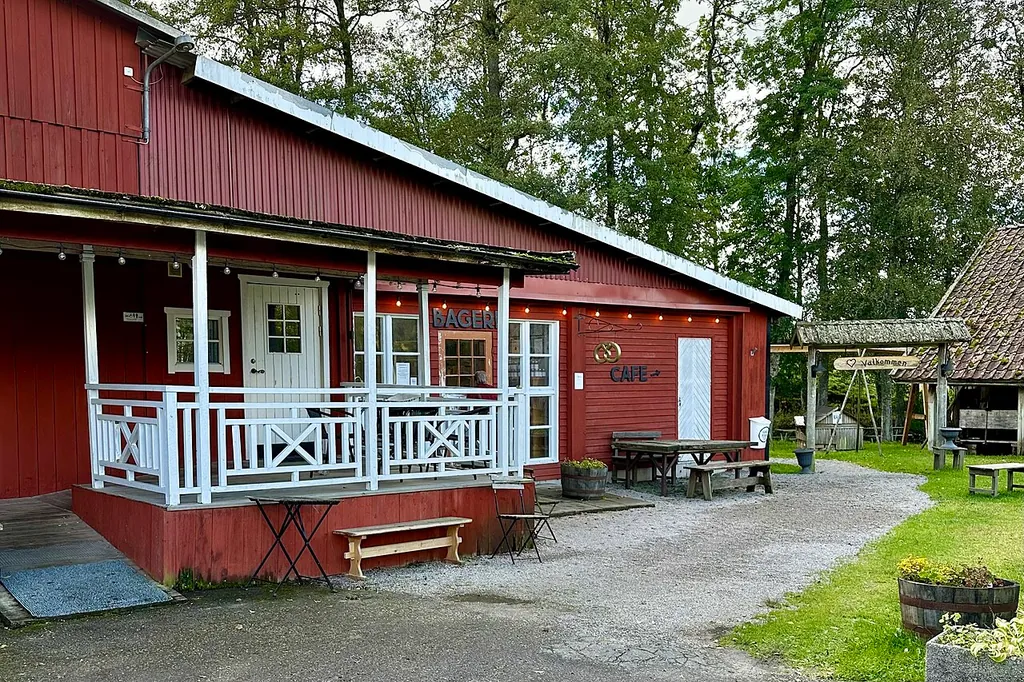
Vänga kvarn
Cultural environment by the Säveån river with one of Sjuhärad’s last working parish mills, a country-store museum, a rebuilt starch factory, a café and a bakery.
Have only individual sections read aloud
About the museum
There have been mills by the waters of the Säveån river since time immemorial. In 1849 permission was sought to build a larger mill, and despite strong opposition from other mill owners in the area, Vänga mill was allowed to be built in 1850. The building burned down in the 1860s but was rebuilt. In 1934 the mill was converted and the driving force changed from a water wheel to a turbine, and in the 1960s it was extended with grain dryers. The two twin turbines were renovated in autumn 2011, and the mill today runs largely on its own electricity. The mill has long specialised in flour from alternatively grown grain, and KRAV-certified Vängamjöl is sold on site.
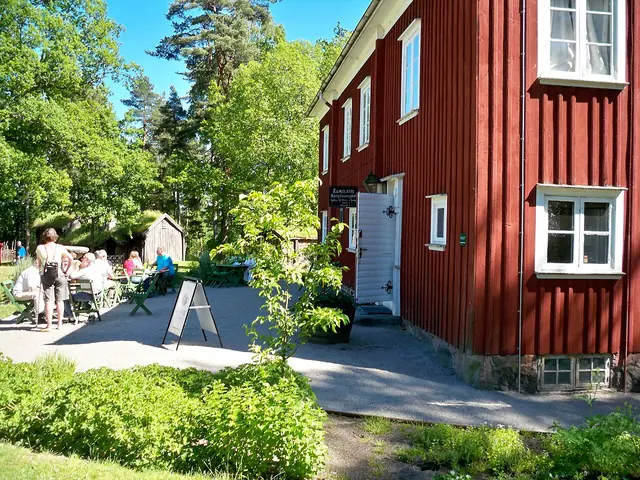
Vänga local heritage society, formed in 1962, became the owner of the mill in December 2008 and has since 2009 carried out major renovations. The association leases out the operations in the mill and the café, and in the Vänga country-store museum local craftspeople sell their products. The craft shop was built in 2004 as a museum and is a copy of Vänga’s old grocery and general store by the church, which closed in 1975. The shop fittings were donated to the association 26 years later. The Wängdala post station was also housed in the country store between 1875 and 1952.
At Nolhaga in Vänga parish a starch factory was built in the 1890s and was in operation until 1944. The buildings were demolished in the late 1950s, but the equipment was preserved, and the local heritage society rebuilt the factory in its original state in 1985–1987. It is today the only one in Sweden that makes potato flour on an industrial scale in the old way. On Maleridagen, the second Saturday in September, several tonnes of potatoes are delivered and the factory is in full operation all day.
Highlights
- Vänga kvarn, the only working mill in Sjuhärad, with turbines and KRAV-certified flour
- Vänga country-store museum with the district’s craftspeople
- Rebuilt starch factory making potato flour in the old way
- Maleridagen on the second Saturday in September
- Café and sourdough bakery by the Säveån river
- The Kärleksstigen walking loop and the Vänga mosse nature reserve nearby
Permanent exhibitions
- Vänga kvarn – Working parish mill from 1850, driven by turbines and generating its own electricity, known for its KRAV-certified flour.
- Vänga lanthandelsmuseum – Copy of the village’s old grocery and general store with preserved shop fittings, where local craftspeople sell their products.
- Nolhaga stärkelsefabrik – Rebuilt starch factory from the 1890s that makes potato flour in the old way.
- Operated by
- Vänga hembygdsförening
Admission & discounts
The museum hasn’t published any information on this.
Accessibility
- Wheelchair accessible
- Elevator: no information
- Accessible restroom
- Accessible parking: no information
- Service dogs welcome: no information
- Tactile models & exhibits: no information
- Sign language tours: no information
- Easy-to-read materials: no information
- Audio description: no information
The visitor attraction is wheelchair-adapted and has an accessible toilet. Vänga mosse has an accessible section of the trail on wide wooden boardwalks.
Kids & families
The museum hasn’t published any information on this.
Getting there & parking
By car
Parking available
Vänga mill lies at the source of the Säveån river between Borås and Alingsås. Parking is available next to the visitor attraction. A walking loop, Kärleksstigen (600 m), runs on both sides of the river by the mill.
Get directionsAmenities & dining
- Café
- Museum shop
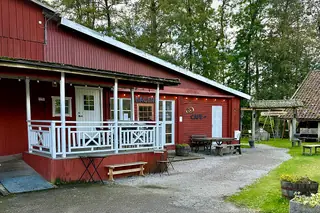
Vänga Kvarncafé with lunch service and sourdough bakery, where everything is baked in a stone oven. KRAV-certified Vängamjöl and handicrafts are sold in the country store. Dogs are welcome in the café.
Events & venue rental
The museum hasn’t published any information on this.
Plan your visit
| Guided tours | yes |
|---|---|
| Good to know | Visits to the mill are booked with the miller; contact details are on the website under Om oss (About us). |