Luther's home in the former Augustinian monastery, with a museum of the Reformation; until 2027 the neighboring Augusteum displays the most important treasures.
Opening hoursAdmission from €6 Wheelchair accessible
Limited operations (expected until 2027). The Lutherhaus is closed for energy-efficiency renovation and redesign. The most important exhibits can be seen in the neighboring Augusteum (same courtyard, Collegienstraße 54) in the exhibition "Buchstäblich Luther." Reopening is planned for the second half of 2027.
The show in the Augusteum presents Luther's life, theology, and relationships alphabetically across some 350 m² and displays the main pieces of the Lutherhaus collection during the renovation. His controversial views are also addressed openly.
In recreated rooms such as Lotter's print shop and Cranach's workshop, teams have 90 minutes to solve puzzles and track down the lost September Testament of 1522. Book at least three days in advance.
About the museum
From 1504, Augustinian monks built a monastery by Wittenberg's Elster Gate that later became known as the "Black Monastery." Martin Luther first lived here as a monk, became a Doctor of Theology, and taught at the university. After the community dissolved in the course of the Reformation, the Elector granted the empty building to Luther and his family in the mid-1520s. Together with Katharina von Bora and their children, he lived, wrote, and taught there until his death in 1546; the table gatherings in the house became legendary.
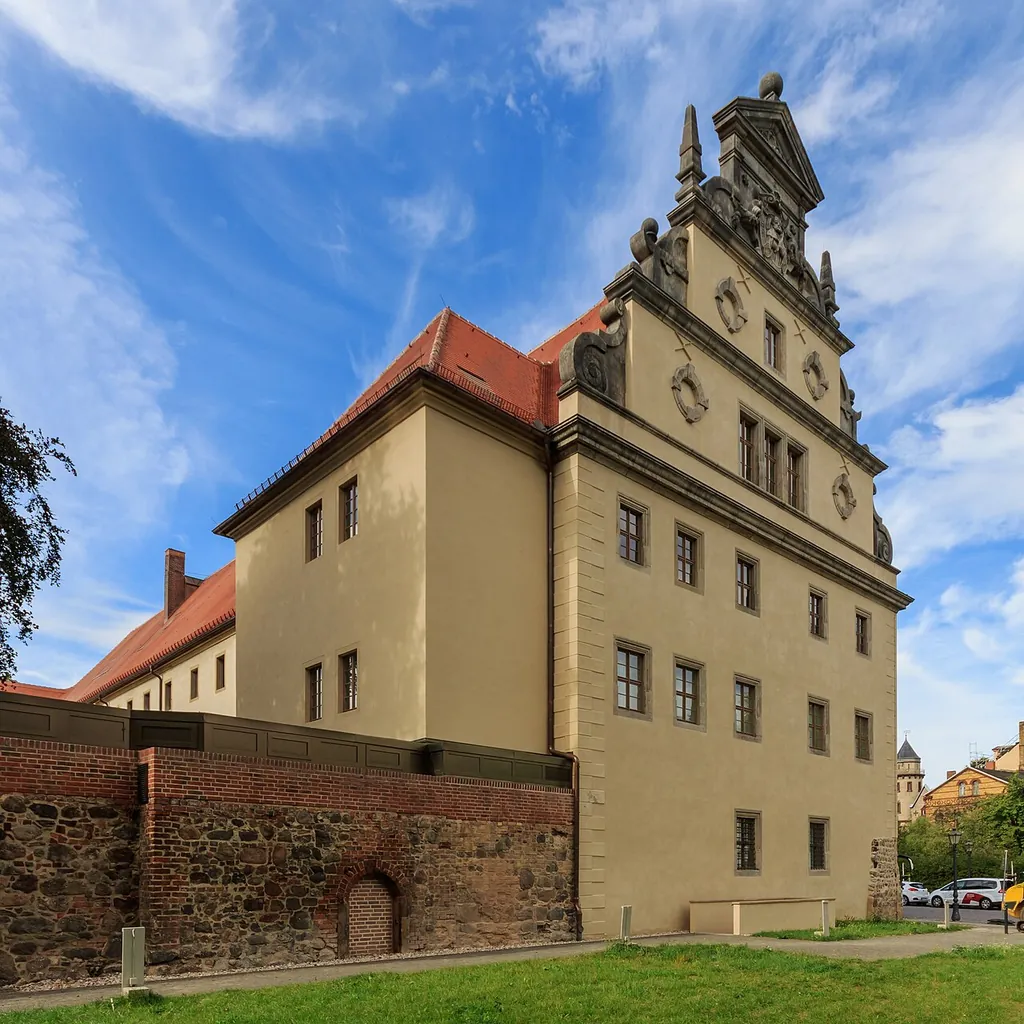
Luther's heirs sold the property to the university in 1564, which used it to house students. Between 1580 and 1582, under Elector August of Saxony, the Augusteum was built in front of it to plans by Hans Irmisch; from 1598 it housed the university library. After Wittenberg's university was dissolved, the building fell into decay until Friedrich August Stüler restored it between 1853 and 1856.
As early as 1655, Luther's living room was regarded as a "Museum Lutheri." From 1877 the house was converted into a museum of Reformation history and opened as the "Lutherhalle" in 1883, on Luther's 400th birthday. It has been part of the UNESCO World Heritage Site of the Luther Memorials since 1996 and of the Stiftung Luthergedenkstätten in Sachsen-Anhalt (Luther Memorials Foundation of Saxony-Anhalt) since 1997, which keeps an extensive collection of prints, manuscripts, paintings, and everyday objects here.
The Lutherhaus is currently undergoing an energy-efficiency renovation and a redesign of its visitor facilities; reopening is planned for the second half of 2027. Until then, the Augusteum in the same courtyard presents the highlights of the permanent exhibition in the show "Buchstäblich Luther" (Literally Luther).
Highlights
Luther's monk's habit and the first complete Wittenberg edition of the Bible
Portraits of Luther from the Cranach workshop that shaped the image of Luther
Korean silk painting depicting Luther as a Confucian scholar
Archaeological finds from Luther's parents' house in Mansfeld
Escape game "Tatort 1522" (Crime Scene 1522) about the missing September Testament
Lutherstube, Luther's living room with its table gatherings (after the 2027 reopening)
Founded
1883
Operated by
Stiftung Luthergedenkstätten in Sachsen-Anhalt
Director
Thomas T. Müller
Admission & discounts
Adults
€6
Reduced
€4Young people, apprentices, students, and people in voluntary service up to age 27, recipients of social benefits, people with a severe disability ID
Children & teens
freefree up to age 5 · Children under 6 free; young people pay the reduced price.
Seniors
–No senior discount.
Visitors with disabilities
€4companion free · Reduced with a severe disability ID (Schwerbehindertenausweis); companion free with "B" marker.
Students & apprentices
€4Students and apprentices pay the reduced price.
Groups (10+ people)
€4 per personPer person for groups of 10 or more. Group tours (German/English) cost €50–60 plus admission and must be reserved in advance.
Families
€15For one or two guardians (parents or grandparents) with their children.
Combination ticket with the Melanchthonhaus €8 (family combination ticket €20), valid on two consecutive days. Free admission with an ICOM card or WelterbeCard. Public guided tour €3 plus admission. The escape game "Tatort 1522" is booked separately (e.g., €95 for 2–6 people, families €75).
Accessibility
Wheelchair accessible
Elevator
Accessible restroom
Accessible parking: no information
Service dogs welcome: no information
Tactile models & exhibits: no information
Sign language tours: no information
Easy-to-read materials: no information
Audio description: no information
Information for the Augusteum: step-free access through the courtyard passage from Collegienstraße, elevator to all exhibition rooms, accessible restroom, accessible lockers, seating in the entrance area, and free portable stools. Before its closure, the Lutherhaus was only partly accessible by elevator.
Kids & families
Great for kids & families
Kids’ admission
free up to age 5
Family ticket
€15 · For one or two guardians (parents or grandparents) with their children.
Family tours & workshops
Hands-on stations
Kids’ birthday parties
According to the foundation, the permanent exhibitions are aimed mainly at adults, but children are well catered for with their own offerings: in the Augusteum, the hands-on exhibition "Der Mönch war's!" (The Monk Did It!, approx. 45 min.) is included in the ticket – with stations for stamping theses, dressing up, and trading with coins. There are also changing holiday programs and children's birthday parties, including in the escape game "Tatort 1522" (age 12 and up).
Getting there & parking
By public transit
Lutherstadt Wittenberg Hauptbahnhof (main station; on the Hamburg–Munich ICE line and served by regional trains), from there on foot to Collegienstraße on the eastern edge of the Old Town. By bike, for example via the Elbe Cycle Route (Elberadweg).
By car
Parking available
Municipal parking lots in the immediate vicinity; no dedicated museum parking mentioned.
By car via the A9 (from the Berlin direction, exit Klein Marzehns; from the Munich direction, exit Coswig), then via the B2, B107, or B187.