Bayerisches Bienenmuseum Illertissen
District museum in the Vöhlinschloss on the biology of the honeybee, beekeeping and cultural history, with a live bee colony in a display case. Free admission.
Have only individual sections read aloud
About the museum
The museum goes back to the collection of physician and chemist Karl August Forster. In 1930 Forster developed Forapin, a rheumatism ointment based on bee venom, and over decades he assembled rare prints of the honeybee from five centuries. In 1983 he handed the collection over to the district, which set up the Bayerisches Bienenmuseum in the Vöhlinschloss in Illertissen.
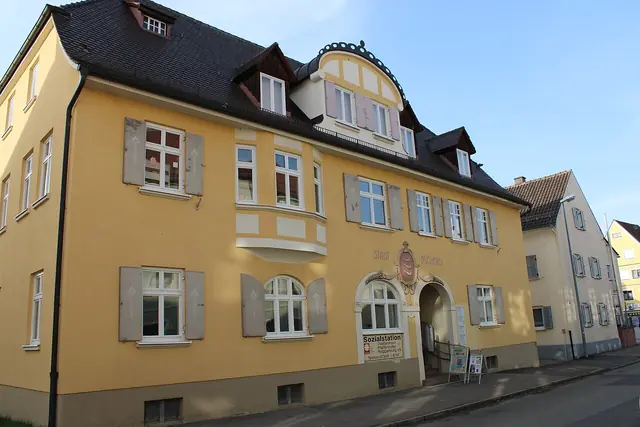
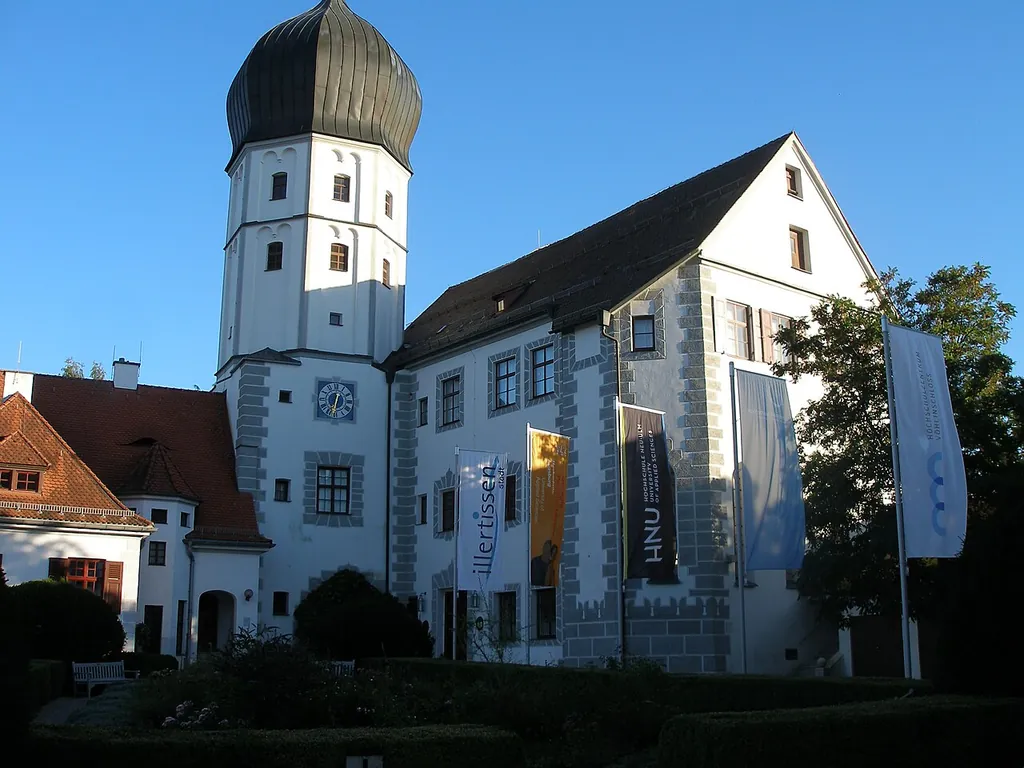
The castle goes back to a 13th-century fortification and was converted into a Renaissance castle by the Vöhlin family from 1520. Notable features of the building include stucco coffered ceilings from 1595 and a chapel with 18th-century frescoes by Franz Martin Kuen.
Three thematic routes lead through the collection: biology and life cycle of the honeybee, beekeeping and honey production, and cultural history and bee venom. From Easter to October, a live bee colony can be observed in a glass display case, and a 3D film shows macro footage of bee life. The museum is run by the Neu-Ulm district.
Highlights
- Live bee colony in a display case (Easter to October)
- 15-minute 3D film with macro footage of bee life
- Collection of rare prints of the honeybee from five centuries
- Renaissance castle with 1595 stucco ceilings and chapel with Kuen frescoes
- Free admission
Permanent exhibition
- Dauerausstellung zur Honigbiene – Three themed routes on the biology and life cycle of the honeybee, beekeeping and honey production, and cultural history and bee venom, plus a live bee colony in a display case.
- Founded
- 1983
- Operated by
- Landkreis Neu-Ulm
Admission & discounts
Admission is free.
| Children & teens | –Admission is free for everyone. |
|---|---|
| Guided tour for adult groups | €5Per person, about 60 minutes including the 3D film; registration at least two weeks in advance |
| Guided tour for school classes | €2.50Per person; about 90 minutes with a workshop |
| Wax workshop (surcharge) | €2.50Depending on the workshop, €2.50 to €3.50 extra on top of the guided tour |
Admission is free; fees apply only for booked guided tours and workshops.
Accessibility
- Wheelchair accessible
- Elevator
- Accessible restroom
- Accessible parking: no information
- Service dogs welcome
- Tactile models & exhibits: no information
- Sign language tours: no information
- Easy-to-read materials: no information
- Audio description: no information
Two steps at the main entrance can be bridged with a mobile ramp (please ring the bell or announce your visit). All exhibition rooms are reachable by lift; the accessible toilet is in the Hinteres Schloss, opposite. Assistance dogs and guide dogs are welcome.
Kids & families
Great for kids & families
- Family tours & workshops
- Hands-on stations
- Kids’ birthday parties
Programs for daycare groups and school classes, wax workshops and children's birthday parties. In the guided tours, visitors may touch, feel, smell and listen.
Getting there & parking
By public transit
Illertissen, Rathaus · 6-min walk
Illertissen train station is about 15 minutes on foot; the "Rathaus" bus stop is about 6 minutes' walk from the castle.
By car
Parking available · 5-min walk to the entrance
15 public parking spaces in front of the Schlossbrücke, opposite the Hotel am Schloss; gravel car park with 50 spaces on Schloßgartenweg (Parkplatz Schlossallee), about 5 minutes' walk away.
By bike, the Vöhlinschloss can be reached via the Klosterweiher loop.
Get directionsAmenities & dining
- Museum shop
Events & venue rental
The museum hasn’t published any information on this.
Plan your visit
| Guided tours | yes · approx. 60 min |
|---|---|
| School programs | yes |
| Good to know | Age-appropriate guided tours for groups, school classes, daycare groups, families and children's birthday parties. Registration through the museum administration (phone +49 731 7040-42014, kreismuseen@landkreis-nu.de) at least two weeks in advance. A mobile museum case also visits schools. |