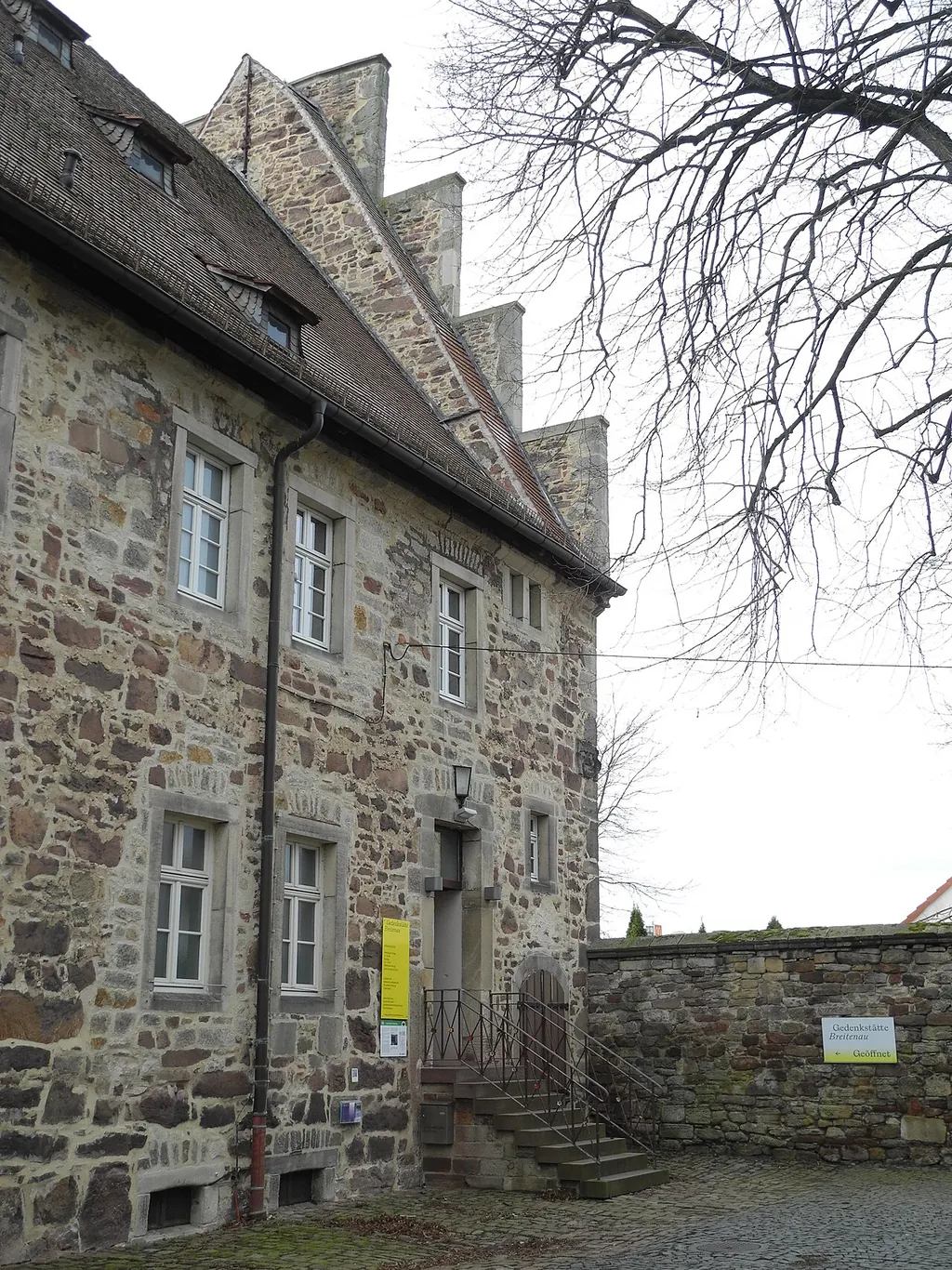
Gedenkstätte Breitenau
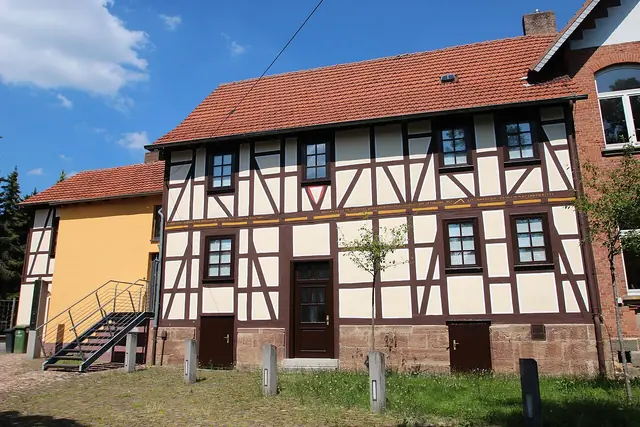
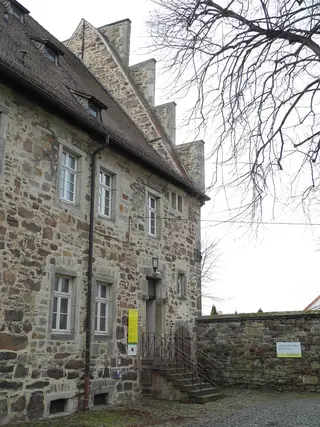
Memorial in the former tithe barn of the Breitenau monastery on the history of the early concentration camp and the labor education camp.
Have only individual sections read aloud
About the museum
The place Breitenau near Guxhagen has a long history: in 1113 a Benedictine monastery was founded here, which Landgrave Philip dissolved in 1527. In 1874 a correctional and rural poor-relief institution was set up in the buildings. From June 1933 to March 1934, an early concentration camp for political opponents of the Nazis was housed there; 470 people were held in it.
From 1940 to 1945, the Gestapo ran a "Arbeitserziehungslager" (labor re-education camp) there. In total, 8,304 people were detained, including about 7,000 forced laborers from more than 20 countries. Between 1933 and 1945, 179 people died. In March 1945, American soldiers liberated the camp.
The memorial exists because of a research project on the Nazi era in Kassel: when researchers discovered extensive files in the cellar of the former administration building, the work was made permanent. In 1984 the project group moved permanently into the tithe barn. Since 1992, the memorial has shown a permanent exhibition by the artist Stephan von Borstel; in addition, there is an archive, educational programs, and a digital tour of the grounds.
Key themes
- Historic site: monastery, workhouse, early concentration camp, and labor re-education camp
- Permanent exhibition by the artist Stephan von Borstel with sculptures and installations
- Historic prison section with isolation cells in the former monastery church (guided tours only)
- Digital 360° tour and QR-code walk around the grounds
- Archive with files and collections on Breitenau's history
Permanent exhibition
- Dauerausstellung von Stephan von Borstel – Four rooms with sculptures and installations made of lead, iron, zinc, and copper combine artistic design with historical presentation of exclusion, Nazi persecution, and remembrance of the victims.
- Founded
- 1984
Admission & discounts
Admission is free.
| Group tour for adults (90 min.) | €45Flat fee per tour; school classes and people in training pay less |
|---|
The exhibition and the QR-code walk are free; donations are welcome.
Accessibility
- Wheelchair accessible: not available
- Elevator: no information
- Accessible restroom: no information
- Accessible parking: no information
- Service dogs welcome: no information
- Tactile models & exhibits: no information
- Sign language tours: no information
- Easy-to-read materials: no information
- Audio description: no information
The outdoor grounds, the historic prison section, and the memorial rooms are not barrier-free; large parts are not accessible to people with mobility impairments. Tours can be streamed live via Zoom. Media stations on the first floor and second floor are open to visitors with visual impairments. There are no audio guides.
Kids & families
Only partly suitable for kidsRecommended for ages 14+
A visit to the historic prison section is recommended from age 14. Bookable educational programs are available for school classes and groups.
Getting there & parking
By public transit
Guxhagen · 10-min walk · 900 m
Take the Cantus-Bahn RB5 toward Fulda or the RegioTram RT5 toward Melsungen from Kassel to the Guxhagen stop; travel time from Kassel Hbf is about 13 to 20 minutes.
By car
Parking available
A few parking spaces on the right side of the Kirchweg. There is no turning space for buses there.
15 km south of Kassel on the A7, exit Guxhagen; follow the B83 toward Guxhagen and turn left onto Brückenstraße.
Get directionsAmenities & dining
The museum hasn’t published any information on this.
Events & venue rental
The museum hasn’t published any information on this.
Plan your visit
| Guided tours | yes · approx. 1.5 hrs |
|---|---|
| Audio guide | no |
| School programs | yes |
| Photography | Private photos of objects and the exhibition are allowed; publications must be coordinated with the memorial management. Photo and film recordings on the grounds and in the prison section require a permit. |
| Good to know | The historic prison section, with its shower room and isolation cells, can only be visited accompanied by memorial staff. Book group tours at least six weeks in advance via the contact form. For visiting on your own, there is a folding map and a QR-code walk. The outdoor grounds are not certified as safe for visitors; a residential care facility is located on the site, and its privacy must be respected. |