Archaeological finds trace 350,000 years of climate history from the Stone Age to the Middle Ages, and show how earlier societies adapted to extreme weather and what we can learn from this.
About the museum
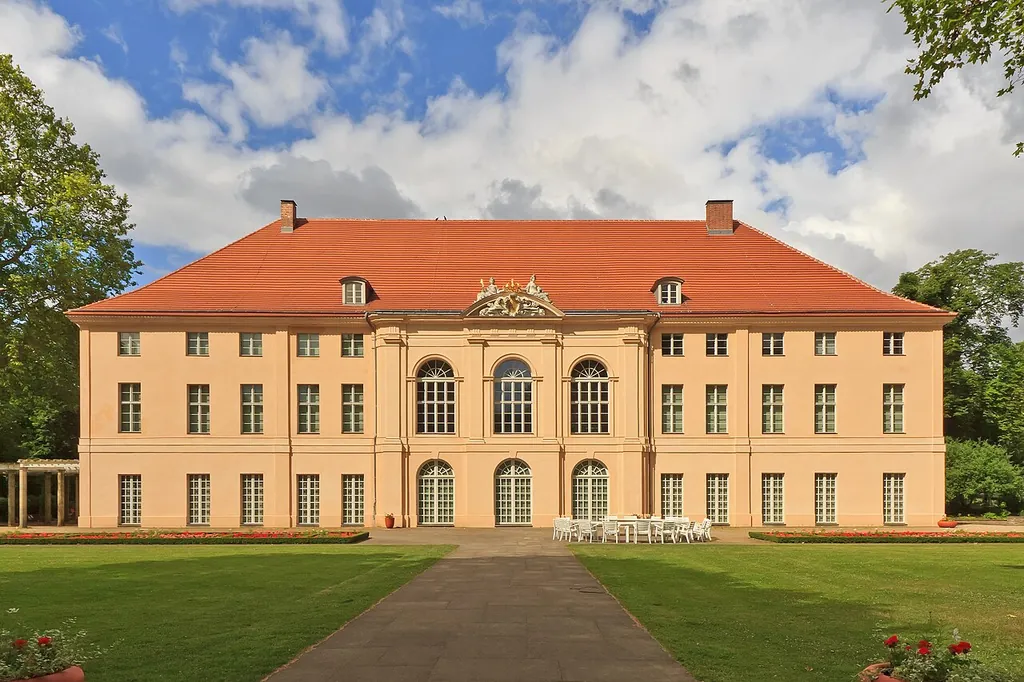
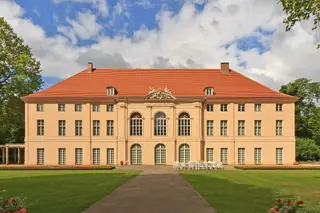
Countess Sophie Dorothea zu Dohna had a first palace built in the 1660s; around 1690 it was completely rebuilt for Elector Friedrich III. Queen Elisabeth Christine, wife of Frederick the Great, shaped the site most strongly; she used the house as a summer residence from 1740 to 1797, for more than five decades. The stuccoed great hall (Festsaal) on the upper floor is Berlin's only original surviving room design of the late Rococo.
During the Nazi era, from 1938, the palace served as a depot for around 3,750 works of confiscated “degenerate art”, which were to be sold abroad for foreign currency. After 1945, Schönhausen became the official seat of GDR President Wilhelm Pieck and remained the highest government building until 1964; from 1964 to 1990 it was a state guest house where, among others, Fidel Castro and Mikhail Gorbachev stayed. During the Peaceful Revolution, negotiations on German unification took place here.
Since 2005, the Stiftung Preußische Schlösser und Gärten (SPSG) has cared for the palace. The permanent exhibitions show the layers of the building's history from the Rococo to the GDR, as well as, in five rooms, the palace's role in Nazi art policy.
Highlights
Rococo great hall, Berlin's only original surviving one
Rooms of Queen Elisabeth Christine
Office of Wilhelm Pieck and GDR guest apartment
Permanent exhibition on the Nazi campaign “Degenerate Art”
Palace garden in the style of the 1950s
Permanent exhibitions
Kunst – Menschen – Macht. Schloss Schönhausen als Tatort der NS-Aktion „Entartete Kunst“ – Five rooms show how from 1938 around 3,750 confiscated artworks were stored and sold here, and introduce the people involved and the affected artists.
Zeit(ge)schichten aus 350 Jahren. Ein Schloss im Wandel der Zeit – The tour leads from the rooms of Queen Elisabeth Christine to Pieck's office and the guest apartment for GDR state visitors.
Operated by
Stiftung Preußische Schlösser und Gärten Berlin-Brandenburg (SPSG)
Director
Björn Ahlhelm
Admission & discounts
Adults
€8
Reduced
€6
Groups
–Group bookings via the SPSG group service (gruppenservice@spsg.de, 0331 9694-222).
Families
€16Family ticket Schloss Schönhausen: 2 adults and up to 4 children up to the age of 18, valid for one day for this palace only; sold at the palace cash desk.
Free admission for holders of the SPSG annual pass, and for holders of the Berlin Youth Card / European Youth Card (valid June 12 – October 31, 2026 and April 1 – October 31, 2027; registration at eyca.org).
Accessibility
Wheelchair accessible
Elevator
Accessible restroom
Accessible parking: no information
Service dogs welcome
Tactile models & exhibits: no information
Sign language tours
Easy-to-read materials
Audio description
The palace is wheelchair-accessible; there is an elevator, accessible toilets and lockers. Assistance dogs are welcome. The free “SANSSOUCI” app offers tours also in German Sign Language, in Easy Language, and for blind and visually impaired visitors.
Kids & families
Family ticket
€16 · Family ticket Schloss Schönhausen: 2 adults and up to 4 children up to the age of 18, valid for one day for this palace only; sold at the palace cash desk.
With the family ticket (€16), up to 2 adults and 4 children up to age 18 can visit the palace on one day.
Getting there & parking
By public transit
Tschaikowskistr.
Stop “Tschaikowskistr. (Berlin)”.
By car
Parking available
Parking spaces are limited.
Tour buses should approach via Ossietzkystraße (a bicycle street, open only to residents).
Museum shop in the palace. Lockers for small pieces of luggage (up to 35 × 35 × 50 cm) in limited numbers. The Café Sommerlust in the palace garden (Tschaikowskistraße 1 / Am Westtor) is nearby.
Events & venue rental
The museum hasn’t published any information on this.
Plan your visit
Guided tours
yes
Audio guide
yes (DE, EN)
Good to know
From April to October, the palace can only be visited on a guided tour from Tuesday to Friday, while Saturdays and Sundays are individual visits; from November to March, visits are guided, and there may be waiting times. The free multimedia app “SANSSOUCI” offers two tours (a walk-through and “Kunst – Menschen – Macht”, Art – People – Power); bring your own headphones, as no loaner headphones are available.