Stadtmuseum Mosbach
Municipal museum in five half-timbered houses around the Hospitalhof, with Mosbach faience, printing history, Jewish history and crafts.
No sound? Check your device’s silent switch.
Have only individual sections read aloud
About the museum
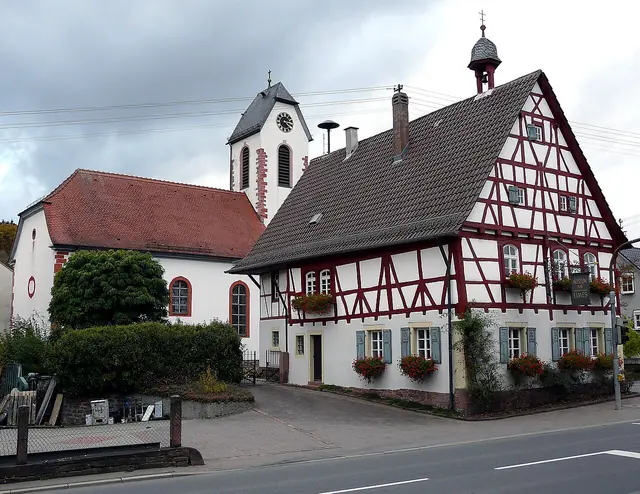
The origins of the city museum lie in 1901 and 1902: Mayor Jacob Renz set up an antiquities collection on the ground floor of the town hall, where it was shown as a municipal collection for more than 70 years. Between 1979 and 1980 the museum moved into the buildings around the Hospitalhof in the old town and grew into an ensemble of five houses.
The centerpiece is the Alte Hospital (Old Hospital), a half-timbered building from the 15th century, which displays Mosbach faience from the Electoral Palatinate manufactory (1770 to 1836), majolica from the Nerbel stove factory, and rural pottery from the Odenwald and Bauland regions. In the hospital barn, small workshop areas show old crafts such as shoemaking, weaving, saddlery and brewing, along with historic views of the town. The Haus Kickelhain, built around 1600 and only 26 square meters in size, is considered one of the smallest freestanding half-timbered houses in Germany.
Further sections are devoted to printing history with working printing and typesetting machines, to the history of Mosbach’s Jewish community, including a synagogue model on a 1:20 scale added in 2025, and, in the Haus Paschke, to the expellees who settled after 1945. The museum database includes around 10,000 objects; there is also a library of about 4,000 volumes and a newspaper archive.
Highlights
- Mosbach faience (1770–1836) and majolica in the Old Hospital
- Haus Kickelhain: only 26 m² half-timbered house from around 1600
- Print workshop with working printing and typesetting machines
- Jewish history with 1:20-scale synagogue model
- Crafts and guilds in the hospital barn
Permanent exhibitions
- Keramik im Alten Hospital – Mosbach faience from the Electoral Palatinate manufactory from 1770 to 1836, majolica from the Nerbel stove factory, and rural pottery from the Odenwald and Bauland regions.
- Die „Schwarze Kunst“ – Druckgeschichte – Working printing and typesetting machines and rare pieces show the printing trade, which is more than 550 years old; the print workshop offers hands-on activities.
- Jüdische Geschichte – Individual stories show Jewish life in Mosbach, from its integration into town life to persecution, including photos of the pogrom of November 10, 1938, and a synagogue model.
- Operated by
- Stadt Mosbach
Admission & discounts
Admission is free.
| Thematic tour for groups (5–15 people) | €40Flat fee per group; free for school classes and kindergarten groups. |
|---|
Admission to the exhibitions is free.
Accessibility
- Partially wheelchair accessible
- Elevator: no information
- Accessible restroom: no information
- Accessible parking: no information
- Service dogs welcome: no information
- Tactile models & exhibits: no information
- Sign language tours: no information
- Easy-to-read materials: no information
- Audio description: no information
The buildings are only partly barrier-free; the Old Hospital has an elevator to the exhibitions.
Kids & families
Great for kids & families
- Family tours & workshops
- Hands-on stations
- Baby changing facilities: not available
- Kids’ birthday parties
The print workshop offers creative printing activities for school classes, kindergartens and children’s birthday parties (groups of 4 to 12 people); tours for school and kindergarten groups are free.
Getting there & parking
The museum office is in the Haus Becker, reachable via the Hospitalhof.
Get directionsAmenities & dining
- Café: not available
- Museum shop: not available
- Coat check: not available
- Lockers: not available
Events & venue rental
The museum hasn’t published any information on this.
Plan your visit
| Guided tours | yes |
|---|---|
| School programs | yes |
| Photography | Photography is allowed. |
| Good to know | Thematic tours for all ages (including living in the 19th century, Mosbach ceramics, historic crafts, geology, Jewish life and printing history) last 60 to 90 minutes and can be booked by registration for groups of 5 to 15 people. The website offers virtual tours (including of Haus Kickelhain) and information in plain language (Leichte Sprache). |