Local history of Aschersleben, a fossil and mineral collection, and the only walk-in Masonic temple in Germany, housed in a townhouse on the market square.
Erzgebirge folk art with luminous wooden pyramids and painted nativity scenes by the Dresden artist Roland Unger (1941–2022), with a humorous, self-ironic character.
Using the biographies of persecuted people, the travelling exhibition shows how the early concentration camps set up from 1933 onwards tested violence and secured Nazi rule; part of the Jüdische Kulturtage Aschersleben.
About the museum
As early as 1843, citizens of Aschersleben called for a natural history museum. The "Städtisches Museum" (Municipal Museum) opened on November 8, 1908, in the former Stephaneum. It closed in 1918, and its collections moved to the Rondell of the town fortifications. In the 1920s, the paleontologist Martin Schmidt and others expanded the geological and paleontological holdings. The museum reopened in 1934 after a long break and was closed again during World War II.
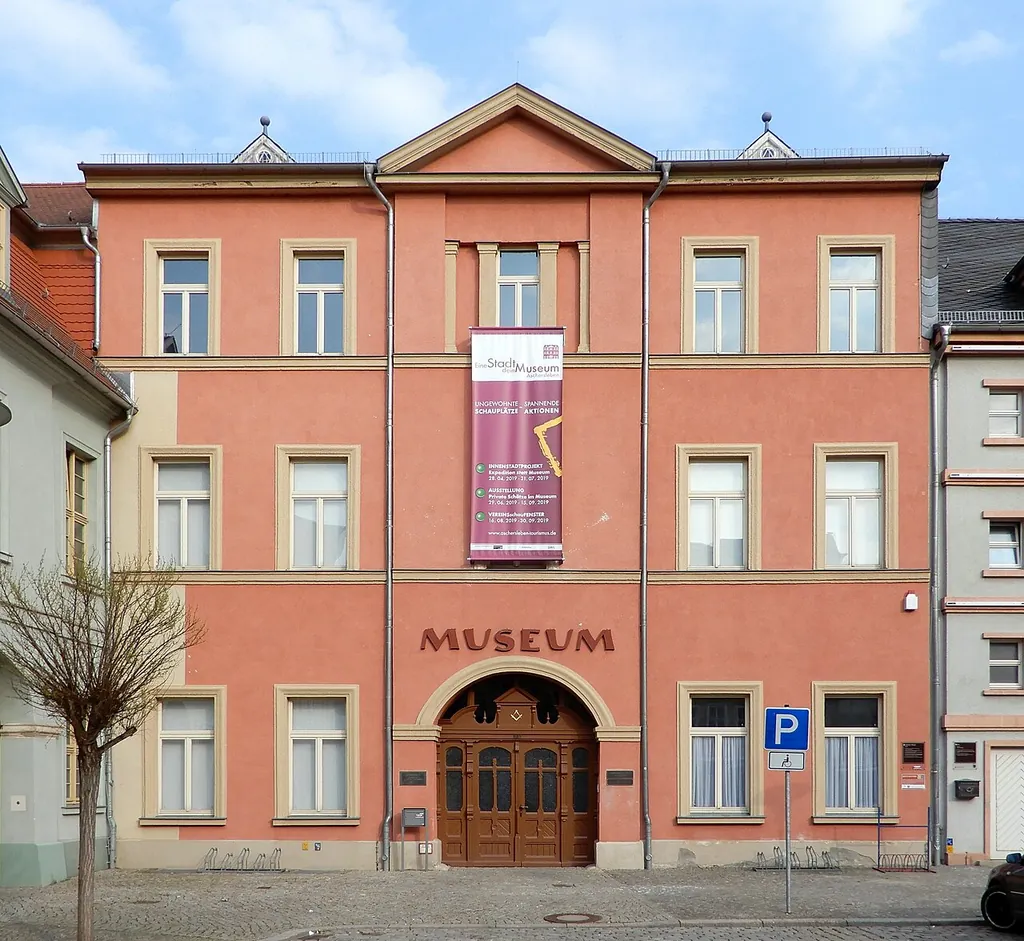
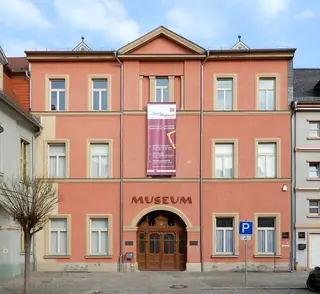
On July 24, 1955, the museum opened at its present location, Markt 21, a listed 18th-century townhouse. The building was erected in 1798 as the lodge house of the Freemasons' lodge "Zu den drei Kleeblättern" (The Three Clovers) and remained so until 1935. After reunification, it was returned in 1992 to the Grand National Lodge of Free and Accepted Masons of Germany; the lodge resumed its work in 1993. Since then, the lodge and the museum have shared the building.
The permanent exhibition traces Aschersleben from its first documented mention in 753 to the political transition of 1989/90 (Wende), supplemented by prehistory and early history, a paleontological study collection with around 7,000 fossils, and a mineral cabinet. The Masonic temple on the upper floor is accessible as part of the tour.
Highlights
Walk-in Masonic temple of the St. John's Lodge
Paleontological study collection with around 7,000 fossils
Mineral cabinet with finds from the Harz and around the world
Town history from the first mention in 753 to 1989/90
Historic inner courtyard with summer events
Permanent exhibitions
Stadtgeschichte Aschersleben – The town's history from its first documented mention in 753 to the 1989/90 political transition, supplemented by the early history of the region.
Paläontologische Studiensammlung und Mineralienkabinett – Fossils from various geological eras, mostly from Europe, along with ores, quartz, agates, and minerals from the Harz and around the world.
Freimaurertempel – The walk-in temple of the St. John's Lodge "Zu den drei Kleeblättern" with a small exhibition on Freemasonry and the history of the lodge.
Founded
1908
Operated by
Aschersleber Kulturanstalt
Admission & discounts
Adults
€3.50
Reduced
€2.50
Further reductions can be requested on site.
Accessibility
Wheelchair accessible: not available
Elevator: no information
Accessible restroom: no information
Accessible parking: no information
Service dogs welcome: no information
Tactile models & exhibits: no information
Sign language tours: no information
Easy-to-read materials: no information
Audio description: no information
The building is not accessible.
Kids & families
Great for kids & families
Family tours & workshops
The museum offers educational programs in the categories "For Little Ones," "For Older Children," and "For Everyone."
Getting there & parking
By car
Paid parking · 2-min walk to the entrance
Parking directly in front of the museum, as well as at the Vorderbreite/Hinterbreite parking lot (about a 2-minute walk); both are paid.