Hansági Múzeum – Cselley-ház
A museum in the oldest residential building of Mosonmagyaróvár, with a Roman stone collection, the Gyurkovich collection and 17th- to 19th-century interiors.
Have only individual sections read aloud
About the museum
The Hansági Múzeum was founded in 1882, when a few local patriots, among them the Piarist teacher Ivánfi Ede, the lawyer Sőtér Ágost and the academic teacher Deininger Imre, established the Mosonmegyei Történelmi és Régészeti Egylet (Moson County Historical and Archaeological Society). At first its collection consisted almost exclusively of archaeological material: Roman remains from Magyaróvár and Oroszvár, finds from the Lombard cemetery at Bezenye and from the Avar graves at Nemesvölgy. A separate museum building was completed in 1913; the museum was nationalised in 1950 and has since operated as the Hansági Múzeum.
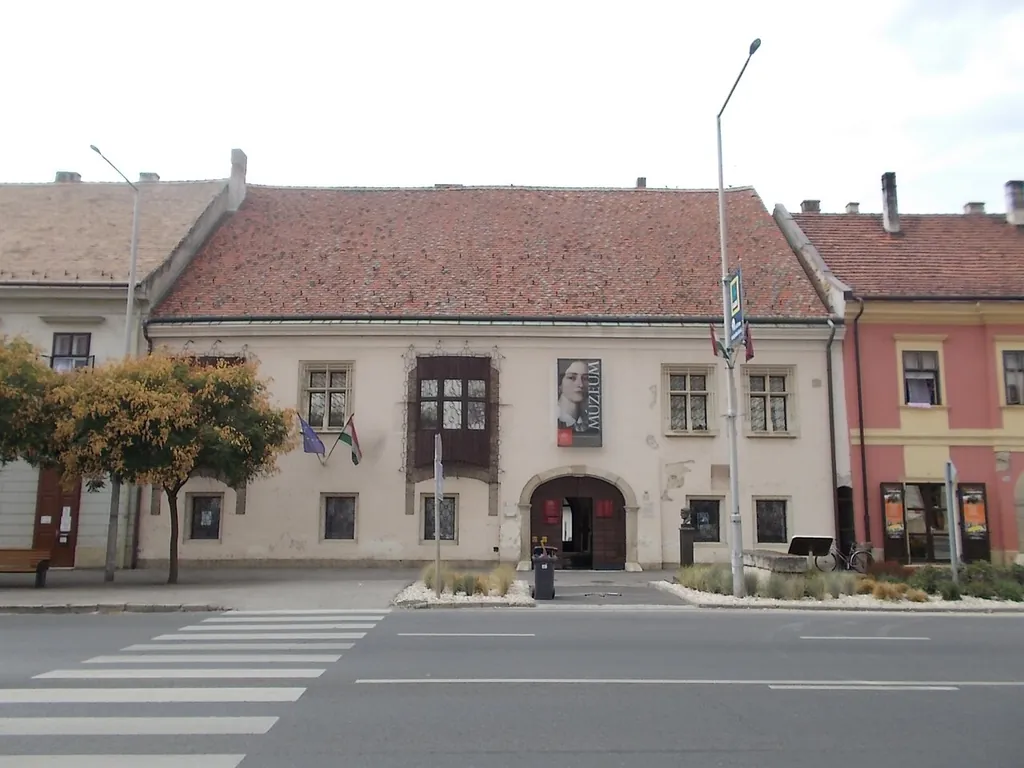
In 1982 the museum took over the town's oldest listed building, the Cselley-ház on Fő út, which is today the centre of the institution. The late Gothic house, with early Renaissance origins, had its upper great hall built between 1470 and 1480; its Baroque staircase dates from around 1730, and the façade received eclectic decoration in 1885. The reconstruction after the heritage excavation of the 1970s restored the medieval proportions.
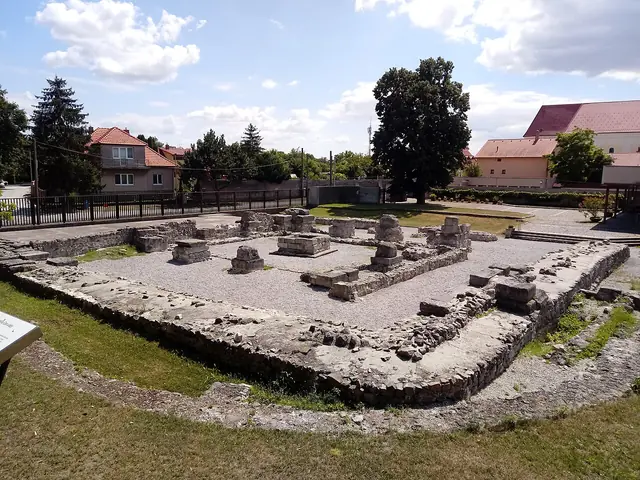
The cellar of the building houses the Roman stone collection. On the upper floors can be seen the outstanding collection of Dr. Gyurkovich Tibor, which presents significant artists of 19th- and 20th-century Hungarian painting, alongside 17th- to 19th-century interiors that show the museum's fine and applied art. Since 2012 the memorial room of the writer and poet Gyurkovics Tibor has also been part of the exhibitions.
Highlights
- Mosonmagyaróvár's oldest residential house, with late Gothic and early Renaissance details
- The Gyurkovich Collection: significant artists of 19th- and 20th-century Hungarian painting
- 17th- to 19th-century interiors with furniture and applied art objects
- Roman stone collection in the cellar
- Memorial room of Gyurkovics Tibor
Permanent exhibitions
- Gyurkovich-gyűjtemény – The collection of Dr. Gyurkovich Tibor, with works by significant artists of 19th- and 20th-century Hungarian painting.
- 17–19. századi enteriőrök – Interiors assembled from the museum's fine and applied art material, with furniture, chests and cupboards.
- Római kőtár – The Roman stone collection in the cellar, consisting mainly of 1st-century gravestones from the Bruckújfalu, Nezsider and Körtvélyes areas.
- Founded
- 1882
Admission & discounts
| Adults | HUF 1,000 |
|---|---|
| Reduced | HUF 500Ages 6–26 and ages 62–70 |
| Children & teens | HUF 500free up to age 5 · Free under the age of 6; discounted for ages 6–26. |
| Seniors | HUF 500Ages 62–70; those who have reached the age of 70 may enter free of charge. |
| Visitors with disabilities | freecompanion free · Visitors with disabilities and one companion may enter free of charge. |
| Students & apprentices | HUF 500Ages 6–26. |
| Groups (15+ people) | HUF 700 per personAdult group admission for more than 15 people: HUF 700 per person; student or pensioner group for more than 15 people: HUF 400 per person. |
| Museum education session (per person, in addition to admission) | HUF 500Group student admission is HUF 400; prior arrangement required. |
Card payment is also possible in the museum buildings.
Accessibility
The museum hasn’t published any information on this.
Kids & families
Great for kids & families
| Kids’ admission | free up to age 5 |
|---|
- Family tours & workshops
Museum education sessions and periodic family programmes (for example on St Martin's Day).
Getting there & parking
The museum hasn’t published any information on this.
Amenities & dining
- Coat check
Use of the cloakroom is compulsory and free of charge for security reasons.
Events & venue rental
The museum hasn’t published any information on this.
Plan your visit
| Guided tours | yes |
|---|---|
| School programs | yes |
| Good to know | Guided tours may only be given by the museum's trained guides. Objects may only be approached up to 30 centimetres. Groups (more than 15 people) can register by e-mail; museum education sessions by prior arrangement (Monday to Friday). |