Nagycenki Széchenyi-kastély
In the Széchenyi-kastély (Széchenyi Mansion) in Nagycenk, the interactive exhibition of the Széchenyi István Emlékmúzeum presents the life of “the greatest Hungarian”.
Have only individual sections read aloud
About the museum
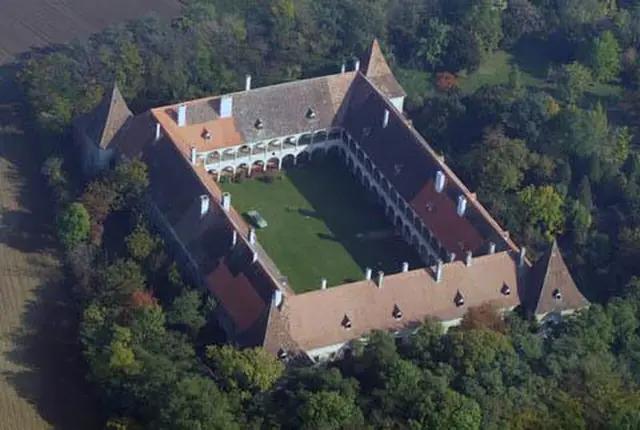
The Széchenyi family's mansion in Nagycenk developed from Baroque beginnings in the 18th century: the first noble building work was started by Antal Széchenyi around 1750, and Ferenc Széchenyi gave the building a Classicist appearance in 1799. Here he kept his famous collection of several tens of thousands of items, which he donated to the nation, laying the foundations for the Országos Széchényi Könyvtár (National Széchényi Library) and the Magyar Nemzeti Múzeum (Hungarian National Museum).
This was also the home of Count István Széchenyi, the “greatest Hungarian”, who modernised and extended the mansion in the Western style: he had a bathroom, a flush toilet and gas lighting installed. The family owned the village and the mansion until 1945; wartime bombing caused severe damage.
Restoration began in 1969, and the Széchenyi István Emlékmúzeum opened in 1973. Across several floors, the renewed exhibition uses interactive elements to present the history of the family and the life of István Széchenyi as statesman and private individual. The mansion, the lime-tree avenue and the mausoleum together form part of the World Heritage landscape.
Highlights
- Széchenyi István Emlékmúzeum
- Interactive permanent exhibition across several floors
- Széchenyi Mausoleum
- Széchenyi lime-tree avenue
- Palace park and English garden
Permanent exhibitions
- Széchenyi István Emlékmúzeum – Interactive exhibition on the life, family and intellectual legacy of István Széchenyi as statesman and private individual, in the rooms of the mansion.
- Széchenyi-mauzóleum – The Széchenyi family burial site in Nagycenk, next to the palace park.
- Széchenyi-hársfasor – The lime-tree avenue starting at the mansion, known from István Széchenyi, as part of the palace complex.
- Founded
- 1973
- Operated by
- Eszterháza Kulturális, Kutató- és Fesztiválközpont
Admission & discounts
| Adults | HUF 4,400 |
|---|---|
| Reduced | HUF 2,200Students and pensioners (50% discount); Hungarian and EEA citizens aged 6–26 and over 65 |
| Children & teens | freefree up to age 5 · Free under 6; Hungarian and EEA citizens aged 6–26 receive a 50% discount |
| Seniors | freeFree over 70; EEA citizens over 65 receive a 50% discount |
| Visitors with disabilities | freecompanion free · People with disabilities and one companion may visit free of charge (EEA citizens) |
| Groups (15+ people) | –Group visits from 15 people with prior booking |
Free admission: On the first Sunday of every month the permanent exhibitions are free for Hungarian and EEA citizens under 26 and for accompanying relatives of children under 18 (up to 2 people); on national holidays (15 March, 20 August, 23 October) the exhibitions are free for everyone.
The entitlement card must be shown at the ticket office. Combined tickets can be bought together with the Esterházy Palace in Fertőd. SZÉP card accepted.
Accessibility
The museum hasn’t published any information on this.
Kids & families
The museum hasn’t published any information on this.
Getting there & parking
The museum hasn’t published any information on this.
Amenities & dining
The museum hasn’t published any information on this.
Events & venue rental
- Spaces for rent
- Private parties
- Corporate events
- Weddings / ceremonies
Chapel, garden and park, conference room, greenhouse / Széchenyi literary café.
Inquiries & detailsPlan your visit
| School programs | yes |
|---|---|
| Good to know | The Széchenyi heritage sites that can be visited are the Széchenyi Mausoleum, the lime-tree avenue and the Széchenyi István Emlékmúzeum. |