Siroki vár
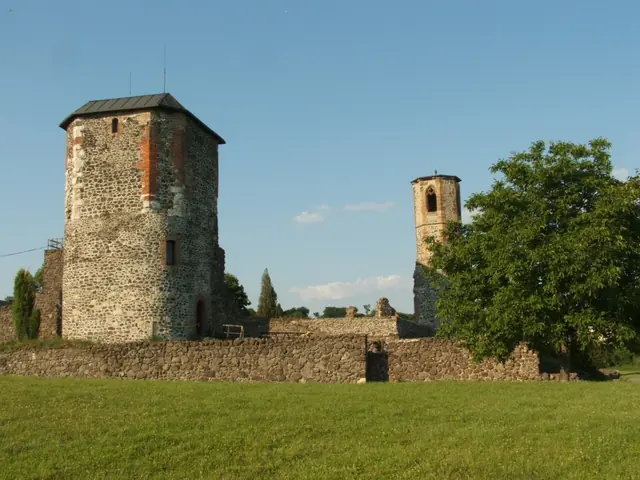
Siroki vár is a medieval fortress built into and onto a rhyolite-tuff hill on the border of the Mátra and the Bükk, with a system of casemates and a permanent exhibition on everyday life in the Ottoman era.
Have only individual sections read aloud
About the museum
The fortification on the top of the Vár-hegy has a history going back to the period following the Hungarian conquest (honfoglalás). After the Tatar invasion it was built up by the Bodon family; later it became a royal castle and then came into the possession of the Országh family. In the 16th century it was part of the northern chain of border fortresses and one of the most important forward positions of Eger; for a time it was also in Ottoman hands.
The special feature of the castle is the system of passages cut into the rock: staircases, corridors and halls were formed inside the rhyolite-tuff hill, and they can still be explored today. The oldest part of the fortress is the residential tower in the upper castle, and the old tower, which served as the garrison's dwelling, was built onto it. Within the walls one can still see the former stable, the grain storage pit and the drinking well.
After the Rákóczi War of Independence, in 1713, Imperial troops demolished the castle. Today it also houses a permanent exhibition on the Ottoman era, and at the foot of the hill a village heritage house (tájház) can be visited. The site is run by the Nemzeti Örökségvédelmi Fejlesztési Nonprofit Kft.
Highlights
- Rock-cut casemate and passage system
- Panorama over the forests of the Bükk and the Mátra
- Permanent exhibition on everyday life in the Ottoman era
- Village heritage house with furnished rooms
- Residential tower and old tower
Permanent exhibition
- A török hódoltság kora – Three interiors – a kitchen, a living room and a space furnished with military equipment – show everyday life in the Ottoman era; a film and guided tours complement the display. The archaeological material belongs to the Dobó István Vármúzeum (Dobó István Castle Museum) in Eger.
- Operated by
- Nemzeti Örökségvédelmi Fejlesztési Nonprofit Kft. (NÖF)
Admission & discounts
| Adults | HUF 2,500 |
|---|---|
| Reduced | HUF 1,250Young people aged 6–26, visitors over 62, and up to two close relatives accompanying at least two children under 18; available to EEA citizens |
| Children & teens | HUF 1,250free up to age 5 |
| Visitors with disabilities | –companion free · People with disabilities and one companion can enter free of charge. |
| Groups (15+ people) | –Group visits require prior arrangement (rendezveny@nof.hu). |
| Village heritage house ticket | HUF 800reduced: HUF 400 |
| Local resident (with address card) | HUF 1,000valid for the castle and the village heritage house too |
Free admission for children under 6 and for visitors who have reached the age of 70. SZÉP cards are accepted; a stamp can be obtained with the Kajla-útlevél (Kajla passport).
Accessibility
- Wheelchair accessible: not available
- Elevator: no information
- Accessible restroom: no information
- Accessible parking: no information
- Service dogs welcome: no information
- Tactile models & exhibits: no information
- Sign language tours: no information
- Easy-to-read materials: no information
- Audio description: no information
The castle is reached from the car park at the foot of the hill by a footpath of roughly 20 minutes, in places steep; it is difficult to reach with a pram or a bicycle.
Kids & families
The museum hasn’t published any information on this.
Getting there & parking
By car
Parking available
There is a car park at the foot of the castle hill; from there it takes about 20 minutes to reach the castle on foot.
Get directionsAmenities & dining
The museum hasn’t published any information on this.
Events & venue rental
The museum hasn’t published any information on this.
Plan your visit
| Guided tours | yes |
|---|---|
| Good to know | A film and guided tours belong to the exhibition on the Ottoman era. |