Safnasafnið
The main museum of Icelandic folk art at Svalbarðseyri by Eyjafjörður, with around 30,000 works, many exhibition halls and outdoor artworks.
Have only individual sections read aloud
About the museum
The Safnasafnið was founded on 17 February 1995 by the visual artist Níels Hafstein and the psychiatric nurse Magnhildur Sigurðardóttir, and it is the main museum of Icelandic folk art (alþýðulist). The founders built up the exhibition facilities gradually until 2007.
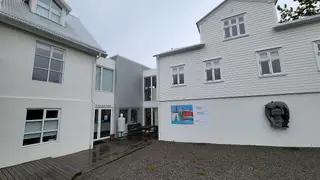
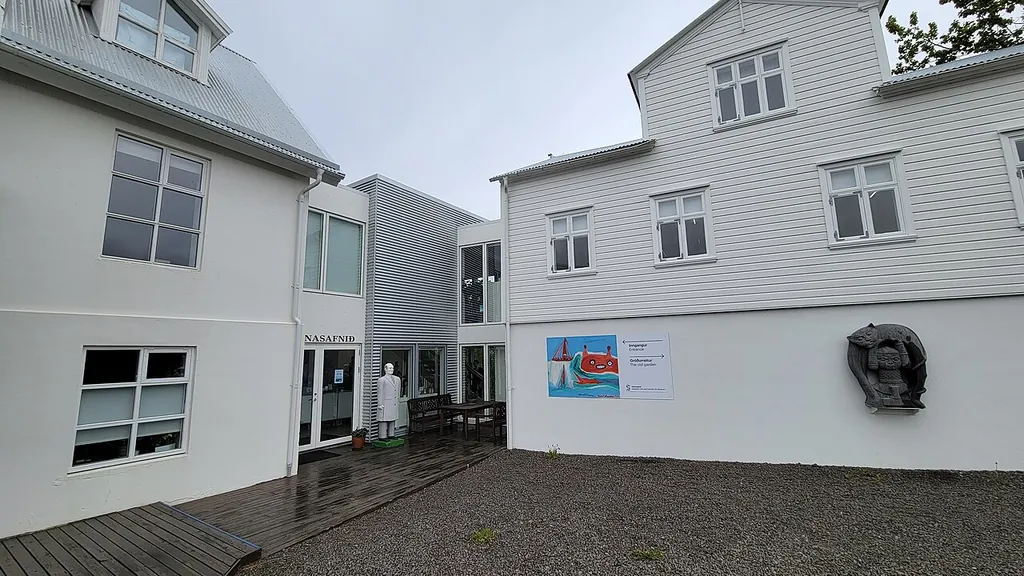
The museum is housed in an old primary school, which was also the community hall of Svalbarðshreppur, and in Gamla-Búð, a co-operative shop building from 1900 that was moved to the museum site in 2006 and restored. A new building links the houses together. The museum was opened in its present form in 2007, with ten exhibition halls and 474 m² of exhibition space.
The basic collection comprises around 30,000 works by 323 artists, both self-taught and formally trained, from the mid-19th century to the present day. Among the special collections is Kiko Korriro's room, with around 120,000 works and drawings by Þórður Guðmundur Valdimarsson (1922–2002). The museum received the Eyrarrósin award in 2012, and in 2014 it was shortlisted for the Dr. Guislain Prize in Ghent, Belgium.
Highlights
- Around 30,000 works by 323 self-taught and formally trained artists
- Kiko Korriro room with around 120,000 works and drawings
- Special collections such as Brúðustofa (doll room), Þvílíkasafnið, Bókhlaða and Ilmvatnsglös
- A new exhibition series every summer in many halls
- Outdoor artworks in the museum garden
- Founded
- 1995
Admission & discounts
| Adults | ISK 1,900 |
|---|---|
| Reduced | ISK 1,500Pensioners |
| Children & teens | freefree up to age 13 · Free for children under 14. |
| Seniors | ISK 1,500Pensioners |
| Visitors with disabilities | ISK 500People with disabilities |
| Groups (10+ people) | ISK 1,500 per personGroups of 10 or more people |
Accessibility
- Wheelchair accessible
- Elevator
- Accessible restroom
- Accessible parking: no information
- Service dogs welcome: no information
- Tactile models & exhibits: no information
- Sign language tours: no information
- Easy-to-read materials: no information
- Audio description: no information
Access for wheelchairs and walkers is generally good, but the car park is covered in gravel, and there is a wooden platform with a threshold at the entrance. A portable ramp is laid at the entrance when needed, and visitors can ask for a mat to make it easier to cross from the gravel onto the platform. Lifts and ramps are provided between floors, except in the middle of the west hall, where three steps lead down; the lower part of the west hall is accessible from the sun deck. On the first floor there are two toilets, one of which is wheelchair-accessible. Staff can guide deafblind visitors and others who wish it. Video and audio works with sound are provided with headphones.
Kids & families
The museum hasn’t published any information on this.
Getting there & parking
By car
Parking available
The car park is covered in gravel.
The museum is at Svalbarðseyri, about a ten-minute drive from Akureyri.
Get directionsAmenities & dining
You can sit in the flower pavilion on the first floor, in the library on the upper floor, on the sun decks and on benches in the garden.
Events & venue rental
- Spaces for rent
The museum's halls are rented out for meetings, receptions and concerts; terms are set individually. A researcher's flat is available for scholars.
Plan your visit
| Guided tours | yes |
|---|---|
| School programs | yes |
| Good to know | Guided tours for small and large groups are offered for a fee. Schools receive education free of charge, such as lectures, guided tours, projects and workshops. School guided tours run through the summer until around 15 September, and the textile education project “Munstur og menning” (Pattern and Culture) is offered in winter. Booking in advance is required. |