Antiquarium «Filippo Buonopane»
Archaeological museum in the Castello d’Aquino in Grottaminarda, with finds from the Ufita Valley from the Neolithic to the Roman period and about 200 coins.
Have only individual sections read aloud
About the museum
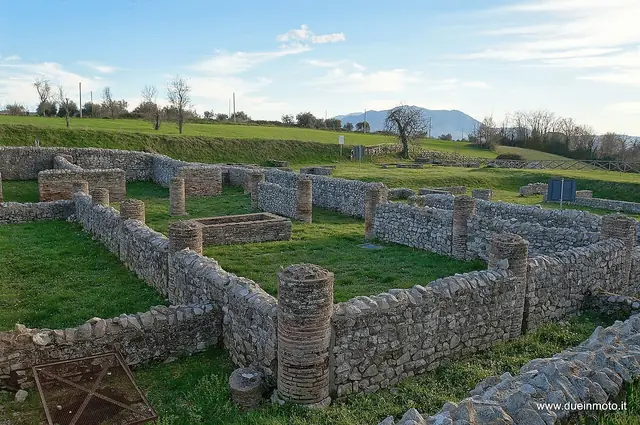
The Museo Antiquarium “Filippo Buonopane” in Grottaminarda is housed in the rooms of the Castello d’Aquino, an early medieval fortress overlooking the middle Ufita Valley. The museum holds finds that document human presence in the valley from the early and middle Neolithic, in the 5th millennium BC, through to the Roman period.
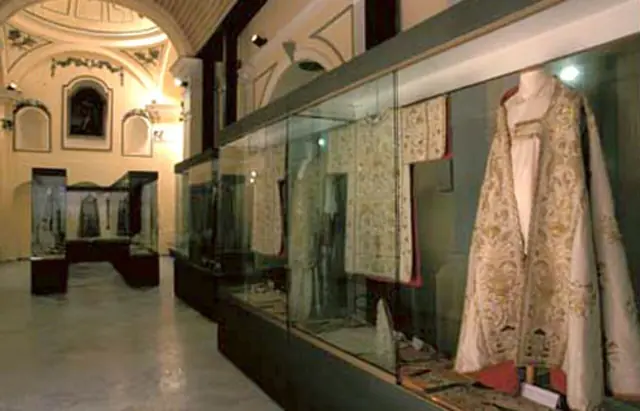
The collection includes pottery from the final Neolithic, two fragmentary axes from the Copper Age, loom weights, an unguentarium (perfume jar), a small red-figure krater and various votive objects from the Bronze and Iron Ages. The Roman period is represented by pottery, marble fragments and a male portrait that may depict Augustus. Around two hundred coins, from the Republican period to the Middle Ages, are also on display, and the section devoted to the modern era contains photographs and documents about the life of the community.
Highlights
- Final Neolithic vessels and Copper Age axes
- Red-figure krater and votive objects from the Bronze and Iron Ages
- Roman male portrait, possibly of Augustus
- About 200 coins from the Republican period to the Middle Ages
- Housed in the Castello d’Aquino
Permanent exhibition
- Collezione archeologica della Valle dell'Ufita – Finds from the Neolithic to the Roman period, coins and historical documentation on the community of Grottaminarda.
- Operated by
- Comune di Grottaminarda
- Visitors per year
- approx. 450
Admission & discounts
Admission is free.
Free admission according to the Museionline portal.
Accessibility
The museum hasn’t published any information on this.
Kids & families
The museum hasn’t published any information on this.
Getting there & parking
The museum hasn’t published any information on this.
Amenities & dining
The museum hasn’t published any information on this.
Events & venue rental
The museum hasn’t published any information on this.