Forte Belvedere Gschwent
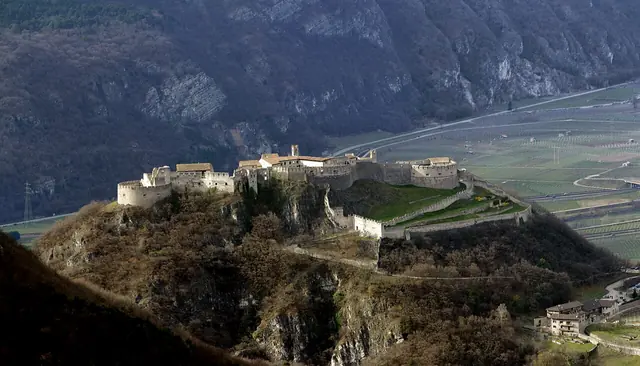
Austro-Hungarian fort on the Altopiani di Lavarone, today a museum of the Great War spread over three floors of the casemate block.
Have only individual sections read aloud
About the museum
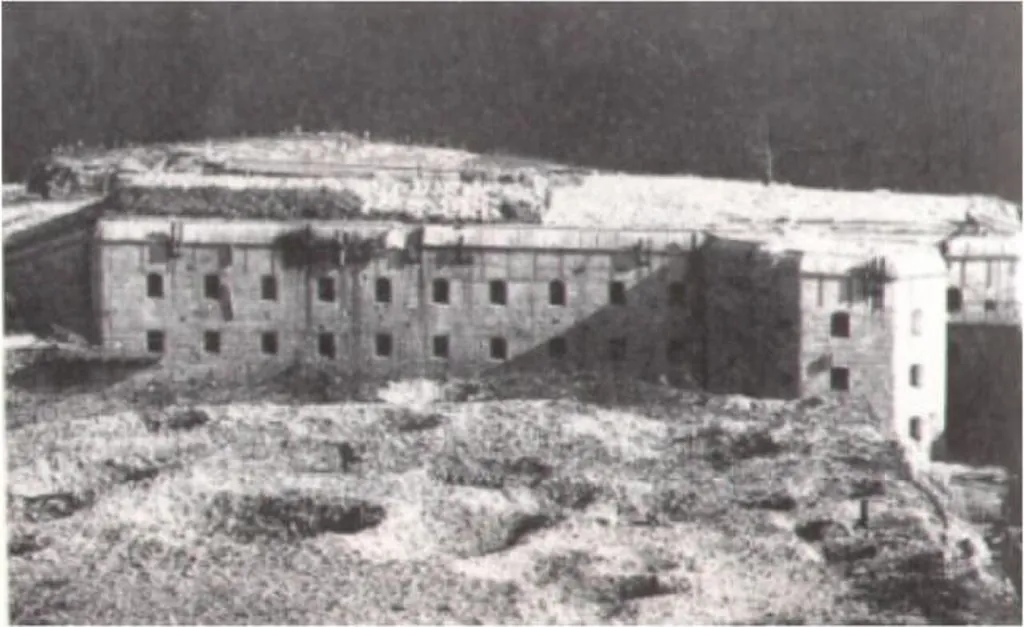
Forte Belvedere, known in German as Werk Gschwent, was built by the Austro-Hungarian army between 1908 and 1912 on a limestone spur at 1,177 metres, overlooking the Val d'Astico, which at the time marked the border between the Kingdom of Italy and the Empire. The project was directed by the engineer lieutenant Rudolf Schneider, and the fort was designed to withstand bombardment with complete autonomy: it comprised a casemate with quarters and storerooms, a battery block with three rotating armoured domes, three armoured forward posts and a small fort in the moat.
When Italy entered the war on 24 May 1915, the garrison numbered about two hundred men. In the first year of the conflict the fort suffered heavy bombardment, with damage to the structure and losses among the soldiers, but it was never attacked directly by Italian infantry.
After the war the fort passed to the Demanio italiano (Italian state property office) and for a long time was sub-leased to the Comune di Lavarone; unlike other fortresses on the Altopiani, it was not demolished in the 1930s to recover the iron. In 1966 a private owner bought it, partly restored it and turned it into a museum. In 1996 the Comune di Lavarone bought it, with a contribution from the Autonomous Province of Trento, and a thorough conservation restoration followed.
Today the museum, run by the Fondazione Belvedere-Gschwent, occupies the three floors of the casemate block: the ground floor illustrates the system of forts on the Altopiani, the history of the fort and the community of Lavarone at war; the first floor the military operations on the Altopiani, the garrison, mountain warfare and war medicine; the second floor the general themes of the First World War, with a reconstruction of a trench environment. Multimedia installations with sounds, voices and videos bring life inside the fortress back to the visitor.
Highlights
- Museum of the Great War over three floors of the casemate block
- History of the system of forts on the Altopiani
- Room on the community of Lavarone during the war
- Sections on mountain warfare and war medicine
- Reconstruction of a trench environment
- Multimedia installations with sounds, voices and videos
- Founded
- 1908
- Operated by
- Fondazione Belvedere-Gschwent
- Visitors per year
- approx. 22,237
Admission & discounts
| Adults | €8 |
|---|---|
| Reduced | €6Persons over 65, young people aged 7 to 17, organised groups with more than 10 paying participants, armed forces, affiliated groups, students of the University of Trento, members of the ANA (Associazione Nazionale Alpini) |
| Children & teens | €6free up to age 6 · Young people aged 7 to 17 |
| Visitors with disabilities | freeFree admission for people with disabilities |
| Groups (10+ people) | –Group leader free; reduced rate for organised groups of more than 10 paying participants |
| Families | €18Two parents with one minor child; further minor children free |
| Entrance with guided tour – standard | €10 |
| Entrance with guided tour – reduced | €8 |
| Entrance with guided tour – schools (groups of students under 18 during the school term) | €4Teachers, persons with disabilities and escorts free |
| Entrance with guided tour – family | €25Two parents with one minor child; further minor children free |
| Entrance with guided tour – Trentino Guest Card | €3Rate per person |
Free admission for children under 7, holders of the Trentino Guest Card, people with disabilities, group leaders, and teachers and escorts on organised guided tours.
Accessibility
- Partially wheelchair accessible
- Elevator: no information
- Accessible restroom: no information
- Accessible parking: no information
- Service dogs welcome
- Tactile models & exhibits: no information
- Sign language tours: no information
- Easy-to-read materials: no information
- Audio description: no information
The museum section is accessible to people with disabilities. The fort can only be reached on foot, except for people with a special disabled-parking permit. Inside it is cold and damp even in summer, and some stretches may be slippery.
Kids & families
Great for kids & families
| Time needed | approx. 1.5 hrs |
|---|---|
| Kids’ admission | free up to age 6 |
| Family ticket | €18 · Two parents with one minor child; further minor children free |
Family ticket and free admission for children under 7; school rate for guided tours of classes.
Getting there & parking
By car
Parking available · 10-min walk to the entrance
Ten parking spaces at the start of the access road to the fort; further spaces for cars and coaches along the main road towards the village of Oseli. From the Cost car park the fort can be reached in about 30 minutes on foot along the “Sentiero dei Camini”.
The fort can only be reached on foot, except for people with a special disabled-parking permit.
Get directionsAmenities & dining
The museum hasn’t published any information on this.
Events & venue rental
The museum hasn’t published any information on this.
Plan your visit
| Guided tours | yes |
|---|---|
| Audio guide | yes |
| School programs | yes |
| Good to know | The visit takes from one to one and a half hours. The audio guide is played on your own phone by scanning the QR codes along the route. Guided tours for groups require booking at least one week in advance; otherwise no booking is needed. Animals are not admitted, not even on a lead or in a bag; guide dogs for the visually impaired are the exception. |