MULSA - Museo di storia dell'agricoltura
Museum of agricultural history in the Castello Morando Bolognini: over 1,200 objects from the origins of agriculture to the present day, in a chronological route.
Have only individual sections read aloud
About the museum
The idea for the museum arose in 1971, during the celebrations for the centenary of the Faculty of Agriculture of the University of Milan, when scholars from the four Milanese universities supported the proposal for a national or regional museum of agricultural history. In 1975 the association Centro Studi e Ricerche di Museologia Agraria was founded and in 1979 the museum was established, with its legal seat at the Faculty of Agriculture and its exhibition space in the Castello Visconteo of Sant’Angelo Lodigiano, under an agreement with the Fondazione Morando Bolognini.
The collections come mainly from Lombardy and the Po Valley, with some pieces from other regions for comparison. The authentic objects mainly document traditional agriculture; for archaeology there are photographs and casts, while the originals are kept in prehistory and antiquities museums. The promoters include Elio Baldacci, Giuseppe Frediani, the first director, Gaetano Forni and Giuseppe Barbiano di Belgiojoso.
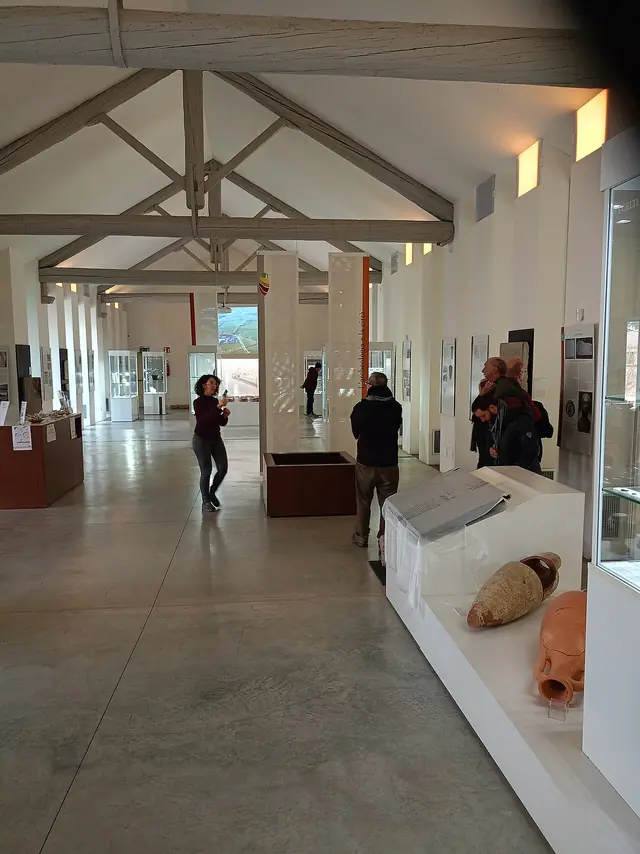
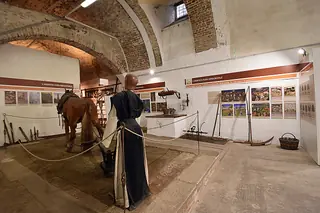
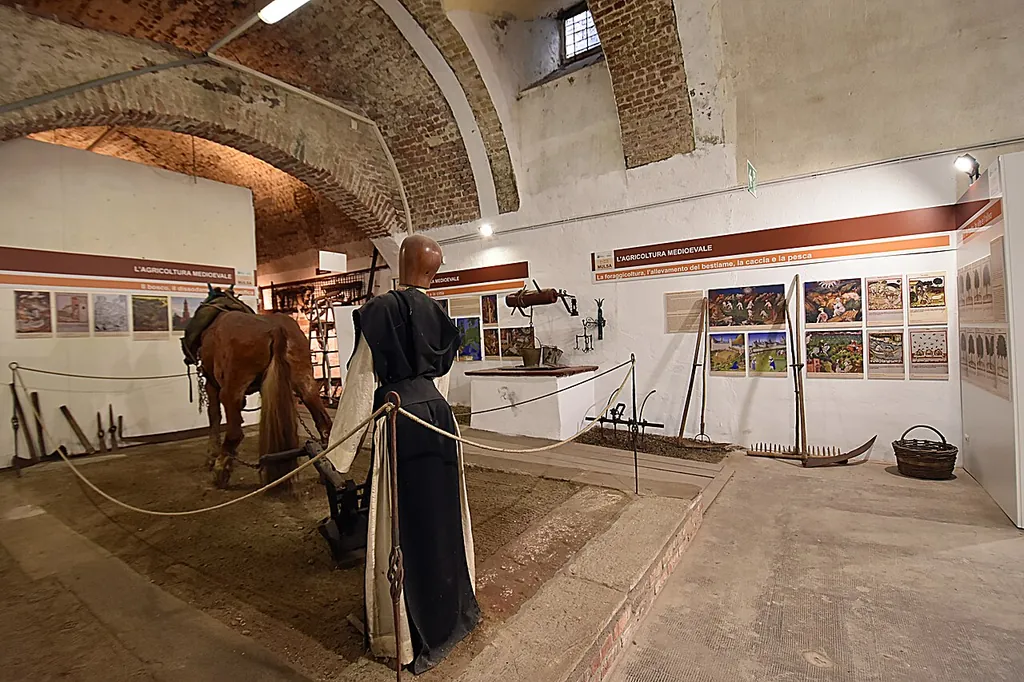
The route is chronological and follows the technological revolutions in agriculture from its origins to the present day, with over 1,200 objects, ethnographic rooms with tools and objects from the farmsteads (cascine) of the Lodi area, and three thematic rooms devoted to the vine and wine, to pre-Columbian American agriculture, and to surveying and technical drawing. Since 2022, with the revision of its statute, the museum has adopted its current name and is a non-profit body of the Terzo settore.
Highlights
- Chronological route from the origins of agriculture to the present day
- Over 1,200 objects, some from the Museo Pigorini in Rome and the Museo della Civiltà Romana
- Ethnographic rooms with tools and objects from the cascine of the Lodi area
- Thematic rooms on vine and wine, pre-Columbian agriculture and surveying
- Diorama of a farmstead of the Bassa Lombarda (Lower Lombardy)
Permanent exhibition
- Percorso permanente di storia dell’agricoltura – Chronological route with over 1,200 objects, ethnographic rooms and thematic rooms on vine and wine, pre-Columbian agriculture and surveying.
- Founded
- 1979
- Operated by
- MULSA – Museo di Storia dell’Agricoltura ETS
- Visitors per year
- approx. 1,500
Admission & discounts
The museum hasn’t published any information on this.
Accessibility
The museum hasn’t published any information on this.
Kids & families
The museum hasn’t published any information on this.
Getting there & parking
The museum hasn’t published any information on this.
Amenities & dining
The museum hasn’t published any information on this.
Events & venue rental
The museum hasn’t published any information on this.
Plan your visit
| Guided tours | yes |
|---|---|
| School programs | yes |
| Good to know | The visit is guided by a volunteer. Tel. 0371 211140/41. The Castello Morando Bolognini also houses the Museo storico-artistico Morando Bolognini and the Museo del Pane. The website also offers school visits, virtual tours and films. |