Museo diocesano di Città di Castello – Museo del Duomo
Diocesan museum in the former Canonry next to the cathedral, with the Canoscio Treasure, the altar frontal attributed to Celestine II, a panel by Pinturicchio and the Christ in Glory by Rosso Fiorentino.
Have only individual sections read aloud
About the museum
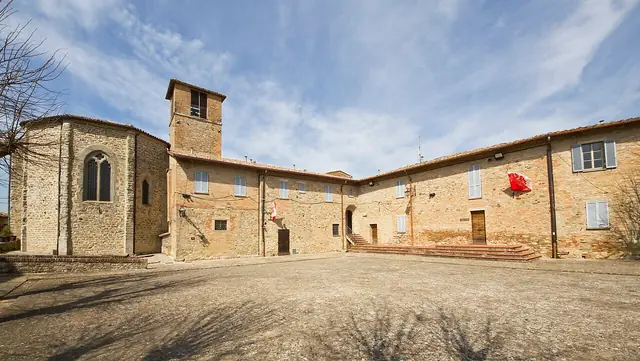
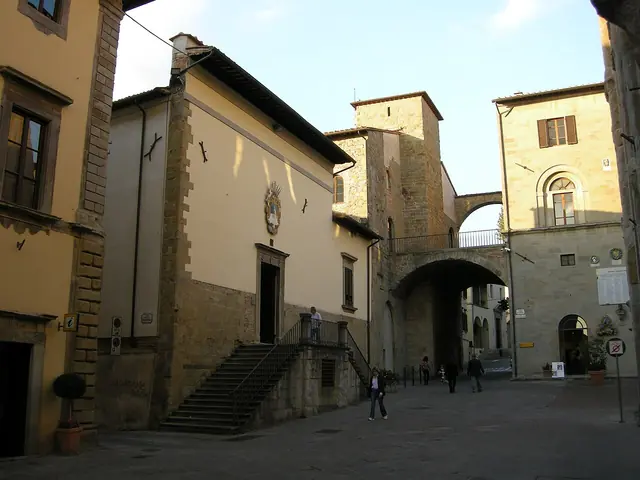
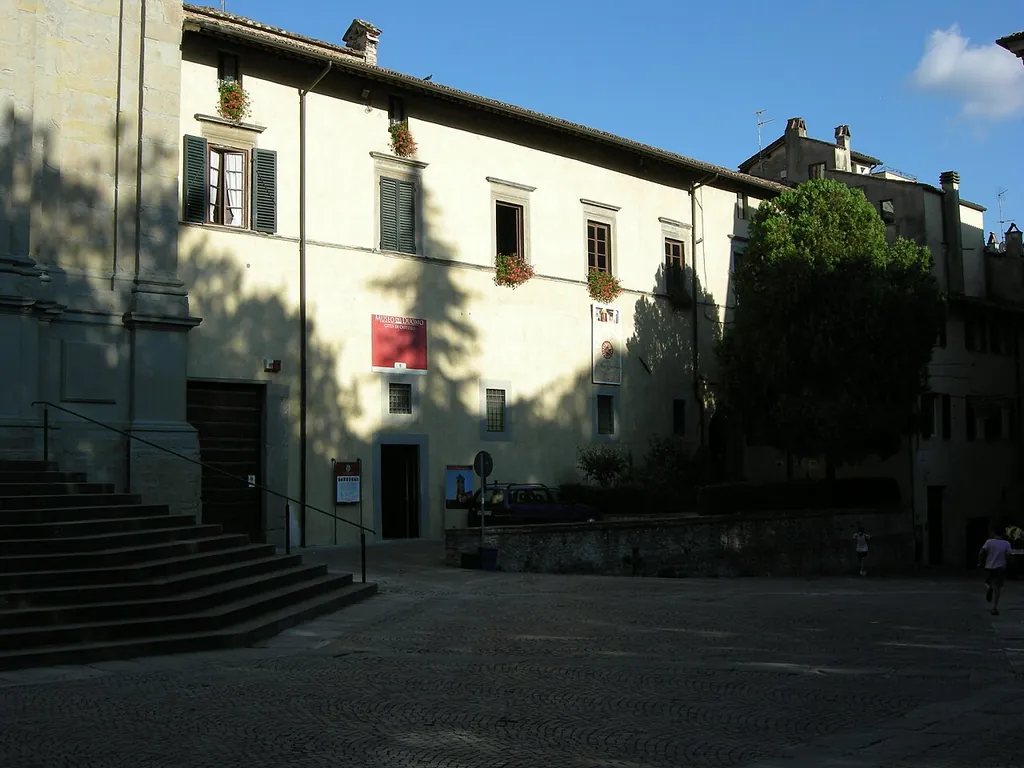
The museum was founded in 1940 by Bishop Filippo Maria Cipriani, following the discovery of the Canoscio Treasure, found in 1935 in the sanctuary of Canoscio at Trestina. Initially it occupied two rooms of the cathedral sacristy. It was enlarged in 1991 and since 2000 has been housed in the former Canonica, next to the cathedral of Saints Florido and Amanzio and its cylindrical bell tower.
The route comprises twelve restored rooms, including the Salone Gotico (Gothic hall). The Canoscio Treasure, from the 6th century, comprises twenty-five early Christian objects, including dishes, chalices and spoons. Also on display are the silver altar frontal attributed to Celestine II, traditionally dated to 1142, the crozier head in silver and enamel by Goro di Gregorio, and a parchment with the protection granted to the canons by Frederick Barbarossa in 1163.
The rooms also house a Cristo deposto (Dead Christ) with movable arms, used in the Holy Week performances, a small panel by Pinturicchio with the Madonna and Child and the young Saint John, and the Christ in Glory painted by Rosso Fiorentino in 1528 for the Compagnia del Corpus Domini.
Highlights
- Canoscio Treasure: twenty-five early Christian objects from the 6th century
- Silver altar frontal attributed to Celestine II
- Christ in Glory by Rosso Fiorentino, 1528
- Panel by Pinturicchio with the Madonna and Child
- Crozier head by Goro di Gregorio
- Cylindrical bell tower, visitable with the same ticket
Permanent exhibitions
- Collezione permanente del Museo del Duomo – Twelve rooms with the Canoscio Treasure, the altar frontal of Celestine II, works by Pinturicchio and Rosso Fiorentino, and the Salone Gotico.
- Campanile cilindrico – Romanesque-Gothic tower 43.5 metres high, reached by a stone staircase and wooden stairs; included in the Biglietto Unico.
- Founded
- 1940
- Operated by
- Diocesi di Città di Castello
- Visitors per year
- approx. 6,523
Admission & discounts
| Adults | €8 |
|---|---|
| Reduced | €6Groups of more than 15 people, visitors aged 6 to 18 and over 65s, university students up to 25, holders of the FAI card and of full-price tickets of partner museums, people with disabilities |
| Children & teens | €6free up to age 5 · Free under 6; ages 6 to 18: €6. |
| Seniors | €6Over 65s. |
| Visitors with disabilities | freecompanion free · Free admission for people with disabilities and their companion. |
| Students & apprentices | €6University students up to 25 years old. |
| Groups (16+ people) | €6 per personGroups of more than 15 people. |
| Pilgrims with credential | €4 |
| School groups of all levels | €3 |
| Guided tour (in addition to the ticket) | €8Booking compulsory; duration 60 minutes. |
The Biglietto Unico (combined ticket, €8, no expiry date) includes the Pinacoteca comunale, the Museo diocesano, the cylindrical bell tower and the Oratorio di San Crescentino at Morra with the frescoes by Signorelli. It is bought at the Museo diocesano or at the Pinacoteca comunale. Free admission for children under 6, students of schools in Città di Castello and holders of the ICOM card.
Accessibility
- Wheelchair accessible
- Elevator: no information
- Accessible restroom
- Accessible parking: no information
- Service dogs welcome: no information
- Tactile models & exhibits: no information
- Sign language tours: no information
- Easy-to-read materials: no information
- Audio description: no information
The exhibition route has no architectural barriers, and there are toilets equipped for people with mobility disabilities. The bell tower, by contrast, is climbed by a stone spiral staircase and wooden ramps.
Kids & families
Great for kids & families
| Kids’ admission | free up to age 5 |
|---|
- Family tours & workshops
- Stroller-friendly
- Baby changing facilities
- Playground / play area
Workshops and family activities with interactive routes, games and hands-on experiences led by museum educators, for groups of up to 20 people. There is a children’s area and a changing table in a dedicated room; families with children and prams are welcome.
Getting there & parking
By public transit
By train on the Florence–Rome line to Arezzo, then SITA bus. The FCU Sansepolcro–Terni railway crosses the Upper Tiber Valley. Daily bus connections also run to Pesaro, Urbino, Gubbio, Perugia, Florence and Rome.
By car: E45 (from Cesena and from Orte), A1 with the Arezzo exit, SS 73 and SS 258 from the Marche and San Marino. Perugia Sant’Egidio airport is about 45 km away, Florence airport about 130 km.
Get directionsAmenities & dining
- Museum shop
- Coat check
- Wi-Fi
Free Wi-Fi for visitors, with no time limit, on the ground floor and first floor. Sales point at the ticket office with the museum guide.
Events & venue rental
The museum hasn’t published any information on this.
Plan your visit
| Guided tours | yes · approx. 60 min |
|---|---|
| School programs | yes |
| Good to know | Guided tours in Italian and English by compulsory reservation (groups of up to 20 people). All works have captions and information panels; free leaflets in several languages are available at the ticket office. |