Necropoli di Sant'Andrea Priu
Necropolis of about twenty domus de Janas near Bonorva, with the Tomba del Capo of 18 rooms, converted into a rock church and frescoed.
Have only individual sections read aloud
About the museum
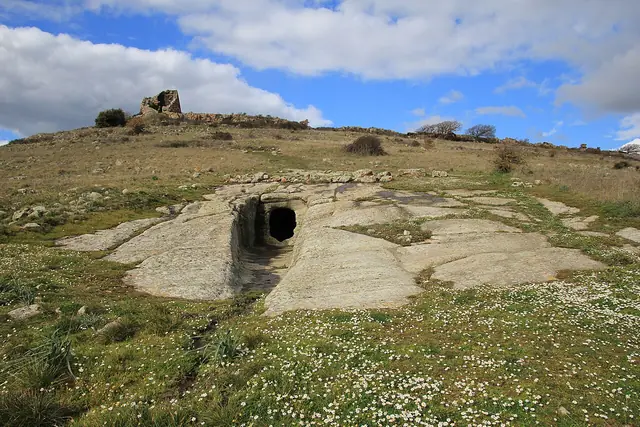
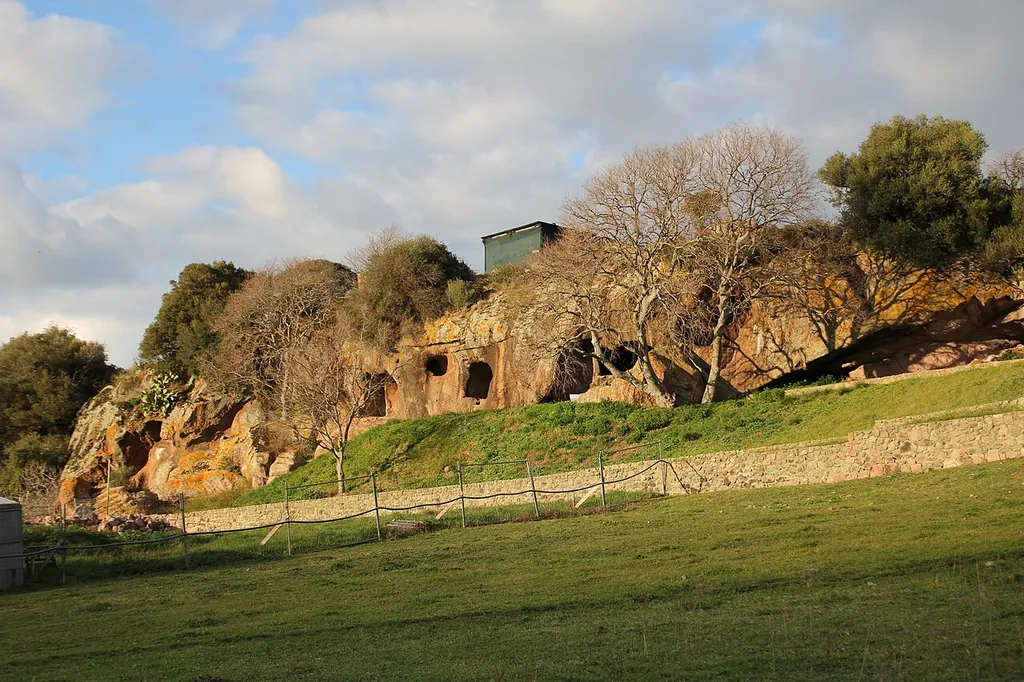
The Sant'Andrea Priu necropolis lies in the Logudoro, on the Santa Lucia plain, less than ten kilometres from Bonorva. It comprises some twenty domus de Janas cut into the flank and upper part of a trachyte outcrop about ten metres high and 180 long. The tombs date from the Neo-Eneolithic (4th–3rd millennium BC), with the earliest phases linked to the Ozieri culture (3200–2800 BC), and inside they reproduce the architecture of houses, with roof beams and other domestic features, to give the deceased a symbolic home.
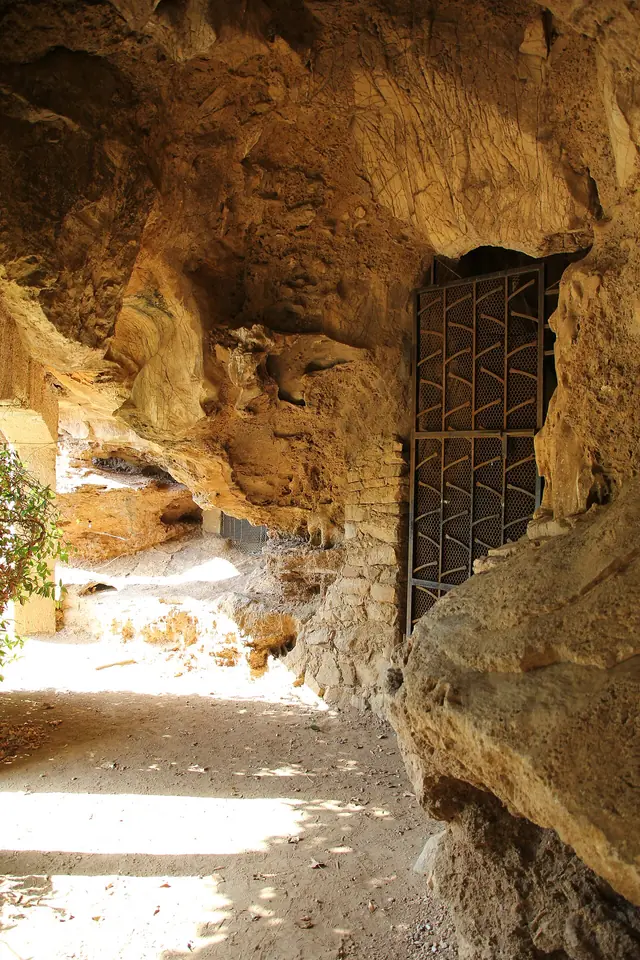
The most important is the Tomba del Capo, about 250 square metres in area, with eighteen rooms arranged like a labyrinth around two main spaces: it has an atrium, a semicircular antechamber about seven metres in diameter and two rectangular cells at the back. In the Roman and Byzantine periods it was converted into a rock church dedicated to Sant'Andrea, and the walls were plastered and painted with scenes from the New Testament. Among the other tombs stand out the round hut-shaped tomb (tomba a capanna), with fifteen coppelle (small cup-shaped hollows) for offerings on the floor, and the chamber tomb, which imitates a house with pillars and a double-pitched roof.
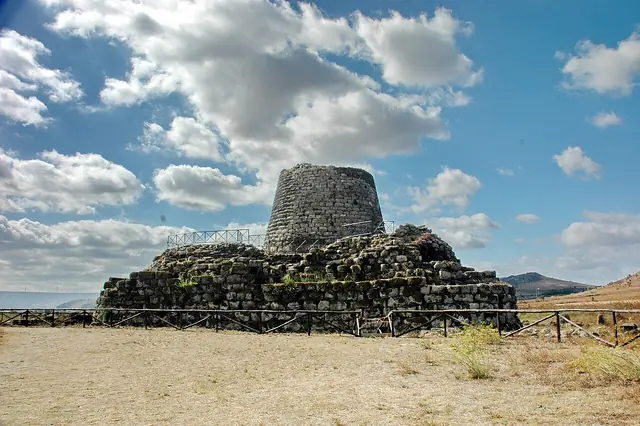
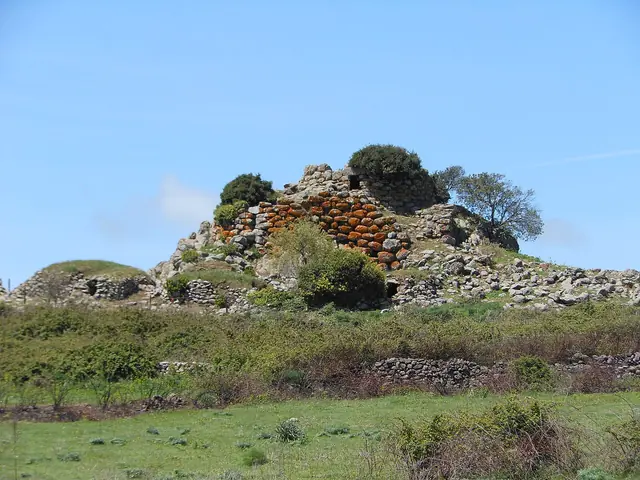
Some parts are not accessible because the rock face has partly collapsed. Since 2025 Sant'Andrea Priu has been one of the seventeen Sardinian prehistoric necropolises recognised by UNESCO as World Heritage. Nearby are the spring of Lumarzu and the nuraghi Puttu de Inza and Monte Donna.
Highlights
- Tomba del Capo with 18 rooms, formerly a rock church with New Testament paintings
- About twenty domus de Janas cut into the trachyte
- Round hut-shaped tomb with 15 coppelle for offerings
- Chamber tomb that imitates a house
- UNESCO World Heritage since 2025
Permanent exhibition
- Necropoli di Sant'Andrea Priu – Visit to the domus de Janas, in particular the Tomba del Capo, and to the linked museum.
- Visitors per year
- approx. 12,334
Admission & discounts
| Adults | €7 |
|---|---|
| Reduced | €5 |
| Museum – standard | €3Reduced €2. |
Rates taken from an Italian museum portal, to be confirmed with the operator.
Accessibility
- Wheelchair accessible: no information
- Elevator: no information
- Accessible restroom: no information
- Accessible parking: no information
- Service dogs welcome: no information
- Tactile models & exhibits: no information
- Sign language tours: no information
- Easy-to-read materials: no information
- Audio description: no information
The necropolis area is fenced; some parts are not accessible because the rock face has partly collapsed.
Kids & families
The museum hasn’t published any information on this.
Getting there & parking
From Bonorva take the road to Bono and after about 6 km turn right onto a tarmac road towards the country church of Santa Lucia; continue for about 500 m beyond the church, and the fenced necropolis is on the left.
Get directionsAmenities & dining
The museum hasn’t published any information on this.
Events & venue rental
The museum hasn’t published any information on this.