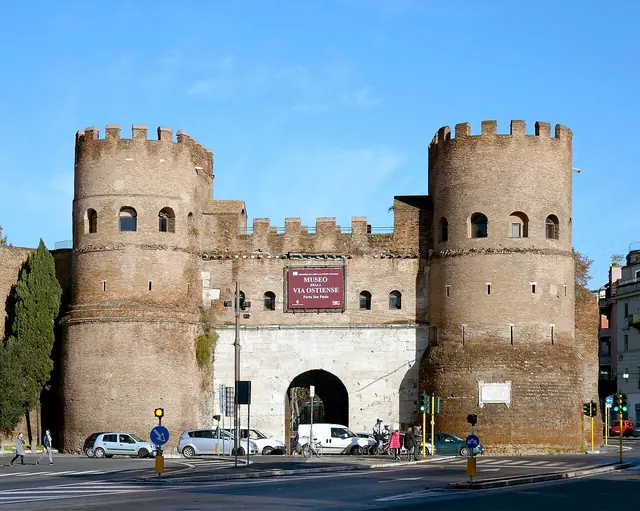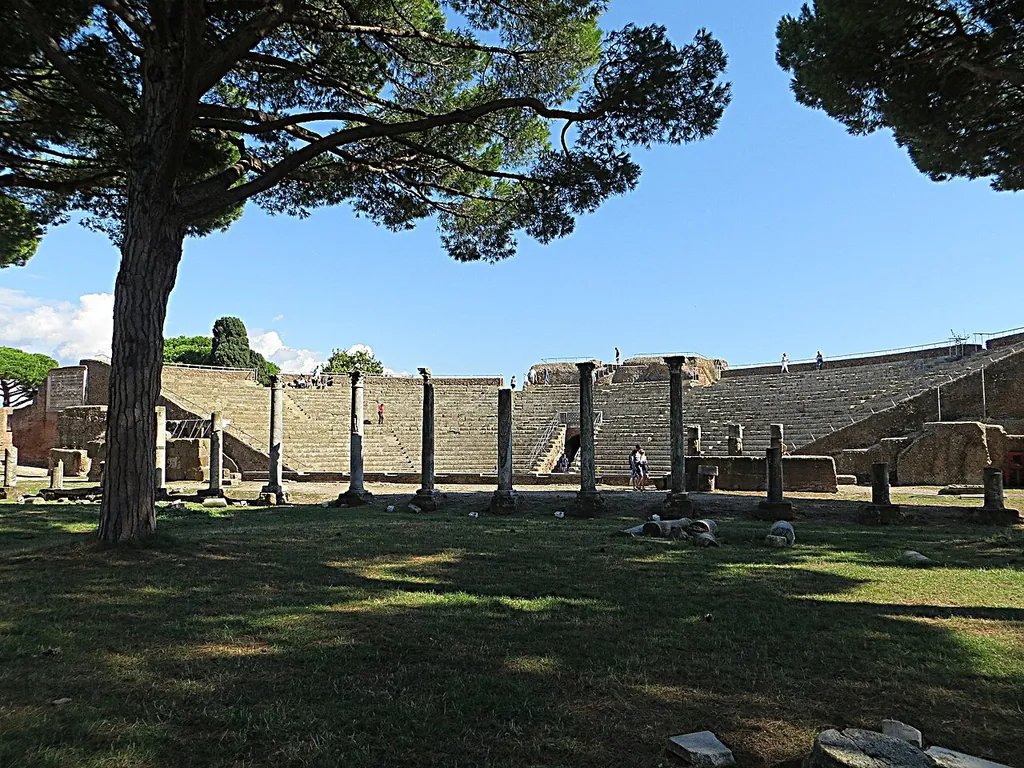
Parco archeologico di Ostia Antica
Archaeological park of Rome's ancient port at the mouth of the Tiber, with streets, baths, a theatre, houses and the Museo Ostiense.
Have only individual sections read aloud
About the museum
Ostia was the port city of Rome at the mouth of the Tiber and, according to tradition, the first Roman colony. After an initial phase as a castrum, over the centuries it became an important trading port for supplying the capital, with warehouses (horrea), shops and residential quarters.
The gradual abandonment of the city, silting and medieval reuse have preserved structures and decorations exceptionally well. Systematic excavations in the 20th century brought to light the Decumanus Maximus, the theatre, the baths, the Capitolium, the insulae with multi-storey apartments, mosaics and places of worship of various religions.
The archaeological park of Ostia Antica today comprises, in addition to the excavations of the city, the Museo Ostiense, the Castello di Giulio II (Castle of Julius II) with the medieval village, the area of the Imperial Ports of Claudius and Trajan, the Museo delle Navi in Fiumicino and the Necropolis of Porto at Isola Sacra. A single combined ticket allows visits to the various sites.
Highlights
- Decumanus Maximus and Roman theatre
- Piazzale delle Corporazioni with the mosaics of the trades
- Baths and multi-storey houses (insulae)
- Museo Ostiense with sculptures and mosaics
- Castello di Giulio II and the village of Ostia Antica
Permanent exhibition
- Scavi di Ostia antica e Museo Ostiense – Route through the Roman city with theatre, baths, houses and shops; the Museo Ostiense holds sculptures and mosaics from the excavations.
- Operated by
- Ministero della Cultura
- Visitors per year
- approx. 301,668
Admission & discounts
| Adults | €18 |
|---|---|
| Reduced | €2European Union citizens aged 18 to 25 |
| Groups | –School classes from the European Union with a teacher enter free on presentation of a signed letter with the list of participants. |
Free admission: First Sunday of the month at all places in the park (no booking required).
The combined ticket is valid for eight consecutive days and includes all archaeological and museum sites of the park. Prices may rise for temporary exhibitions. Tickets are available at the ticket offices (cash or card), online at coopculture.it or with the Musei Italiani app.
Accessibility
- Partially wheelchair accessible
- Elevator: no information
- Accessible restroom
- Accessible parking
- Service dogs welcome: no information
- Tactile models & exhibits: no information
- Sign language tours: no information
- Easy-to-read materials: no information
- Audio description: no information
The route from the ticket office to the Museo Ostiense, with a ramp, is accessible by wheelchair, as is the Piazzale delle Corporazioni in front of the Theatre. Visitors with reduced mobility and a valid permit can drive to the internal car park, from which a route runs along the Tiber to Via dei Misuratori del Grano and the Capitolium. Accessible toilets. Paths can be uneven.
Kids & families
Great for kids & families
- Activity booklet, scavenger hunt or kids’ audio guide
An audio guide for children in Italian and English is available.
Getting there & parking
By car
Parking available
Unattended car park open from 7:30 to 19:30; a separate internal car park is reserved for visitors with reduced mobility and a permit.
- Accessible parking
Address: Viale dei Romagnoli 717.
Get directionsAmenities & dining
- Café
Cafè degli Scavi inside the archaeological area; snack and drink vending machines. Meals and picnics are not permitted in the area. Dogs admitted on a leash.
Events & venue rental
The museum hasn’t published any information on this.
Plan your visit
| Audio guide | yes (IT, EN, FR, DE, ES) |
|---|---|
| Good to know | Audio guide for adults in Italian, English, French, German and Spanish: long route €7, short route €5; audio guide for children in Italian and English €5. Comfortable clothing and shoes are recommended. The park is a no-drone zone. |