Bitininkystės muziejus
The museum in Stripeikiai village in Aukštaitija National Park presents the life of bees, the development of beekeeping and bee products.
Have only individual sections read aloud
About the museum
The Senovinės bitininkystės muziejus (Museum of Traditional Beekeeping) is located in Aukštaitija National Park, in the village of Stripeikiai. Stripeikiai is the oldest village in the park; it is first mentioned in the Livonian Chronicle in 1357. Even then the village was known for beekeeping – it paid its tribute to the Labanoro dvaras (Labanoras manor) in honey and wax. The museum began to be developed in 1978 on the bank of the Tauragnos upelis (Tauragna stream) and opened to visitors in 1984. Its initiator, founder and long-time director was Bronislovas Kazlas.
When the land was returned to its owners, the exhibits were moved to the present site; the original exhibition structure fell apart and some of the objects standing outdoors rotted. The museum was therefore reconstructed under the project “Saugomų teritorijų tvarkymas (II etapas)” (Management of Protected Areas, Stage II), co-financed by the European Regional Development Fund and Lithuania. The old buildings were restored, four new ones were built (a barn, a beehive shed and two gazebos), the surroundings were tidied and the site was adapted for people with disabilities.
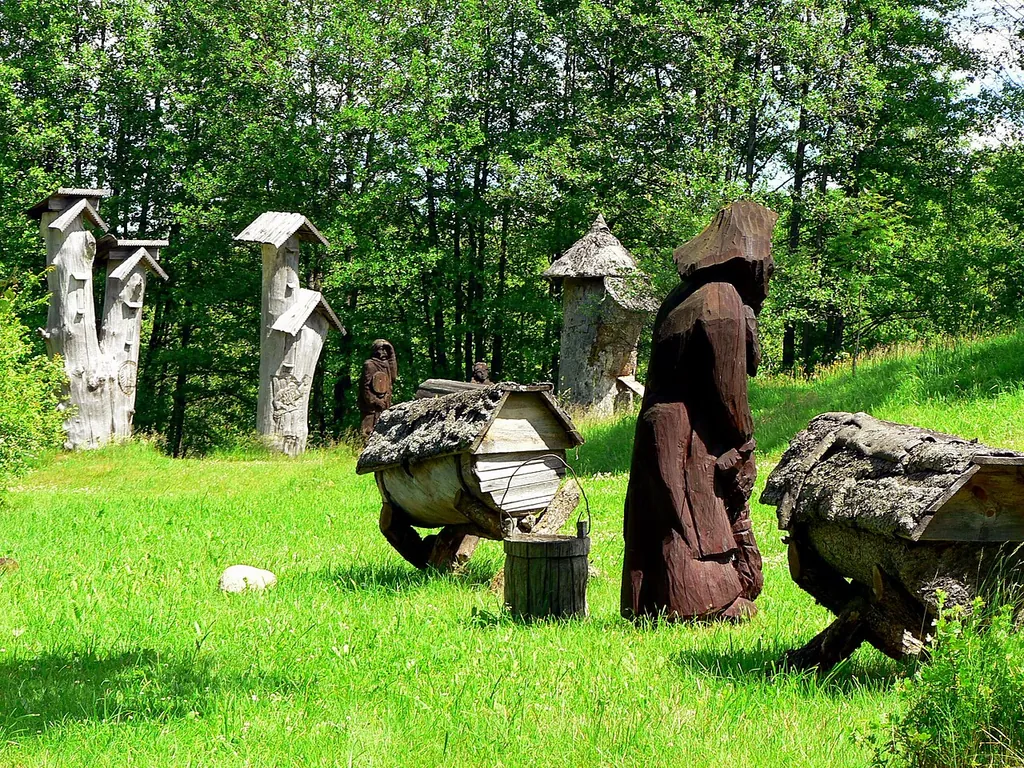
Today the museum occupies an area of about 4 ha. In the new interactive indoor exhibition, spread over several buildings of a traditional Aukštaitija farmstead, each building presents a different theme on the bee and beekeeping. Outdoors there is an old sculpture park, a linden hill with hammocks, a children's play area, gazebos and a path along the Tauragna stream. The museum offers 17 educational programmes and hosts festivals, and there is also a small café, “Bitutė”.
Highlights
- Interactive beekeeping exhibition in the farmstead buildings
- Park of old sculptures outdoors
- Linden hill with hammocks and the sound of bees buzzing
- Educational programmes on bees and their products
- Café “Bitutė” with food cooked over an open fire
Permanent exhibitions
- Vidaus ekspozicija sodybos pastatuose – Interactive exhibition in the buildings of a traditional Aukštaitija farmstead (“Jonažolė”, “Bandrenis”, “Muilinė guboja”, “Šlamutis” and others): each building presents a different theme on bees and beekeeping, the development of beekeeping, bee products and honey plants.
- Lauko ekspozicija – The park of old sculptures, a linden hill with hammocks, a children's play area and gazebos on the museum grounds.
- Founded
- 1984
Admission & discounts
| Adults | €6 |
|---|---|
| Reduced | €3Pupils, students, seniors and persons with disabilities |
| Children & teens | –Museum visits are free for pre-school children. |
| Guide service for a group of up to 10 people | €30For larger groups: €3 per person |
Prices of educational programmes depend on the programme; groups and educational sessions must be registered in advance.
Accessibility
- Wheelchair accessible
- Elevator: no information
- Accessible restroom: no information
- Accessible parking: no information
- Service dogs welcome: no information
- Tactile models & exhibits: no information
- Sign language tours: no information
- Easy-to-read materials: no information
- Audio description: no information
The museum's surroundings are adapted for persons with disabilities.
Kids & families
Great for kids & families
- Family tours & workshops
- Hands-on stations
- Playground / play area
There is a children's play area outdoors; educational programmes are offered for children and pupils.
Getting there & parking
The museum hasn’t published any information on this.
Amenities & dining
- Café
The small café “Bitutė” is at the museum; food is cooked over an open fire. Group catering must be booked in advance.
Events & venue rental
The museum hasn’t published any information on this.
Plan your visit
| Guided tours | yes |
|---|---|
| School programs | yes |
| Good to know | Groups and educational sessions require a reservation: by phone +370 686 12105, by a message on Facebook, or via the enquiry form on the museum's website. The museum offers 17 educational programmes on beekeeping and bee products, four of which are funded through the Culture Passport (Kultūros pasas) programme. |