Feiring jernverk
Preserved ironworks area from the 19th century in Feiring with one of Norway's best-preserved blast furnaces, a visitor mine and a copy of Carsten Anker's summer house.
Have only individual sections read aloud
About the museum
Feiring jernverk was established in 1798 and was in operation from 1806 to 1818. The works was part of Eidsvoll Verk, which was owned by Carsten Anker. At its height 168 men, women and children lived in this small industrial community, which lived from work in the mines, timber felling, haulage, charcoal burning (kølbrenning) and roasting of ore (røsting av malm).
Today the ironworks area is a well-preserved cultural heritage site with one of Norway's best-preserved blast furnaces. There are also remains of walls from a charcoal house (kølhus), a bakery oven, the manager's house and an office building. The area lies in the forest and is reached on foot after about 15 to 20 minutes from the car parks.
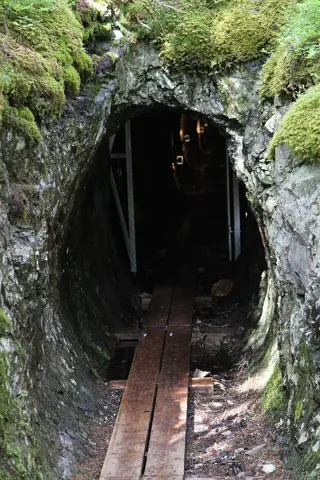
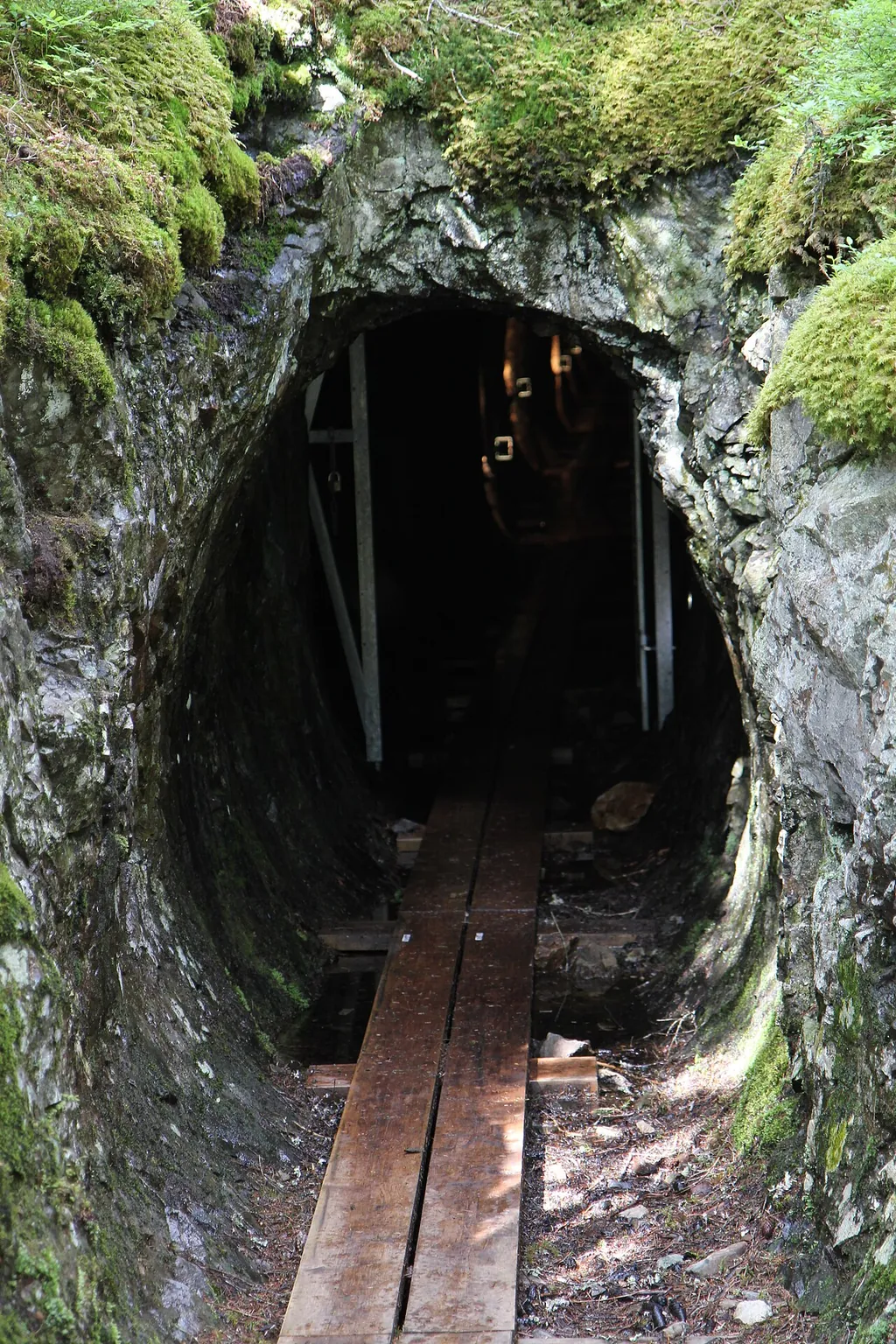
The ore came, among other places, from St. Pauls gruve (St. Paul's mine), where iron ore was extracted from 1628 to 1820. The mine has been restored and developed as a visitor mine, and the friends of Feiring jernverk arrange tours there. On Kristenkollen stands Carsten Anker's summer house (lysthus), a copy of the house Anker had built to receive guests and business contacts visiting the works, with a view over Lake Mjøsa.
The history is kept alive through the annual Jernverkshelga (Ironworks Weekend) on the first weekend of August, with open-air theatre and tours in the ruins. The site is run by Eidsvoll museum, part of MiA – Museene i Akershus, in cooperation with Feiring jernverks venner (the friends of Feiring ironworks).
Highlights
- One of Norway's best-preserved blast furnaces
- Ironworks area with walls of a charcoal house, a bakery oven and the manager's house
- St. Paul's mine, developed as a visitor mine
- Carsten Anker's summer house on Kristenkollen with a view over Lake Mjøsa
- Jernverkshelga with open-air theatre and guided tours
- Operated by
- Eidsvoll museum (MiA – Museene i Akershus) i samarbeid med Feiring jernverks venner
Admission & discounts
The museum hasn’t published any information on this.
Accessibility
- Wheelchair accessible: not available
- Elevator: no information
- Accessible restroom: no information
- Accessible parking: no information
- Service dogs welcome: no information
- Tactile models & exhibits: no information
- Sign language tours: no information
- Easy-to-read materials: no information
- Audio description: no information
The ironworks is reached on foot along a gravel road and a forest path (about 15 to 20 minutes from the car park), and the mine is reached after about a 20-minute walk on a marked path. The mine is cold and wet; waterproof footwear, warm clothing and preferably a torch are recommended.
Kids & families
The museum hasn’t published any information on this.
Getting there & parking
By car
Parking available · 15-min walk to the entrance
Option 1: parking at Eftasmyra in Stubberuddalen, about a 15-minute walk along a gravel road to the ironworks. Option 2: parking at Atthaldsdammen, about a 20-minute walk on a forest path. For St. Paul's mine, park at Skomakerbakken (about a 20-minute walk on a marked path), and for Carsten Anker's summer house, park at Eftasmyra (about a 10-minute walk).
Drive along County Road 33 (Fv33) and turn off at Stubberuddalen. Follow the signs to Feiring jernverk up Stubberudvegen. Alternatively, follow the signs from Feiring town centre via Kjerkelinna, Bamrudvegen and Dalbekkvegen (about 9 km of gravel road). For St. Paul's mine, follow the signs to the mine, not to the ironworks (about 5.5 km of gravel road).
Get directionsAmenities & dining
The museum hasn’t published any information on this.
Events & venue rental
The museum hasn’t published any information on this.
Plan your visit
| Guided tours | yes |
|---|---|
| Good to know | Tours of the ironworks and mine walks in St. Paul's mine are arranged by Feiring jernverks venner, especially during Jernverkshelga. The mine does not lie within the ironworks area itself. |