Muzeum byłego niemieckiego Obozu Zagłady Kulmhof w Chełmnie nad Nerem
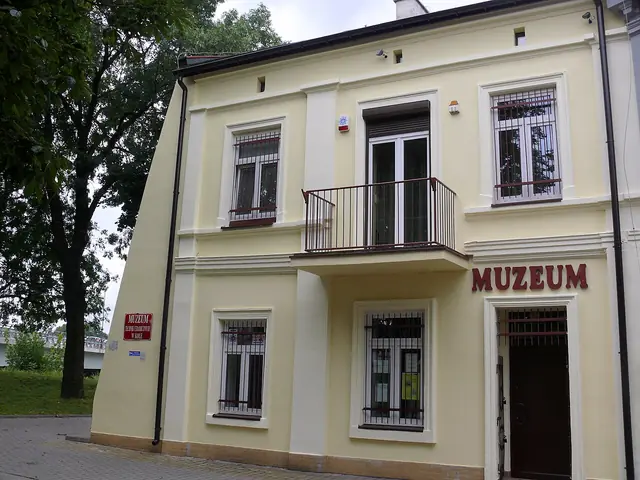
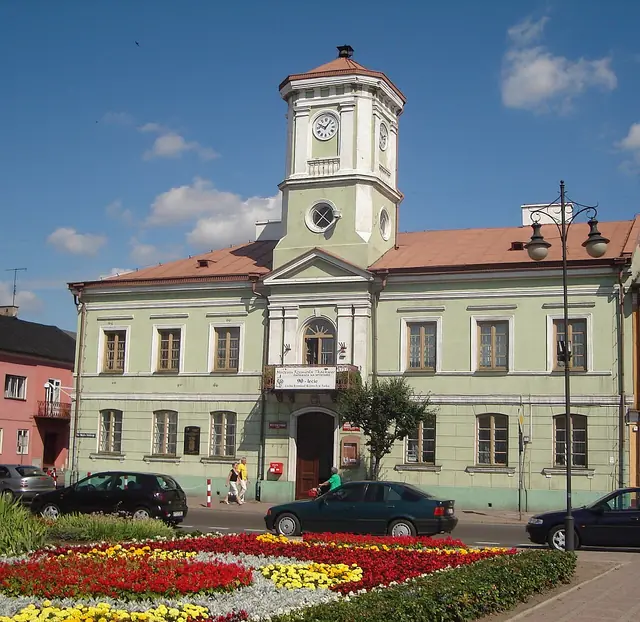
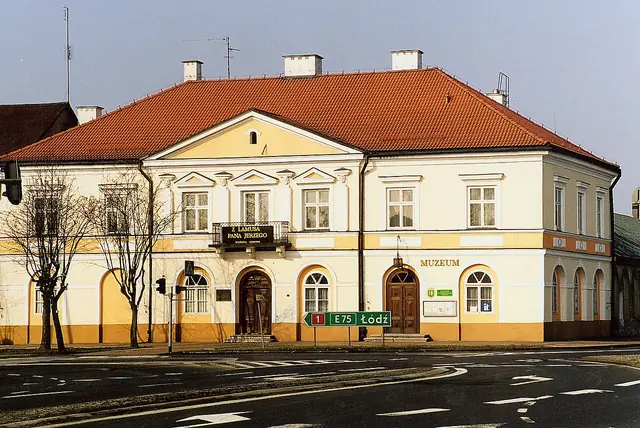
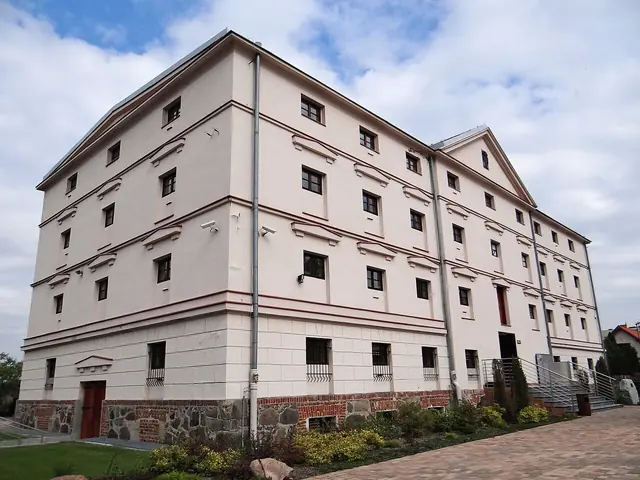
Museum on the site of the former German Nazi extermination camp Kulmhof, with permanent exhibitions in the granary and the museum building, and a Memorial Site in the Rzuchów Forest.
Have only individual sections read aloud
About the museum
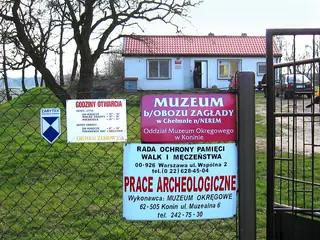
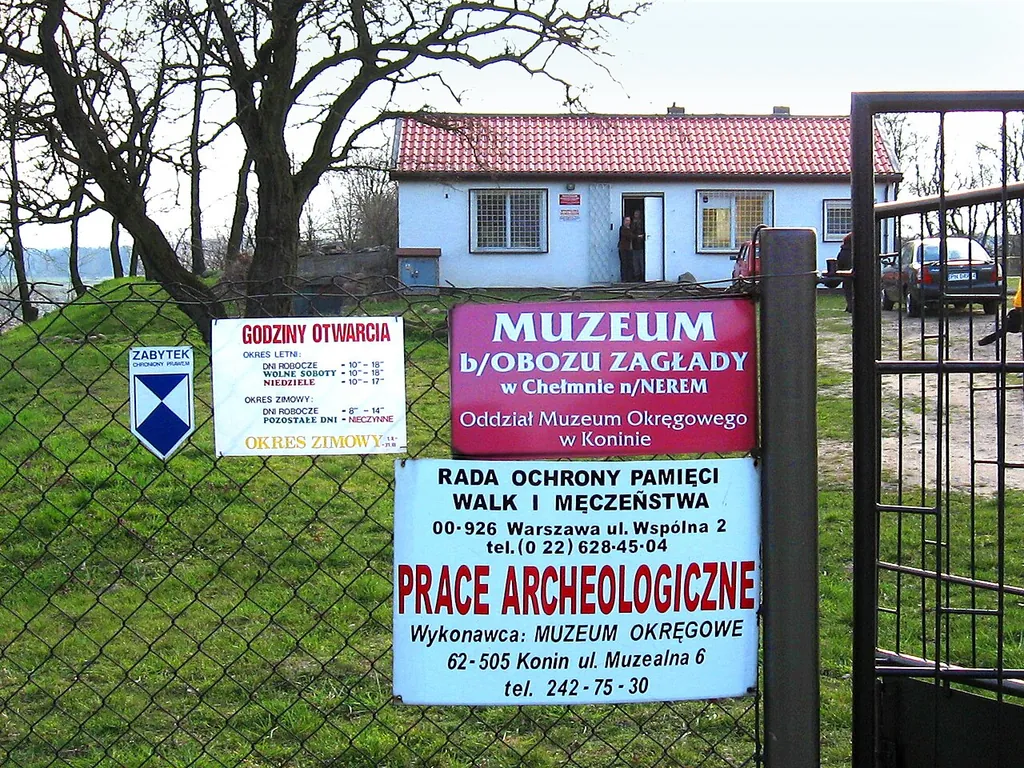
The museum was established on 17 June 1990 as a branch of the Konin Regional Museum, following archaeological research carried out from 1986 on the site of the former camp in the Rzuchów Forest. In 1998 the institution took over property in the centre of the village of Chełmno, with the ruins of a palace, farm buildings and a park. Since July 2013 it has been a branch of the Museum of Martyrdom in Żabikowo and an institution of the Greater Poland Voivodeship local government.
In Chełmno nad Nerem the German Nazi extermination camp Kulmhof operated. The museum site includes the ruins of the palace in the centre of the village and the Memorial Site in the Rzuchów Forest, with remains of crematoria, outlines of mass graves and memorials. Both sites were entered in the register of monuments in 1994.
In 2009 an exhibition on the camp was opened in the restored granary, and in 2019 a permanent historical exhibition, “To są ostatnie dni naszego życia, dajemy więc znać o sobie” (“These are the last days of our lives, so we are letting you know”), was opened in the exhibition building. Visitors can also see the palace ruins with a walkway, a lapidarium with gravestones from Jewish cemeteries in the Konin region, and temporary exhibitions on the museum grounds. The museum runs educational and publishing activities.
Key themes
- Permanent exhibition “To są ostatnie dni naszego życia, dajemy więc znać o sobie”
- Exhibition “Spichlerz – przestrzeń tragedii” (Granary – Space of Tragedy)
- Palace ruins with a walkway for visitors
- Memorial Site in the Rzuchów Forest (open-air site)
- Audio guide in Polish, English and German with audio description and Polish Sign Language (PJM)
Permanent exhibitions
- To są ostatnie dni naszego życia, dajemy więc znać o sobie – Permanent historical exhibition opened in December 2019 in the museum's exhibition building, dedicated to the victims of the Kulmhof extermination camp.
- Spichlerz – przestrzeń tragedii – Exhibition in the restored granary, prepared as part of the commemoration of the 75th anniversary of the first transport of victims to the camp.
- Founded
- 1990
- Operated by
- Muzeum Martyrologiczne w Żabikowie (Instytucja Kultury Samorządu Województwa Wielkopolskiego)
Admission & discounts
Admission is free.
| Groups (6+ people) | –Guided tour: organised groups of more than 5 people PLN 300, school groups PLN 200 (in Polish); in English PLN 400 per group. |
|---|---|
| Guide service for an individual visitor (in Polish) | 40 złPrice per person; only on the museum grounds in the village of Chełmno. |
| Guide service for an individual visitor (in English) | 50 złPrice per person. |
| Audio guide or app | 20 złVersions: Polish, German, English, with audio description and in Polish Sign Language. |
| Entry with an external guide (up to 10 people) | 10 złPrice per person; above 10 people PLN 100 per group. |
Admission to the museum grounds and to the exhibitions is free for individual visitors and organised groups. Visitors may make a voluntary donation to the institution on site.
Accessibility
- Wheelchair accessible
- Elevator: no information
- Accessible restroom
- Accessible parking
- Service dogs welcome
- Tactile models & exhibits
- Sign language tours: not available
- Easy-to-read materials: no information
- Audio description
Both entrances to the main museum building and to the granary can be reached by wheelchair (there is a low threshold at the granary). Steps lead to the visitor reception point, which can be negotiated with the help of a member of staff. Two permanent exhibitions, a walkway over the palace ruins and firm paths in the Memorial Site are available. In the car park there is one space for people with disabilities, and one of the museum's six toilets is adapted. The museum has a portable induction loop, Braille markings and audio guides with audio description and a Polish Sign Language track; there is no sign language interpreter on site. The Rzuchów Forest has no induction loops or Braille markings.
Kids & families
Only partly suitable for kids
- Family tours & workshops
Because of the content, children and younger school pupils are advised to visit the museum under the supervision of an adult. The museum runs educational activities and provides teaching materials.
Getting there & parking
By public transit
By scheduled bus from Koło or Łódź.
By car
Parking available
A public car park for cars and coaches is located at the museum and on voivodeship road no. 473 near the Memorial Site in the Rzuchów Forest.
- Accessible parking
By the A2 motorway (Dąbie exit) or road no. 92 (exit in Koło towards Dąbie–Uniejów); entrance to the museum grounds from voivodeship road no. 473 on the Dąbie–Koło route.
Get directionsAmenities & dining
The museum hasn’t published any information on this.
Events & venue rental
The museum hasn’t published any information on this.
Plan your visit
| Guided tours | yes |
|---|---|
| Audio guide | yes (PL, EN, DE) |
| School programs | yes |
| Good to know | Because of the nature of the site, the grounds may be visited under the supervision of a museum employee; visitors are asked to behave with solemnity and dress appropriately. Touching exhibits, using mobile phones in exhibition buildings and bringing in animals (except guide dogs) are prohibited. English-language guided tours are possible by prior arrangement. |