Muzeum Wsi Lubelskiej
One of the largest open-air museums in Poland, with buildings of villages, manor houses and a small town of the Lublin region on about 23 hectares by the Czechówka river.
Have only individual sections read aloud
About the museum
The Muzeum Wsi Lubelskiej in Lublin, founded in 1960, collects and protects the material and intangible heritage of the Lublin region. It lies in the valley of the Czechówka river and is one of the largest open-air museums in Poland. The first object moved to the museum grounds was a windmill from Zygmuntów.
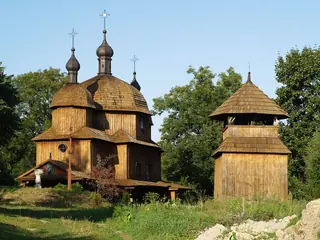
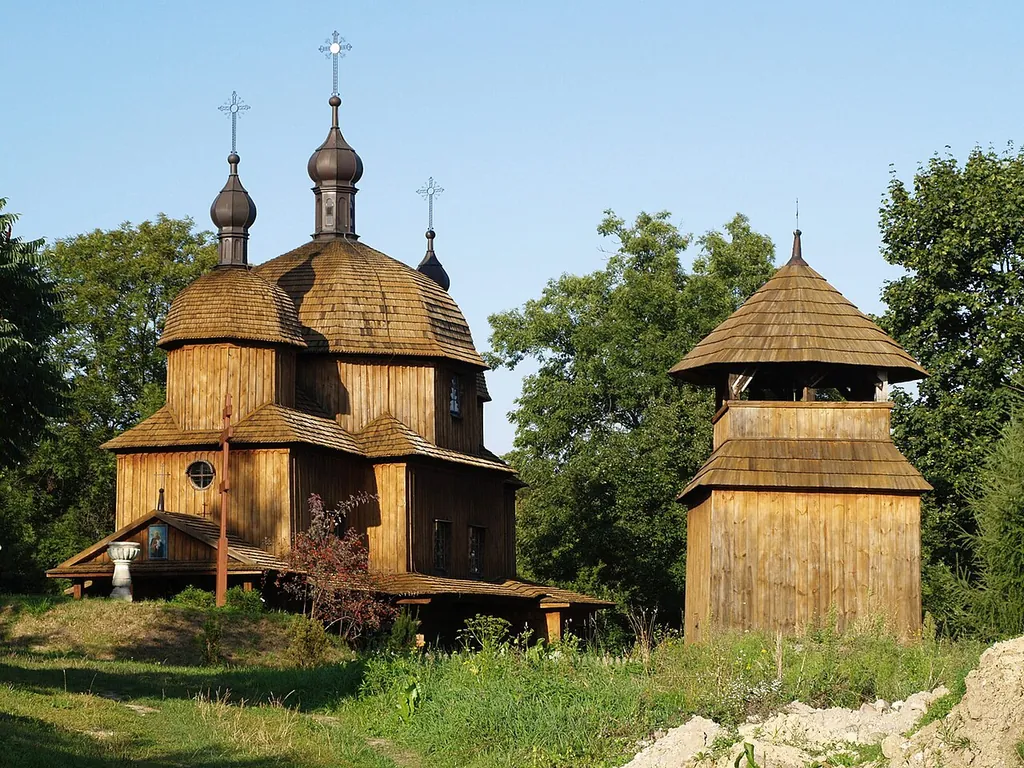
The exhibition covers about 23 hectares and is divided into sectors reflecting the landscape and ethnographic diversity of the region: the Lublin Upland (Wyżyna Lubelska), Roztocze, Powiśle, Podlasie and Nadbuż, as well as a manor sector and a small-town sector. In the Roztocze sector stands a historic Greek Catholic church from Tarnoszyn, and the central object of the manor sector is an 18th-century manor house from Żyrzyn with a garden.
The small-town sector is a model of a provincial town of the 1930s. The first part was built in 2010–2013; it includes the market square and the buildings to its north, among them a barber’s shop, a hardware shop, a Jewish kitchen, a post office, a beer hall, the mayor’s house and craft workshops, as well as a church complex with the church from Matczyn. The museum also organises temporary exhibitions, events linked to the village ritual year, historical reconstructions and educational activities.
Highlights
- Windmill from Zygmuntów, the first object of the open-air museum
- Manor house from Żyrzyn with a garden
- Greek Catholic church from Tarnoszyn
- Small-town sector modelled on the 1930s
- Route for blind and partially sighted visitors, “Inne spojrzenie” (A Different Look)
Permanent exhibitions
- Sektory wsi lubelskiej – Buildings and furnishings of villages from the Lublin Upland, Roztocze, Powiśle, Podlasie and Nadbuż, including the windmill from Zygmuntów and the church from Tarnoszyn.
- Sektor dworski – 18th-century manor house from Żyrzyn, with the interiors of a moderately wealthy landed family and a garden.
- Miasteczko – Model of a provincial small town of the 1930s, with a market square, service businesses and craft workshops.
- Founded
- 1960
- Operated by
- Muzeum Wsi Lubelskiej w Lublinie
Admission & discounts
| Adults | 30 zł |
|---|---|
| Reduced | 20 zł |
| Children & teens | 20 złfree up to age 6 · Children under 7 enter free of charge. |
| Groups | –Organised groups visit the museum only with a guide. |
| Families | 60 złFamily ticket on presentation of the Large Family Card (Karta Dużej Rodziny), the Regional Large Family Card (Regionalna Karta Dużej Rodziny) or the “Rodzina 3+” card. |
| Family ticket | 60 złOn presentation of the Large Family Card, the Regional Large Family Card or the “Rodzina 3+” card. |
| Guided tour in Polish – group of up to 15 people | 150 złPlus admission tickets for participants. |
| Guided tour in Polish – group of 16–30 people | 200 złPlus admission tickets for participants. |
| Guided tour in English – group of up to 15 people | 200 złPlus admission tickets for participants. |
| Guided tour in English – group of 16–30 people | 260 złPlus admission tickets for participants. |
| Photo and video session | 300 złPlus admission ticket. |
Free admission: selected Mondays (dates are published by the museum on its website)
The prices given are the standard tariff; in winter (from 1 December to the end of February) lower prices applied (in the 2025/26 season: PLN 15 standard, PLN 10 reduced, PLN 30 family). Tickets can be bought online or at the ticket office.
Accessibility
- Partially wheelchair accessible
- Elevator
- Accessible restroom
- Accessible parking: not available
- Service dogs welcome: no information
- Tactile models & exhibits
- Sign language tours: no information
- Easy-to-read materials
- Audio description: no information
Because of its open-air character, historic surfaces and historic architecture, the museum is difficult to access for people with mobility impairments: the buildings have high thresholds and narrow entrances, and none of them has a ramp or platform. A toilet adapted for people with mobility impairments is located in the town hall from Głusk in the small-town sector (level -1; the lift is operated by the exhibition staff). For Deaf visitors, films in Polish Sign Language about 58 objects are available via QR codes. For blind and partially sighted visitors there is the “Inne spojrzenie” (A Different Look) route, with a bronze tactile map, casts and props to explore by touch (by prior booking). For people with intellectual disabilities there is a visitor guide with pictograms.
Kids & families
Great for kids & families
| Kids’ admission | free up to age 6 |
|---|---|
| Family ticket | 60 zł · Family ticket on presentation of the Large Family Card (Karta Dużej Rodziny), the Regional Large Family Card (Regionalna Karta Dużej Rodziny) or the “Rodzina 3+” card. |
- Family tours & workshops
The museum runs museum lessons and workshops for kindergarten and school groups, as well as the “Skansenada” activities; a family ticket is available.
Getting there & parking
By public transit
City bus lines nos. 18, 20, 30 and 37.
By car
Free parking
Next to the museum there is a municipal, unguarded and free car park, without designated spaces for people with disabilities.
- Accessible parking: not available
Amenities & dining
The museum hasn’t published any information on this.
Events & venue rental
- Spaces for rent
- Private parties
- Corporate events
The museum rents out buildings and grounds for symposia, meetings, family celebrations, feasts, picnics and bonfires; rides in a carriage, wagon or sleigh are also offered (booking: wynajem@skansen.lublin.pl, tel. 533 110 920).
Inquiries & detailsPlan your visit
| Guided tours | yes · approx. 1.5 hrs |
|---|---|
| School programs | yes |
| Good to know | Bookings for guided tours and educational activities are taken by the Education and Promotion Department (tel. 81 533 85 13, ext. 20) at least 7 days before the visit. A guided tour takes about 1.5 hours; a group consists of up to 15 or 30 people including accompanying persons. |