Oddział Etnografii – Spichlerz Opacki
Branch of the National Museum in Gdańsk in the Baroque Abbey Granary (Spichlerz Opacki) in Oliwa Park, with the permanent exhibition ‘Folk Culture of Gdańsk Pomerania’.
Have only individual sections read aloud
About the museum
The Ethnography Branch of the National Museum in Gdańsk is seated in the Abbey Granary in Oliwa, right by Oliwa Park. The Ethnography Department was set up in 1958 at the Pomeranian Museum, and its founder and first head was the ethnographer Dr Longin Malicki. In 1965 the department was moved to the rebuilt Abbots’ Palace (Pałac Opatów), in 1979 it became a branch of the National Museum, and in 1988 it obtained its present seat.
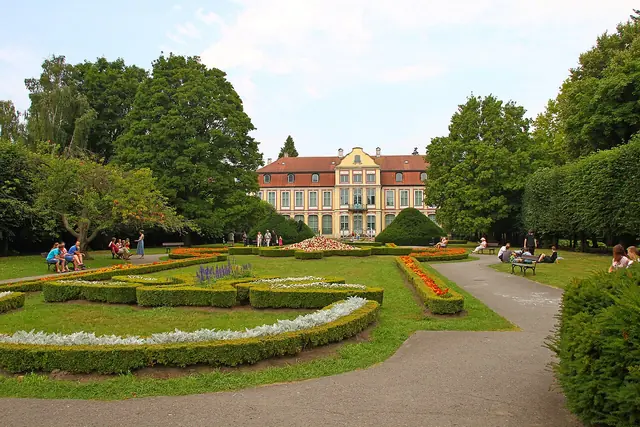
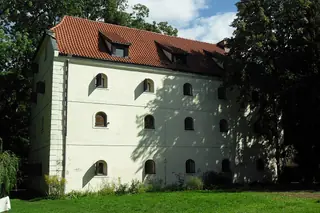
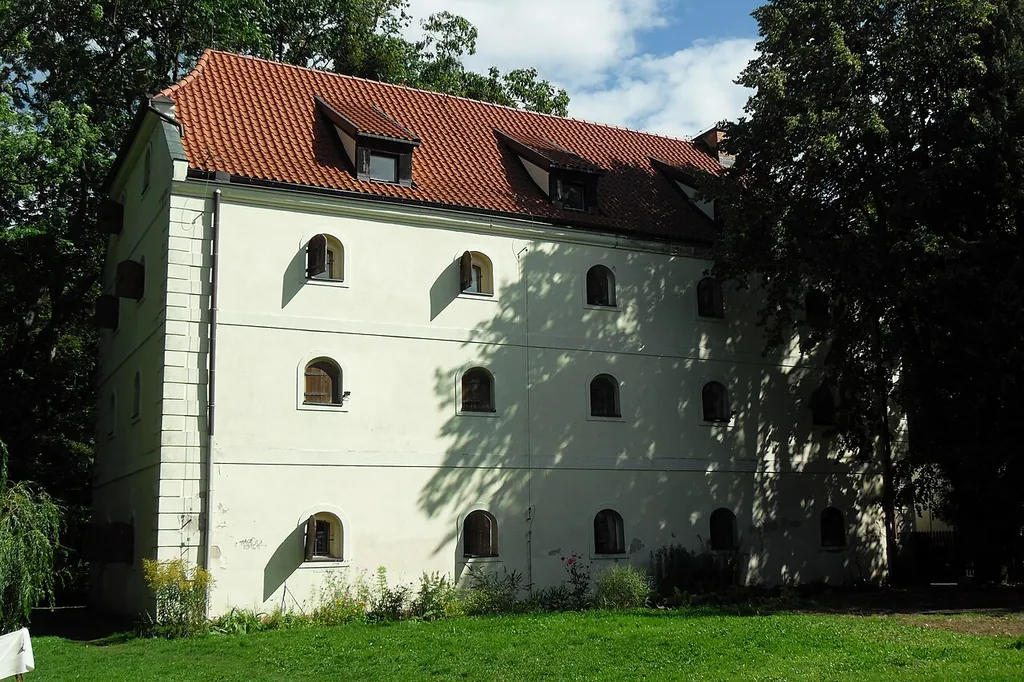
The Baroque, three-storey Abbey Granary was built in 1723 at the command of Abbot Franciszek Mikołaj Zaleski, on the site of two smaller granaries. After the Second World War it housed a conservation depot, and after adaptation works carried out from 1982 the branch opened on 30 May 1988. The permanent exhibition occupies the ground and first floors, the second floor is used for temporary exhibitions, and a museum garden adjoins the building, where, among other things, the Summer Ethnographic Fair (Letni Jarmark Etnograficzny), workshops and concerts take place.
The permanent exhibition ‘Folk Culture of Gdańsk Pomerania’, opened in 1988, shows various aspects of the culture and everyday life of the region’s inhabitants at the turn of the 19th and 20th centuries. The collection numbers nearly 10 thousand ethnographic objects gathered during fieldwork and in cooperation with folk artists. The branch runs a rich offer of cultural education, a cycle of documentary and indigenous film screenings, and projects devoted to traditional crafts.
Highlights
- Permanent exhibition ‘Folk Culture of Gdańsk Pomerania’ from the turn of the 19th and 20th centuries
- Baroque Abbey Granary from 1723 in Oliwa Park
- Collection of nearly 10 thousand ethnographic objects
- Museum garden with the Summer Ethnographic Fair
- Sculptures and figurative beehives made by folk artists
Permanent exhibition
- Kultura ludowa Pomorza Gdańskiego – Permanent exhibition on the ground and first floors of the Granary, on the culture and everyday life of the inhabitants of Gdańsk Pomerania at the turn of the 19th and 20th centuries.
- Founded
- 1958
- Operated by
- Muzeum Narodowe w Gdańsku
Admission & discounts
| Adults | 25 zł |
|---|---|
| Reduced | 20 złconcessions apply to, among others, pupils and students, holders of the Large Family Card and persons with disabilities and their carers. |
| Students & apprentices | 1 złPupils and students aged 8–26 pay PLN 1. |
| Groups (10+ people) | 18 zł per personOrganised groups from 10 people, price per person. |
| Families | 18 złFamily or friends’ ticket for 3–8 people, price per person. |
| 7-day standard ticket for all branches of the National Museum in Gdańsk | 60 złThe 7-day reduced ticket costs PLN 45. |
| Annual ticket for the bearer, all branches | 150 zł |
| Workshop or museum lesson (up to 30 people) | 300 złPrice per group plus admission tickets; for pupils with an Academy of Gdańsk Lion Cubs (Akademia Gdańskich Lwiątek) index card, PLN 250. |
| Guided tour for adults (up to 30 people) | 300 złIn Polish or English; price per group plus admission tickets. |
Free admission: Tuesday is a free day.
The ticket entitles the holder to a single entry to the permanent and temporary exhibitions of the branch. All persons fleeing the war, together with accompanying persons, enter free of charge on the basis of an oral declaration. Exemptions apply to, among others, museum employees, members of ICOM and AICA, tourist guides and journalists.
Accessibility
- Partially wheelchair accessible
- Elevator: not available
- Accessible restroom: not available
- Accessible parking: not available
- Service dogs welcome
- Tactile models & exhibits: no information
- Sign language tours: no information
- Easy-to-read materials: no information
- Audio description: no information
There is no lift or platform lift in the building; visitors with mobility impairments can only see the permanent exhibition ‘Folk Culture of Pomerania’ on the ground floor, as steep stairs lead to the upper floors. There is no toilet adapted for people with disabilities, and no tactile maps or Braille markings. The ticket office has an induction loop, and an online sign language interpreter is available. There is no car park for people with disabilities on the museum grounds; the nearest are by the wall of Oliwa Cathedral. Entry with an assistance dog is possible.
Kids & families
Great for kids & families
| Family ticket | 18 zł · Family or friends’ ticket for 3–8 people, price per person. |
|---|
- Family tours & workshops
- Baby changing facilities
- Playground / play area: not available
The toilet has a changing table. The branch runs a cultural education programme, workshops and museum lessons and offers a family ticket; there is no separate play area for children.
Getting there & parking
By public transit
Opacka · 5-min walk
Trams 2, 4 and 6 to the Opacka stop; buses stop at the Oliwa, Cystersów and Opacka stops; SKM and POLREGIO trains to Gdańsk Oliwa station.
By car
Parking available
Public parking spaces are available at ul. Cystersów and on nearby streets of Oliwa; at weekends and during events in Oliwa Park there are often few.
- Accessible parking: not available
From Gdańsk Oliwa station it takes 10–15 minutes on foot. The entrance to the building is on the left, just past the gate to Oliwa Park from the Cathedral side. From the park entrance on ul. Opata Jacka Rybińskiego it takes about 5 minutes.
Get directionsAmenities & dining
The building has a clothes rack for self-service use. The museum garden adjoins the Granary.
Events & venue rental
The museum hasn’t published any information on this.
Plan your visit
| Guided tours | yes |
|---|---|
| School programs | yes |
| Good to know | Guided tours for groups (up to 30 people) in Polish or English, as well as workshops and museum lessons, must be booked in advance. The branch organises, among other things, a cycle of film screenings and events in the museum garden. |